  |
|
Long-term Habitat Conservation: an Integral Part of American marten and Canada lynx Population Recovery on Cape Breton Island Nova Scotia 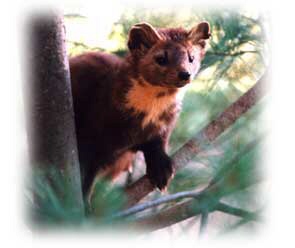 Two carnivore species -- American marten and Canada lynx - whose populations were abundant on Cape Breton Island 50 years ago, were recently listed under the new Nova Scotia Endangered Species Act as provincially Endangered. One of the main factors responsible for the sharp decline of these populations appears to be logging-induced habitat loss and fragmentation (Scott 1998). Any hopes of recovering these threatened populations must include the active participation of the forest industry to ensure long-term conservation of their habitats. This habitat conservation project is part of a larger project aimed at recovering the endangered American marten and Canada lynx on Cape Breton Island. The overall project integrates three components, each of which plays a crucial role in the recovery of these Cape Breton marten populations: I) Working with forest industry, scientists, and government agencies to ensure long-term conservation of critical habitat throughout the Cape Breton Highlands, II) Field research to gather genetic and baseline ecological information using live trapping and radio telemetry and III) Educational Outreach in the form of workshops with local fur harvesters and forest practitioners to promote a conservation ethic and facilitate stakeholder involvement in recovery. Funds secured from The Habitat Conservation Fund were directed toward activities that relate to Component I. The objectives of our habitat work are to partner with forest industry, scientists, government agencies and stakeholders to: 1) create a spatial habitat model designed to incorporate marten habitat requirements into long-term forest management planning, and 2) develop an alternative silviculture technique that will serve to enhance marten habitat by increasing prey abundance and denning sites. Development of better and more effective management of forest resources to ensure for the long-term availability of marten and lynx habitat will be critical for the recovery of both species. 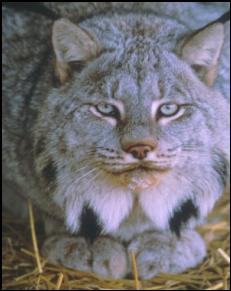 2.0 WORKING WITH LARGE INDUSTRY This project addresses the important issue of ensuring that sustainable forest management planning includes the provision of habitat for species at risk and other wildlife. More specifically, our emphasis this year was on the spatial arrangement of marten habitat in the Cape Breton Highlands region, as well as site-level structural requirements. Through scientific research, the project aimed to develop innovative tools that can in turn be implemented by the forest industry to ensure long-term habitat conservation for the provincially endangered American marten on Cape Breton Island, both at the landscape level and at the stand level. Our partnerships with industry, government agencies, research scientists, and recovery team will directly improve forest management using the following approach: Creating a GIS spatial habitat model designed to incorporate marten habitat requirements and into iterative spatial and temporal projections of supply for short and long-term planning at various scales. Food and cover indices are being designed using Arcview/ArcInfo GIS. The habitat component (cover index) of the model was completed in 2001 by identifying non-, poor, fair and good habitat using GIS forest inventory data. This cover index is currently being updated as new information, such as stand history, and model limitations are discussed. Prey base (food index) studies for the GIS marten habitat model have included small mammal trapping in October of 2001, transect work in February of 2002 for snowshoe hare, grouse and squirrel tracks. This year small mammal live-trapping was completed in twenty, 12ha plots and along ten, 1km transects. These surveys provided information on prey abundance in various habitat types. Verification of the model was attempted by detecting marten through the use of sightings, captures and locations of marten previous to the live-trapping and telemetry work. The project has formed a strong partnership with the forest industry, in this case StoraEnso, to generate and refine habitat suitability models for marten, assess prey-base abundance, and carry-out experimental forest cutting practices that may enhance marten/marten prey habitat. The final goal (2005) of which is to be able to provide a model that includes marten and lynx habitat needs incorporated in long-term forest management plans. By working closely with the forest industry, this project can help ensure that areas of critical habitat are identified and protected and that present and future forestry conservation plans are successfully developed and implemented. Research has demonstrated that marten require large home ranges relative to their body size, ranging from 1.2 to 50 km2 (Gosse et al in press, Hargis et al 1999, Potvin et al 1999). By ensuring long-term habitat conservation for species with large ranges we will also be helping to protect habitat for many species of wildlife including the rare Cape Breton lynx. Cape Breton is predominately a rural region characterised by a heavy reliance on natural resource industries such as forestry, fishing, tourism, trapping and hunting. Long-term sustainability of these industries and the resources on which they collectively rely is extremely important. As such, integrating sustainable forestry and conservation of wildlife habitat on Cape Breton Island stands to be of immense benefit to the major stakeholders in the Cape Breton Highlands including the forest industry, federal and provincial governments and fur harvesters. In addition, building strong integrated partnerships as outlined in our project will be key to the recovery of all species at risk in Cape Breton. 3.0 WORK COMPLETED 3.1 GIS Habitat Suitability ModelThrough Recovery Team discussions, it was determined that the model needs to be up-dated and refined. An up-dated iteration of the model is being run to include growth of the forest in the last 10 years using 2001 data, increase the volume of hardwoods in the model, and lower the suitability of stands having an extreme silvicultural history. In order to refine the model more information on marten locations, movement and prey information were collected through various surveys. 3.2 Experimental Silvicultural Plots To determine if small mammal habitat (marten prey) can be enhanced through harvesting methods, twenty, 12 ha experimental plots were laid out on Crowdis Mountain over the summer for experimental silviculture treatments. Study Design Using the habitat ranking criteria developed by the NSDNR, we selected approx 456 ha of forest in the Crowdis Mountain area of the Highlands Plateau. Selected primarily class 2 habitat (fair), which is defined as being >= 6m in height, >18 m2 basal area , and > 33% swd basal area. Based on aerial photos we supplemented some of the smaller areas by selecting similar forest types, and removing some predominantly hardwood stands from the defined area. • 3 treatment types originally identified, control, regular shelterwood, modified shelterwood. • 5 replicates of each treatment required. • 2 treatments and 1 Control, 5 replicates each = 15 blocks, • additional 5 blocks of proposed patch retention treatment identified The Treatments are Defined as Follows: Control - no treatment, monitoring will take place in same manner as treatment blocks. The control will act to account for natural fluctuations in population levels such as food availability, natural cycling of population numbers, catastrophic events etc. Regular Shelterwood - up to approximately 40% overstory removal. See note below regarding methodology for shelterwood techniques. Modified Shelterwood - up to approximately 40% overstory removal, with 12 - 14 trees/ha cut and retained on the ground as CWD. Trees retained on ground will typically be ones with larger crown and branches which are not able to be processed efficiently, and will provide the best above ground structure. Note on Shelterwood Treatments: Shelterwood treatments were completed differently than typical 30% removal. Extraction trails were run perpendicular to the access point, at 20m spacing between centre of trail. The trail width is 5m from edge to edge, and cut clear. 5m either side of the extraction trail was cut, removing 16 - 43% of the Basal Area (retaining Basal Area of 22-25 m 2 per ha). Next to the 5m shelterwood extraction, there is a 5m strip of forest that remains untouched (no removal). (Modified Shelterwood would have the same layout, but would have trees left on the ground as described above.) Patch Retention - 50% removal of forest within the block, but arranged spatially on the ground to have the remaining 50% existing in untouched patches. These cuts do not fall within the random treatment assignment described above. They have been located based on the age of the trees, which are difficult to be harvested with machinery typically used in a shelterwood operation. Sampling Forest DescriptionWe had a sample density of 0.5% of each block, with 6 plots located randomly throughout the block. Structure information included prism sweep (BA), canopy closure (over, mid and understory), Height, Dominant Species, and coarse woody debris according to the attached forms. Small Mammal Trapping Small mammal live trapping took place through the month of August/September on each of the plots. A 100m x 100m grid was centered within each of the circle plots, and 5 Trap-lines were located 25m apart along the 100m grid, with 5 trapping plots along each line. Trap-lines always ran North - South, and two trap types were used at each plot (live single trap, and live multiple capture traps). They were placed 5m East and West of the centre of the trapping line. Traps were baited with Peanut butter and oats, and left for four days (three trapping nights), with the traps being checked each day, and captures, recaptures, sprung traps recorded. Traps were then collected after three nights. 6 plots were trapped consecutively where possible and captured animals marked using ear tags where possible. Squirrel/Hare Track Transects The layout for squirrel/hare track transects were designed to occur within each of the above sample blocks. The priority was to sample blocks located in Crowdis mountain area, with additional sample sites located on previously (2000) located small mammal trapping plots. Each transect had a 1000 m total transect length, arranged in a 4 x 250m segments radiating from the centre point in each of the cardinal directions. Each 250m segment was further broken down into 50m segments. Tracks of hare, squirrel, grouse, marten, other weasel, deer, moose, lynx and rodents would be noted in each of the 50 m segments. Tracks were recorded as:
Occurrences were recorded by species as in one of the above categories for each 50m segment. The sampling required at least 3 replications of each survey. Surveys took place within 12 hours of a snowfall event, with subsequent surveys taking place at least 2 - 3 days after previous survey. Hours since last snowfall to be recorded to attempt to normalize track counts throughout the day. Pellet Group Surveys / Red Squirrel Vocalizations Sampling of Snowshoe Hare pellet groups, and Red Squirrel vocalizations took place on the 20 previously identified 12 ha sampling areas located in the southern Marten Moratorium area. There are 10 sub-plots identified within each of the larger sampling areas. These 10 plots have been spaced out 100m apart along three transects running north-south within the sampling area. Hare pellet group surveys were located at each of these locations. The plot (as defined by the coordinates given) acted as the centre point. The coordinates were generated using GIS, and are projected to UTM, NAD83. 4.0 OTHER WORK IN SUPPORT 4.1 Research Marten DetectionLocating or detecting the presence of marten has taken place in six ravines in the southern section of the Highlands around Crowdis Mountain over the summer. This involved setting up alternating numbered camera trap and hair snag stations ~400 to 500 metres apart. They were left for 10-14 days and then retrieved. In, total these six ravines produced ~240 hair snag nights and ~280 camera nights. In addition, 24 camera traps, hair snag and track-plate stations were placed in 3 sites in or near Cape Breton Highlands National Park in November for two weeks, and 9 stations were set up behind Baddeck. Baited with deer meat and scented with lure, these amounted to 140 camera trap nights, 100 hair sang nights and 90 track-plate nights. Only one new marten record has come out of this work. Detection work is on-going with the help of NSDNR regional staff. Marten Live-trapping Three weeks have been devoted to live trapping of marten in Cape Breton. Thirty live-traps were placed in six locations in the Highlands of Cape Breton. Traps were placed ~500-1500 m apart and baited with squirrels. No marten were captured and no signs of marten were detected. Because of the lack of new marten locations/records in Cape Breton, some live trapping for marten has taken place in southern Nova Scotia. Seven marten have been collared and should provide information on individual home-ranges, and inter-specific and con-specific interactions that may be transferable to Cape Breton. Southern Nova Scotia provides a useful setting for an outside lab for marten research in a landscape that is disturbed and fragmented. Information collected will also help in further refining marten habitat suitability models. Efforts placed here will in no way detract from the work conducted in Cape Breton. 4.2 EDUCATION AND OUTREACH WorkshopsWorkshops were held to facilitate mechanisms which enable fur harvesters to be actively involved in marten and lynx recovery with the ultimate goal of them taking a lead in recovery initiatives where appropriate, and to provide further mechanisms which enable forest practitioners (including crown, private, First Nations and industry) to be actively involved in marten and lynx recovery with the ultimate goal of them taking a lead in recovery initiatives where appropriate. Fur harvester workshops Fur harvester workshops were designed to open up lines of communication so trappers would become aware that their participation is an invaluable part of recovering marten and lynx populations, and can not be achieved without their help and involvement. Key trappers on mainland Nova Scotia are already partnering with us to provide essential baseline information regarding marten and lynx numbers and distribution throughout southwest Nova Scotia, and have changed their own activities to reduce incidental loss. These key trappers were invited to participate in the Cape Breton workshops to discuss with their peers their involvement in marten recovery. These workshops provided additional baseline information through reports of marten tracks in five locations in Cape Breton. Knowledge gaps will continue to close, as long-term dialogue with the local trappers is maintained. These workshops are only the first step in this process. Two, 1day workshops were in Metegan and Margaree in January. The workshop included several presentations, a hands-on venue and an open discussion forum. An agenda for the fur harvester workshop is appended to this report. Forest Practitioners and Industry Workshops Forest practitioner workshops were designed to pen up lines of communication and enable foresters to recognize that the recovery of marten and lynx populations can not be achieved without their help and involvement. One full day workshop was held in January, at the St. Patrick's Community Hall, Margaree, Cape Breton, for forest practitioners. This workshop was planned in close association with StoraEnso to ensure all forest practitioners in the Cape Breton region are represented. Prior to the workshop parties were contacted and formally invited. The workshop consisted of an introduction section, several presentations, and an open discussion. An agenda for the forest practitioner workshop is appended to this report. A database has been compiled of all attendants and a follow-up, currently underway, regarding the workshop will include contact of all the attendants to see if the workshop changed their thoughts or activities, and how they feel the partnership should go ahead in terms of marten and lynx recovery. The possibility of future workshops will be discussed during these follow-up communications, and tentatively planned for 2003, if applicable. Additionally, on Sunday February 2, 2003 the project biologist presented information to the Trappers' Association of Nova Scotia Directors. On March 7th or 8th presentations were given at the Trappers' Association of Nova Scotia Annual Workshop and Convention. Workshop Evaluation Questionnaire A 3 page, 5 part questionnaire was passed out after each workshop and filled in by most workshop participants. This questionnaire was designed to determine the effectiveness of the workshops, the results of which will form part of a master's thesis. Marten Brochure Development The educational pamphlet development took longer than expected and were not available for distribution at the Cape Breton Island workshops. This was due to a few reasons: there was an incredible amount of constructive feedback from the Recovery Team members that needed to be incorporated in the Pamphlet; also, some formatting constraints arose and translation time had to be extended. However, a marten brochure has now been finalized, translated and will be printed shortly. Articles A few articles have been written regarding the recovery Project, and marten and lynx. An article appeared in the Nova Scotia Trappers Newsletter regarding the marten/lynx recovery project (and a note was placed in the same Newsletter regarding the listing of the Canada lynx as provincially endangered under the Nova Scotia Endangered Species Act. Members of the Recovery Team have been in conversation with "Coastlines" editor, Penny Doherty, regarding a column for marten in a month, and lynx in early spring. A DNR photo of a marten was sent for inclusion in the marten article. An article appeared in Cape Breton Post - 11/02/03 (Wildlife officials take part in moose, marten studies: Projects involve radio collared on moose and recording numbers of pine marten). 5.0 Discussion and Future Direction Habitat modeling for marten and lynx will continue for the foreseeable future. As in-kind support, Acadia University will have a Research Fellow to work on marten habitat models in 2003, and an Acadia master's student will look at lynx habitat models and connectivity. Several marten were collared in south western NS, will be tracked and used as surrogate to the population in Cape Breton. Prey abundance work (small mammal live-trapping, squirrel play-backs and pellet counts), and other scientific research to support habitat modeling and will continue. Data collected from the fall of 2002 has been entered in a database and will be used at part of a master's thesis. Future forest practitioners workshops will be held but, they may not be as specifically related to marten/lynx recovery. These workshops will have a species at risk components and mention the progress of the marten/lynx recovery efforts. Depending on the direction of the marten/lynx recovery project and other similar species at risk recovery projects in the Highlands, it may be beneficial to emphasize stewardship in the larger landscape. 6.0 PARTNERS
Privacy
Policy |