The Economics and Statistics Division maintains archives of previous publications for accountability purposes, but makes no updates to keep these documents current with the latest data revisions from Statistics Canada. As a result, information in older documents may not be accurate. Please exercise caution when referring to older documents. For the latest information and historical data, please contact the individual listed to the right.
<--- Return to Archive
For additional information relating to this article, please contact:
June 09, 2025HOUSEHOLDS AND THE ENVIRONMENT, 2023 Statistics Canada has released the 2023 results from the Survey on Households and the Environment. New data reports on experiences of extreme weather and natural disaster events, emergency preparedness, reusable products and single-use plastics, electronic waste, radon, bird-feeding and cats.
Extreme weather and natural disaster events
In 2023, Nova Scotia experienced several episodes of extreme weather and natural disasters, including forest fires, extreme rainfall and flooding. As a result, Nova Scotians were the most affected by extreme weather and natural disaster events in 2023. The vast majority of those who reported effects from natural disasters and extreme weather experienced these events in their primary residence.
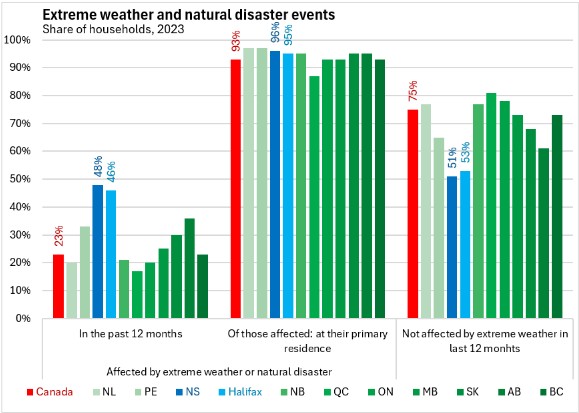
Among those affected by extreme weather, Nova Scotians reported higher than average experiences with heavy rains, storms, strong winds, hurricanes and winter storms/blizzards.
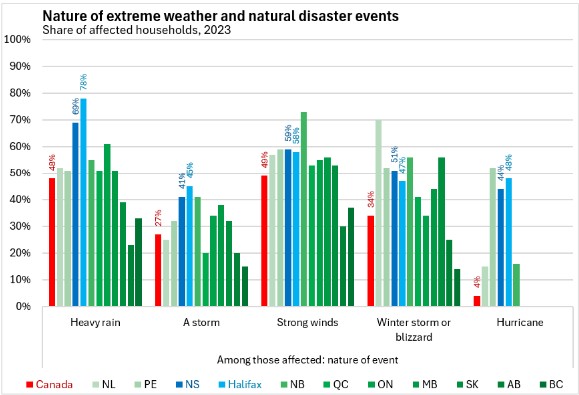
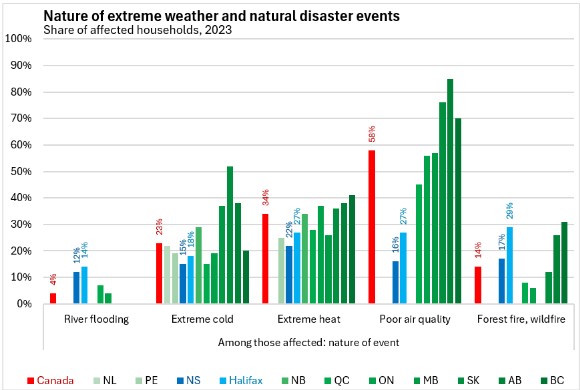
Nova Scotians also experienced higher than average episodes of flooding and forest fires in 2023, though these affected fewer households than storms and rainfall events.
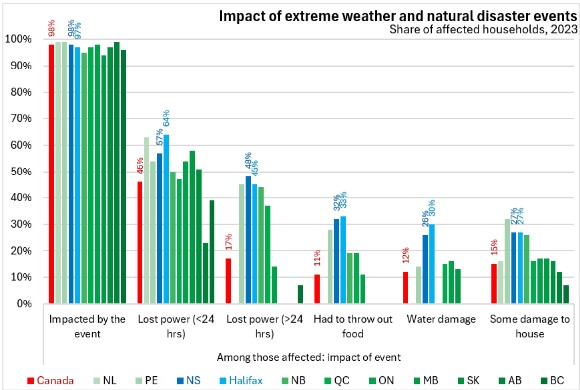
Of Nova Scotians who reported effects of extreme weather and natural disaster, the overwhelming majority experienced some impact. The most common impacts were lost power and spoiled food that had to be thrown out. There were also notable impacts on Nova Scotians through water damage, damage to the home, road closures, poor air quality, flooded property and interruptions to drinking water.
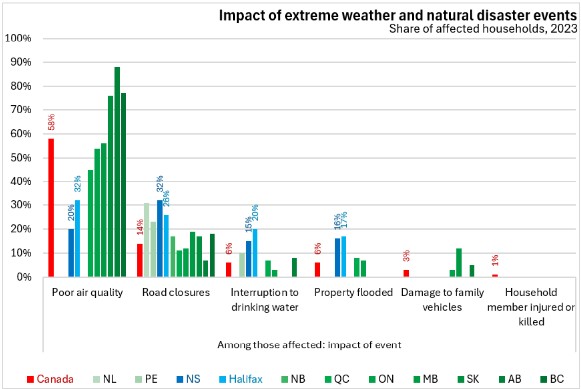
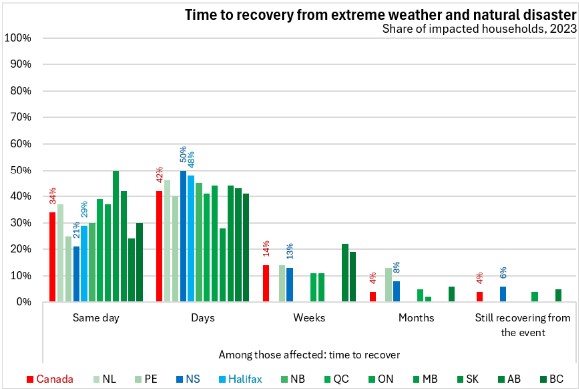
Among those impacted by extreme weather and natural disaster events, the majority had recovered within days. However, there were some that reported more lengthy or ongoing impacts.
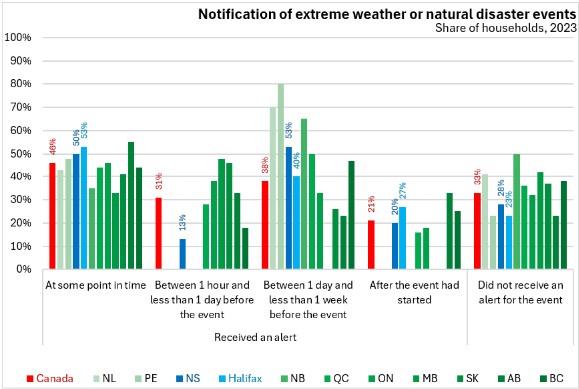
Half of Nova Scotians received some kind of notification of impending natural disasters or extreme weather in 2023. The most common timeline was more than 1 day and less than 1 week in advance of the event. However, some reported receiving notice only hours before the event or even after the event started.
Phone, television, radio and social media were the most common forms in which Nova Scotians received notices of extreme weather or natural disaster events in 2023.
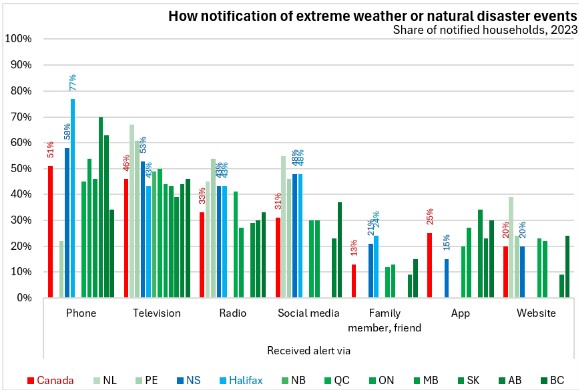
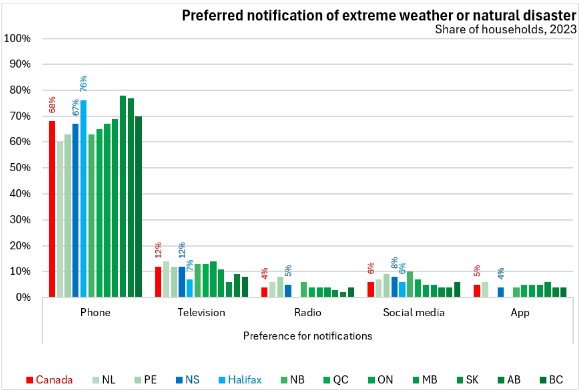
Phone was by far the preferred method through which Nova Scotians would like to be notified of extreme weather or natural disaster events.
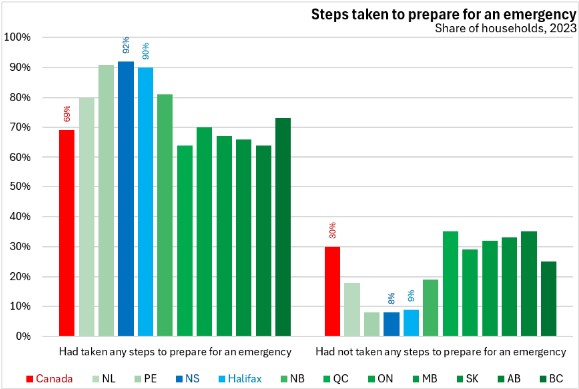
In 2023, Nova Scotians were the most likely in Canada to have undertaken steps to prepare for an emergency.
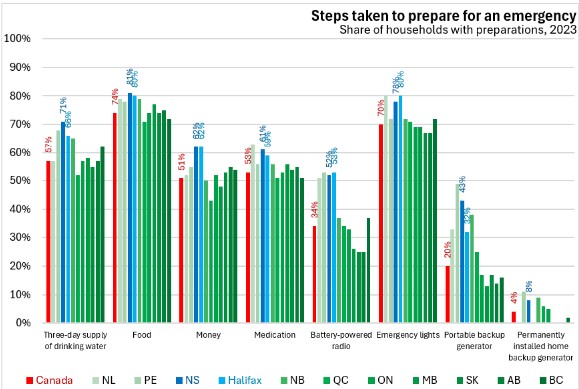
Nova Scotians were the mostly likely among Canadians to have made emergency provisions of water, food and money as well as the second most likely to have prepared medicine, radios, lights and generators in case of an emergency.
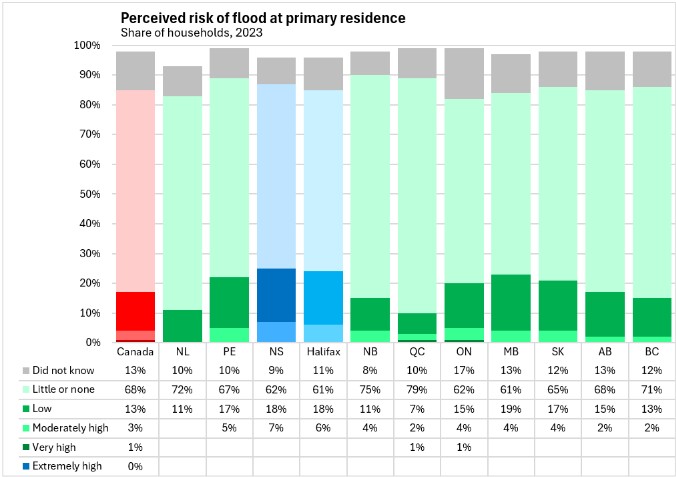
After extreme rainfall and flooding events in 2023, Nova Scotians had a higher perceived risk of flooding than most other Canadians. However, the majority of Nova Scotians perceived little to no flood risk.
Radon
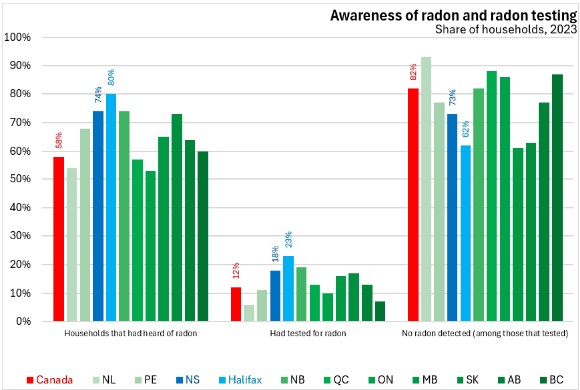
Nova Scotians were tied with New Brunswickers for the most likely in Canada to have heard of radon. Nova Scotians - particularly those in Halifax - were the second most likely to have conducted radon testing (after those in New Brunswick).
Among those that tested for radon, the majority found no issues. However, Nova Scotia - particularly Halifax - reported a higher than average incidence of problems identified by a radon test.
Single use products and reusable alternatives
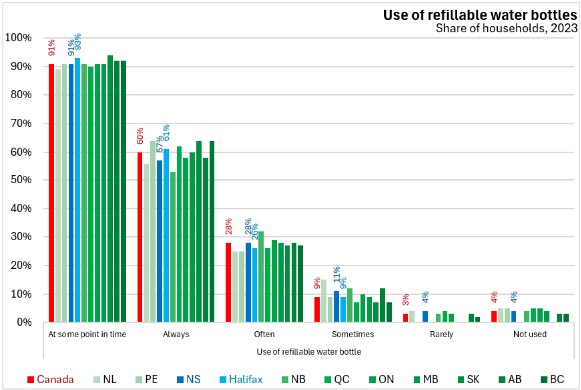
The majority of Nova Scotians (and Canadians in general) report always using a refillable water bottle as opposed to single-use water containers.
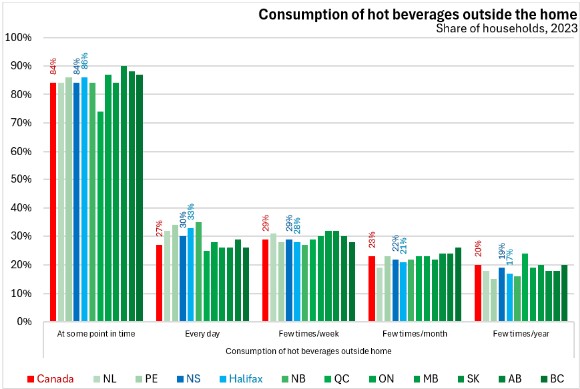
Hot beverages enjoyed outside the home were very popular among all Canadians, with more than half of the population reporting consumption every day or a few times per week.
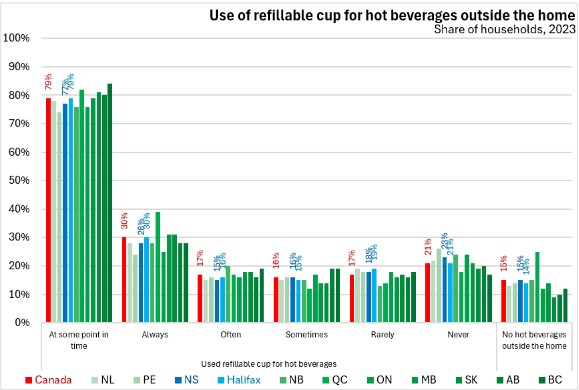
Over 40% of Nova Scotians reported always or often using a refillable cup for hot beverages consumed outside the home. Another 40% of Nova Scotians reported rarely or never using a reusable cup for hot beverages consumed outside the home.
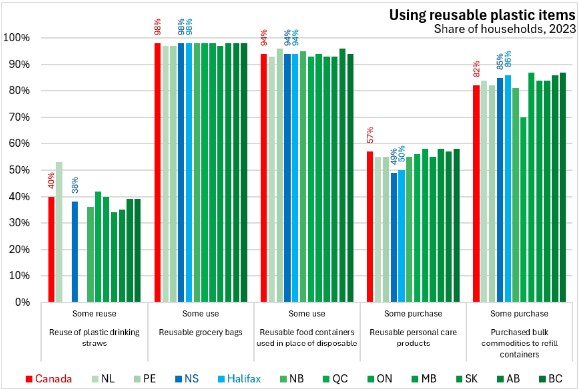
Nova Scotians generally report very high use of at least some reusable grocery bags, food containers and bulk-product containers (as were those in every other province). Reusable personal care products were less widely used, particularly in Nova Scotia. Although only 11% of Nova Scotians reported using plastic straws, 38% of these were reused in some capacity.
Electronic waste
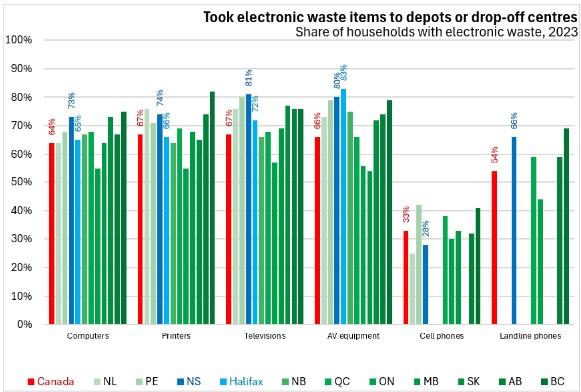
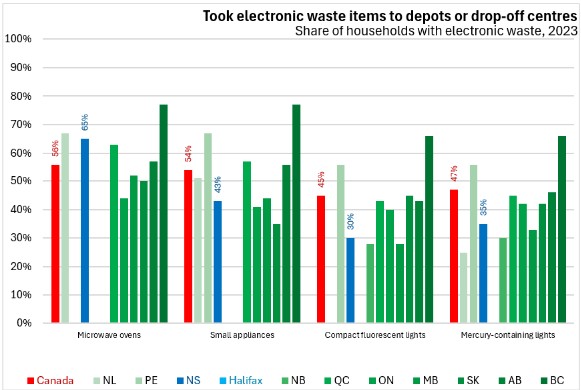
Nova Scotians were more likely than the national averages to bring electronic waste to a drop-off centre or depot. This was particularly the case for computers, printers, televisions, AV equipment, microwave ovens and landline phones.
Nova Scotians were less likely than the national average to bring cell phones, small appliances and fluorescent/mercury-containing light bulbs to an electronic waste drop-off or depot.
Bird-feeding and cats
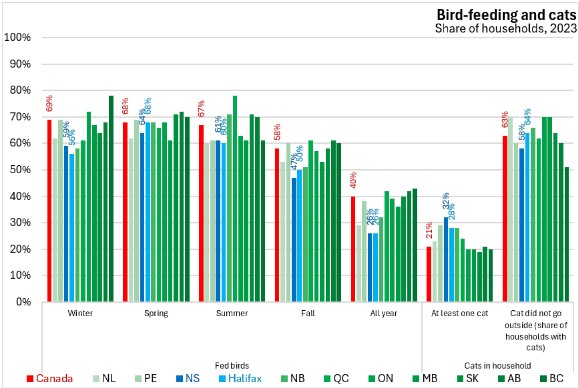
In all seasons of the year, Nova Scotians were less likely than most other Canadians to feed birds.
Statistics Canada notes that: "...predation by pet cats is probably the largest human-related source of bird mortality in Canada."
Nova Scotia households were the most likely to report having a cat and the second most likely among households with cats to report that the cat goes outside.
Source: Statistics Canada. Table 38-10-0186-01 Impact of extreme weather events and natural disasters on households; Table 38-10-0184-01 Emergency preparedness; Table 38-10-0185-01 Perception of risk from flooding; Table 38-10-0086-01 Knowledge of radon and testing; Table 38-10-0086-01 Knowledge of radon and testing; Table 38-10-0156-01 Reusable containers; Table 38-10-0154-01 Electronic waste; Table 38-10-0015-01 Purchases to feed, shelter or watch birds
<--- Return to Archive


