The Economics and Statistics Division maintains archives of previous publications for accountability purposes, but makes no updates to keep these documents current with the latest data revisions from Statistics Canada. As a result, information in older documents may not be accurate. Please exercise caution when referring to older documents. For the latest information and historical data, please contact the individual listed to the right.
<--- Return to Archive
For additional information relating to this article, please contact:
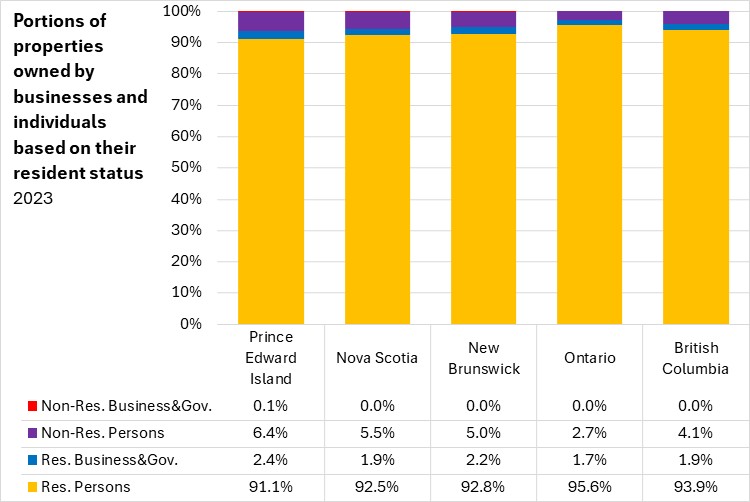
December 08, 2025CANADIAN HOUSING STATISTICS PROGRAM, 2023 In 2023, majority of residential properties in Nova Scotia were owned by residents of Canada (94.4%). Canadian businesses and government owned 1.9% in 2023 and non-residents of Canada owned 5.5% of residential properties. Prince Edward Island had the largest share of non-residential ownership of residential properties while Ontario had the least amount.
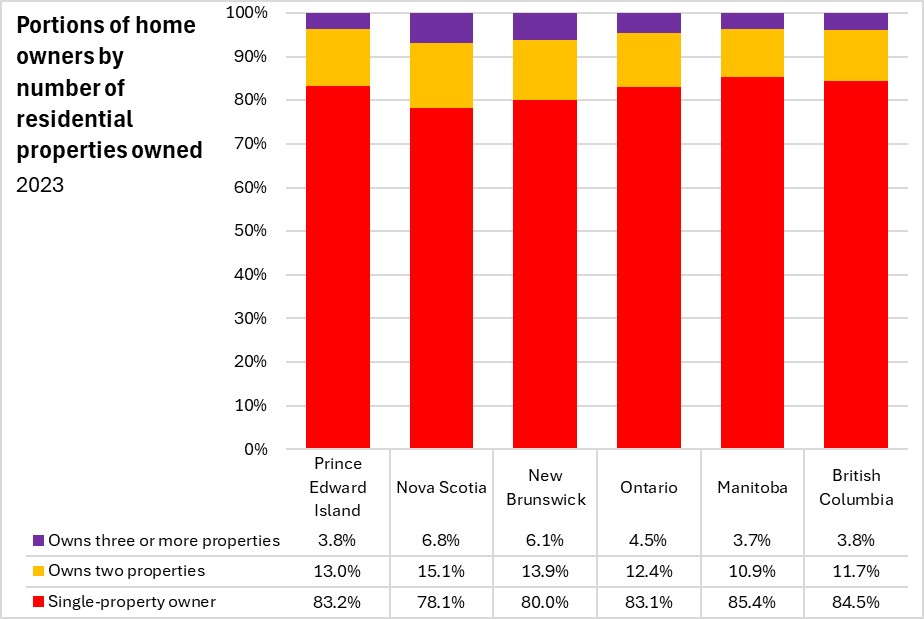
In 2023, there were more single property owners than multiple property owners. In Nova Scotia, 78.1% home owners that owned a single property, 15.1% that owned two properties and 6.8% that owned three or more properties. Nova Scotia had the largest number of individuals that owned two or more properties, while Manitoba had more people owning a single property than multiple.
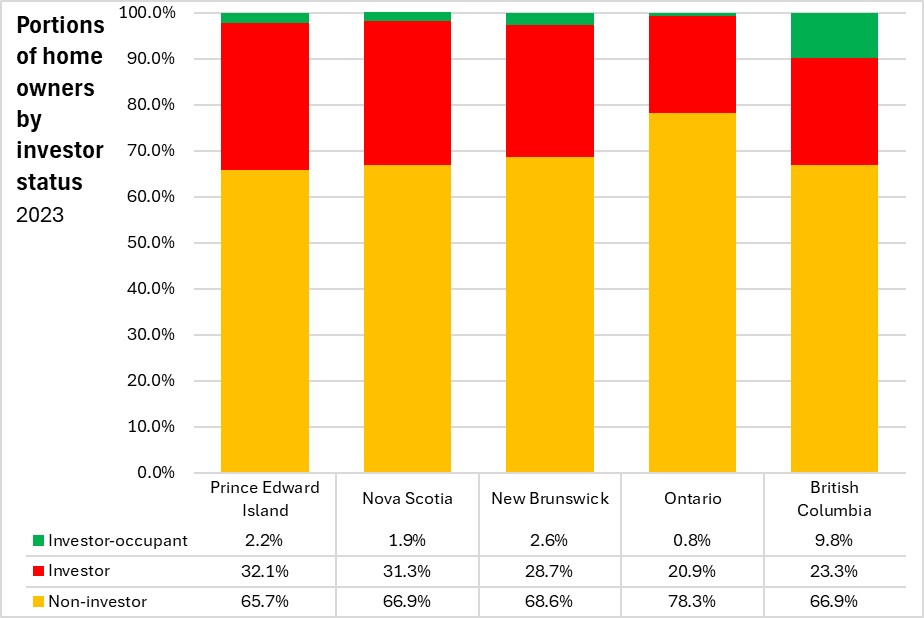
Nova Scotia had 66.9% non-investors holding properties compared to 31.3% investors owning property and 1.9% investors living on their properties. Prince Edward Island had the largest number of investors holding properties and Ontario had the least. British Columbia had the largest number of investor-occupants compared to other provinces.
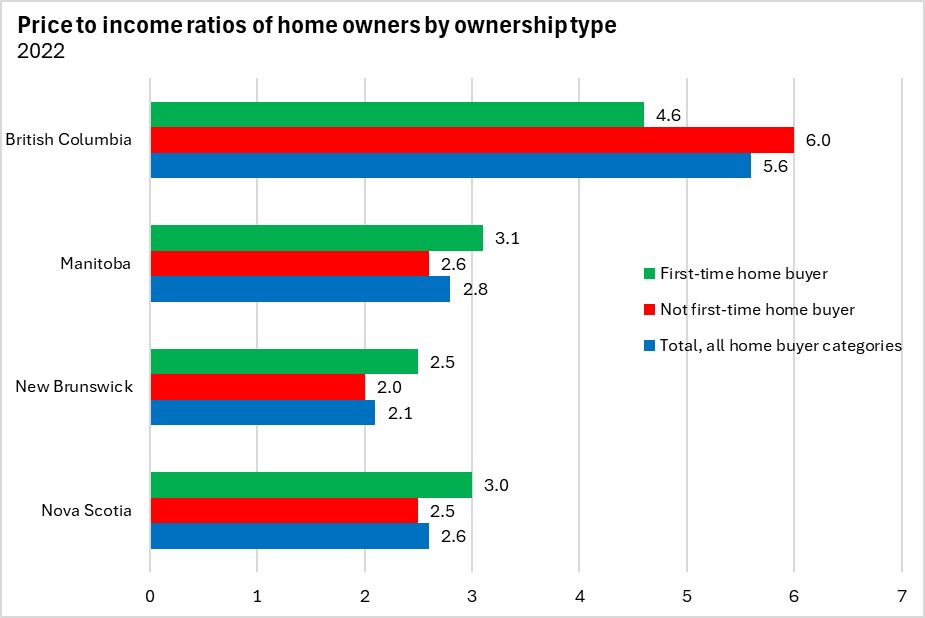
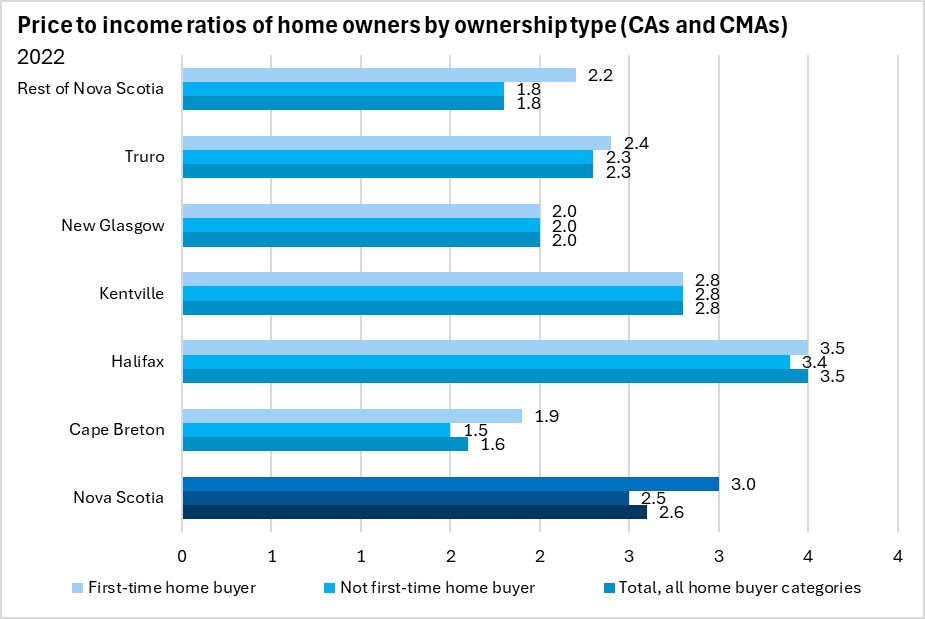
Information on price to income ratios is only available for 2022 based on home ownership type. In Nova Scotia, price to income ratio was 3.0 for first-time home buyers and 2.5 for not first-time home buyers. Nova Scotia, New Brunswick, and Manitoba had a higher price to income ratio for first-time home buyers, where British Columbia had a lower price to income ratio for first-time home buyers compared to not first-time home buyers. However, British Columbia had the highest price to income ratio compared to other provinces where data was available.
Across Nova Scotia, prices were higher than income for first-time home buyers compared to not for most areas with the exception of New Glasgow and Kentville. Halifax had the highest price to income ratio for all types of buyers.
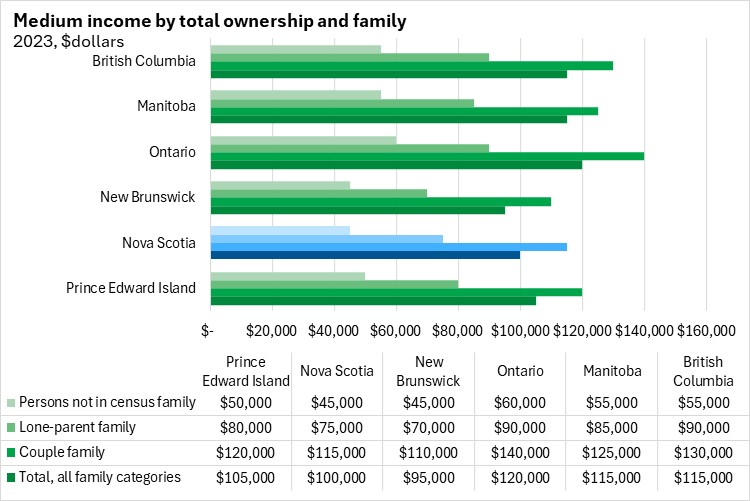
In 2023, medium income of residential property owners in Nova Scotia was $100,000, this was the second lowest medium income of residential property owners among provinces. Ontario had the largest medium income among provinces for those owning residential properties.
Notes: The Canadian Housing Statistics Program (CHSP) provides information on the characteristics of homeowners—such as age, sex, family type, immigrant status and income. A property may have more than one owner, and an owner may have more than one property; as a result, the counts of owners and properties can differ.
<--- Return to Archive


