The Economics and Statistics Division maintains archives of previous publications for accountability purposes, but makes no updates to keep these documents current with the latest data revisions from Statistics Canada. As a result, information in older documents may not be accurate. Please exercise caution when referring to older documents. For the latest information and historical data, please contact the individual listed to the right.
<--- Return to Archive
For additional information relating to this article, please contact:
August 28, 2026COMPENSATION OF EMPLOYEES, Q2 2026 Quarter-over-quarter (Q2 2026 vs Q1 2026, seasonally adjusted)
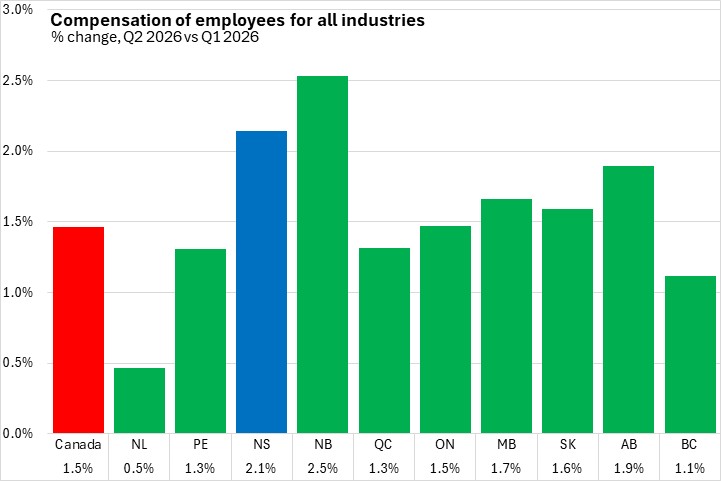
Total compensation of employees for all industries increased by 2.1% in Nova Scotia, rising to $9.57 billion in Q2 2026. National employee compensation was up 1.5% in the second quarter of 2026. All provinces recorded quarter over quarter gains in employee compensation with the fastest growth in New Brunswick (followed by Nova Scotia), and the slowest growth in Newfoundland and Labrador.
Year-to-date (Q1-Q2 2026 vs Q1-Q2 2025)
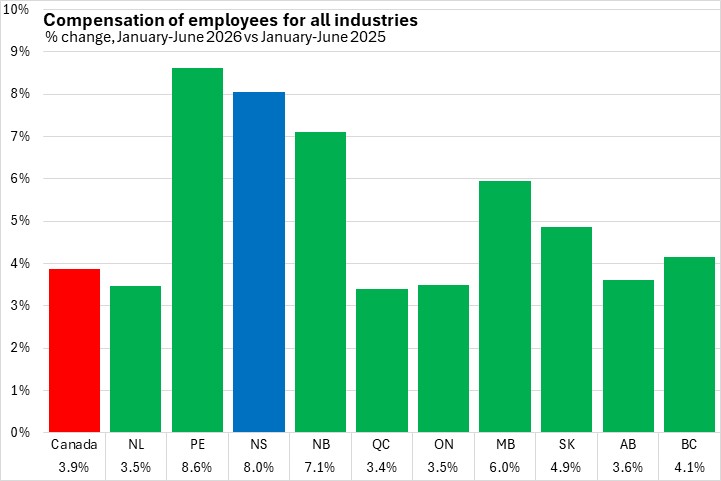
Nova Scotia's employee compensation for all industries was up 8.0% in the first two quarters of 2026 when compared with the same period of 2025. National employee compensation grew 3.9%. All provinces recorded year-to-date gains in employee compensation in the first two quarters of the year, with the fastest gain reported in Prince Edward Island, followed by Nova Scotia, and the slowest gain in Québec.
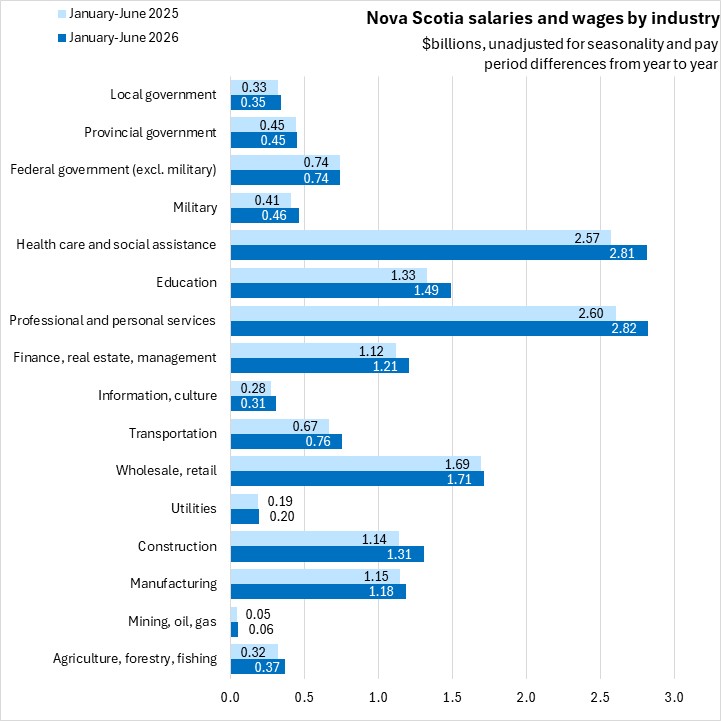
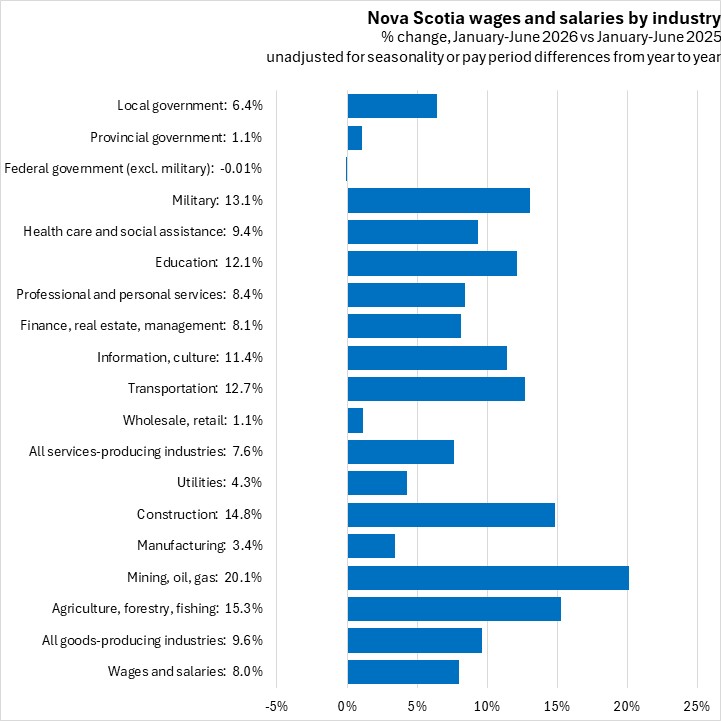
Year-to-date growth in total wages and salaries by industry show that the strongest contributions to rising payrolls came from health care/social assistance (which includes daycare), followed by professional/personal services. Wage and salary totals were down slightly for federal government(excluding military).
In percentage terms, mining/oil/gas, agriculture/forestry/fishing and construction reported the fastest gains in Nova Scotia over this period.
Note that changes in employee compensation reflect changes in wages and salaries as well as changes in contributions to social insurance. Changes in wages and salaries include the effects of changing numbers of employees, changing hours worked and wage rates as well as effects from differences in pay period from one year to the next.
Trends
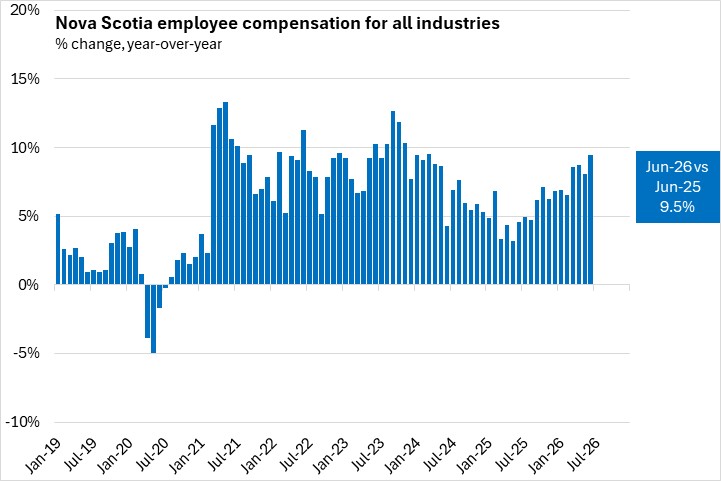
After the notable declines early in the pandemic, employee compensation growth picked up and experienced strong growth from 2021-2023. Over this period, there were some notable spikes in employee compensation monthly results, followed by subsequent corrections. Beginning in 2024, monthly results became less volatile and growth in employee compensation slowed, with growth reaccelerating beginning in mid-2025.
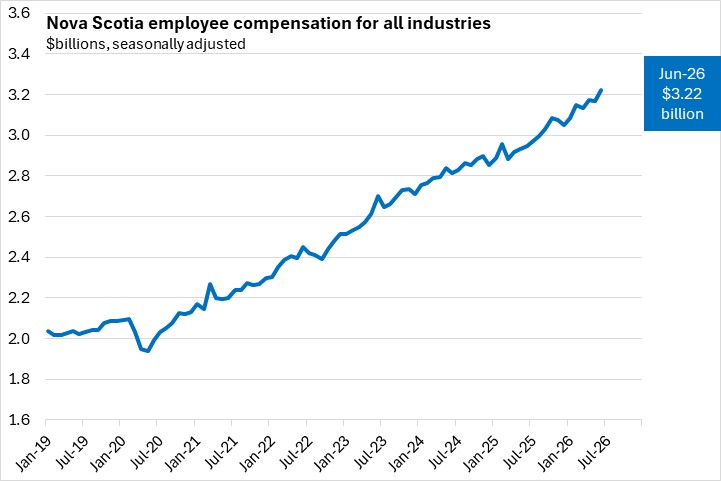
On a year-over-year basis, employee compensation growth was 9.5% in June 2026.
Source: Statistics Canada. Table 36-10-0205-01 Wages, salaries and employers' social contributions (x 1,000)
<--- Return to Archive


