The Economics and Statistics Division maintains archives of previous publications for accountability purposes, but makes no updates to keep these documents current with the latest data revisions from Statistics Canada. As a result, information in older documents may not be accurate. Please exercise caution when referring to older documents. For the latest information and historical data, please contact the individual listed to the right.
<--- Return to Archive
For additional information relating to this article, please contact:
September 25, 2025CANADIAN HOUSING STATISTICS PROGRAM 2022 Today, the Canadian Housing Statistics Program is releasing new data on residential properties and property owners for the 2022 reference year in select provinces. The data covers a range of topics and includes detailed information on property characteristics and owner demographics.
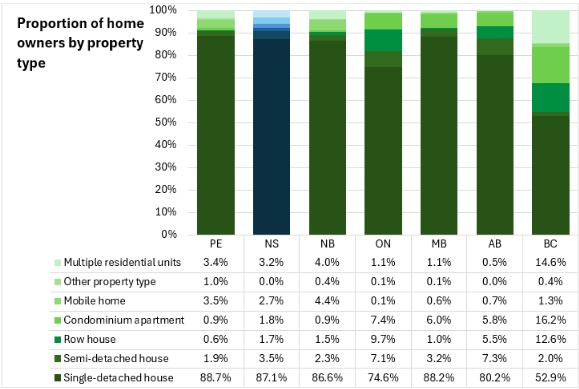
In 2022, single-detached houses were by far the most common type of property owned, with 87.1% of home owners in Nova Scotia owning a single-detached home. Single-detached home ownership was most common in Prince Edward Island, and lowest in British Columbia. Ownership of condominiums, row houses, and residences with multiple units was notably higher in British Columbia.
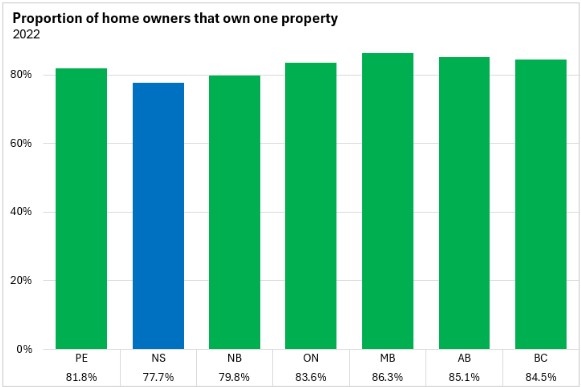
Most homeowners owned a single property in every province in 2022, with single-property ownership highest in Manitoba, and lowest in Nova Scotia.
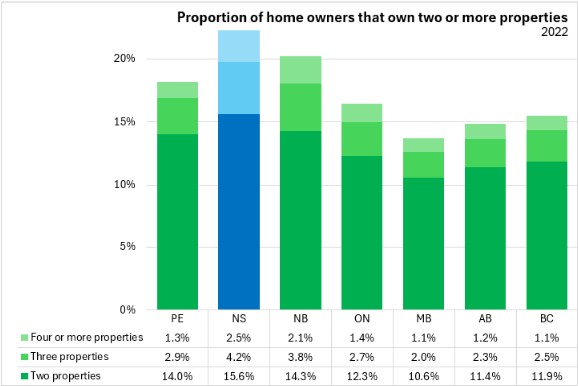
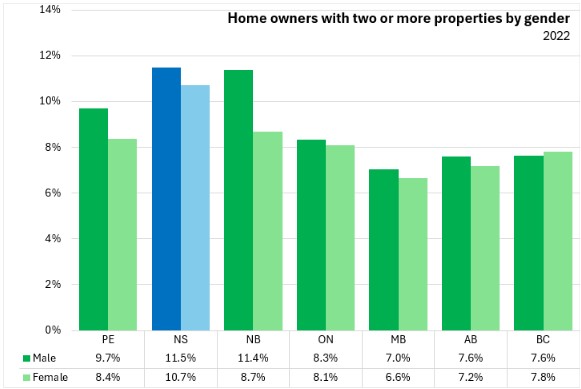
Ownership of multiple properties was more common in the Maritime provinces, led by Nova Scotia with 22.3% of homeowners having two or more properties. Nova Scotia had higher rates of multiple property ownership in all categories measured by the Canadian housing statistics program compared to other participating provinces. Manitoba had the lowest rate of multiple property ownership.
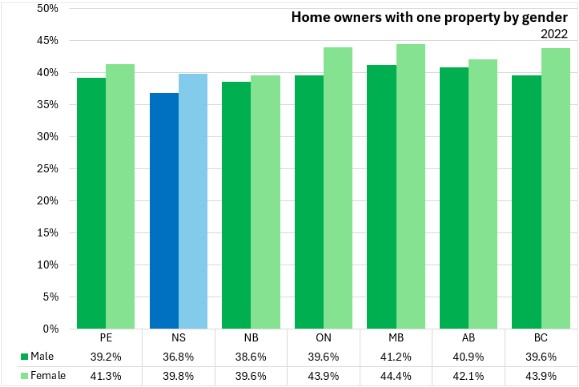
The proportion of home owners that were female and owned one property was higher than males in all provinces. The proportion of single property home owners that were female was highest in Manitoba, and lowest in New Brunswick. The highest proportion of homeowners that were single-property males was in Manitoba, and the lowest in Nova Scotia.
The proportion of property owners that were males with multiple houses was higher than the proportion that were females in every province except British Columbia, with Nova Scotia having the highest proportion of male multiple-property owners.
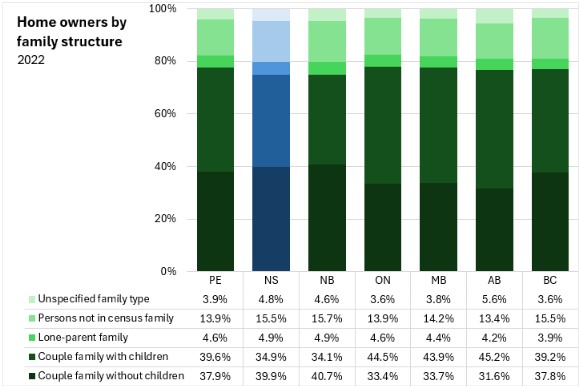
Couple families made up the majority of home owners in every province, led by Ontario. Home owners were most likely to be couple families with kids in Alberta, while couple families without children were more common in New Brunswick. The proportion of home owners not in a census family was highest in New Brunswick, while lone-parent families were more common in Nova Scotia and New Brunswick.
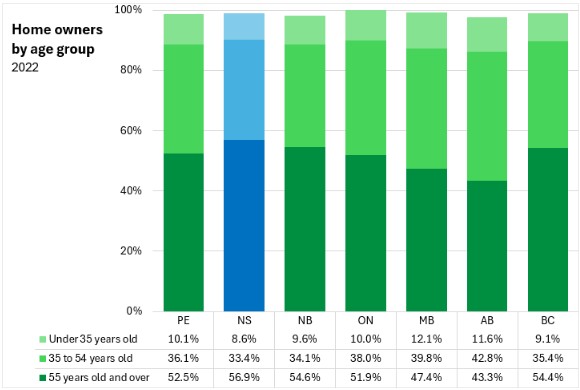
Older owners made up the majority of home owners in every province except Manitoba and Alberta, and made up the highest proportion of owners in Nova Scotia. The highest proportion of owners 35 to 54 years old was in Alberta, and lowest in Nova Scotia. Home owners under the age of 35 were most common in Manitoba, and were less common in Nova Scotia compared to other provinces.
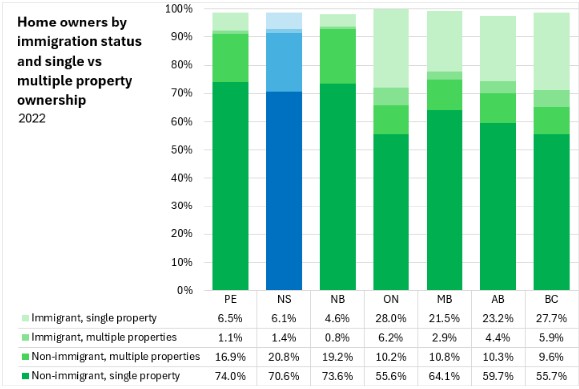
Immigrants made up a notably lower proportion of home owners in the Maritime provinces, with New Brunswick having the lowest proportion of immigrant home owners across the provinces at 5.4%. The highest proportion of immigrant home owners was in Ontario at 34.2%. British Columbia had the highest proportion of immigrant multiple property owners, while immigrant single property owners were most common in Ontario.
Source: Canadian Housing Statistics Program, 2022
<--- Return to Archive


