The Economics and Statistics Division maintains archives of previous publications for accountability purposes, but makes no updates to keep these documents current with the latest data revisions from Statistics Canada. As a result, information in older documents may not be accurate. Please exercise caution when referring to older documents. For the latest information and historical data, please contact the individual listed to the right.
<--- Return to Archive
For additional information relating to this article, please contact:
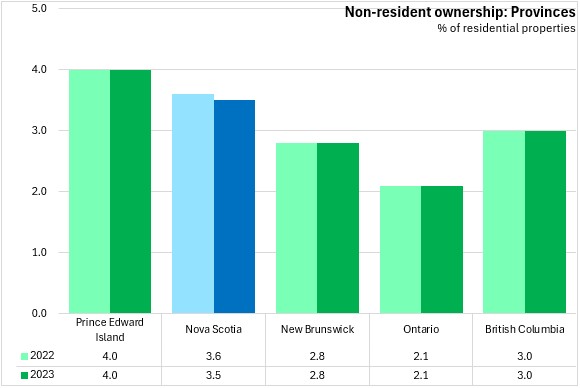
October 21, 2025CANADIAN HOUSING STATISTICS PROGRAM, 2023 In 2023, 3.5% of residential properties in Nova Scotia were owned by non-residents of Canada. This was down slightly from the previous year. Of provinces with data for 2023, Prince Edward Island had the highest rate of non-resident residential property ownership. Nova Scotia reported the next highest percentage of residential properties owned by non-residents. Ontario reported the lowest percentage of residential properties owned by non-residents at 2.1% in 2022.
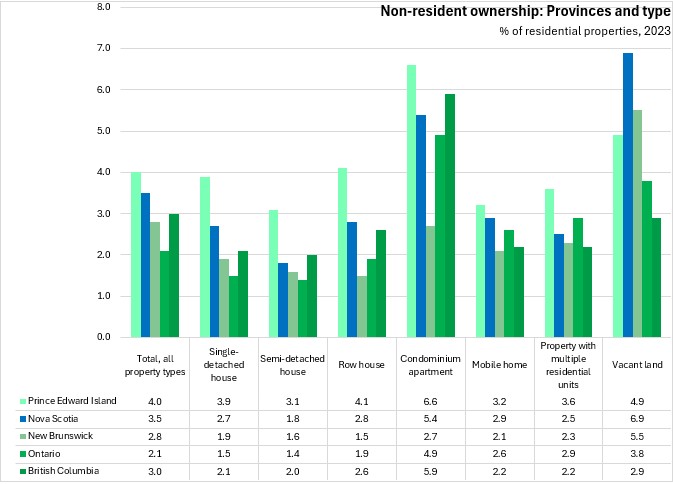
Nova Scotia reported the highest rate of non-resident ownership among vacant land at 6.9% in 2023. Prince Edward Island had the highest rates of non-resident residential property ownership in all other categories among provinces reporting data.
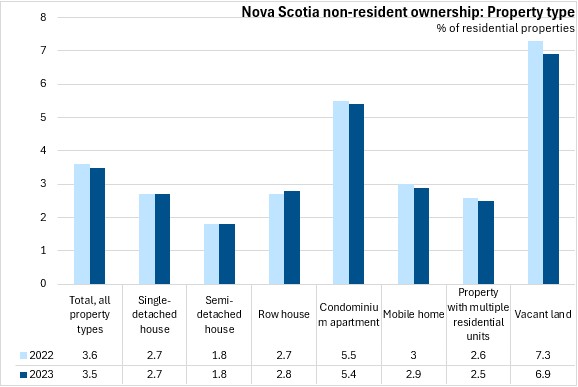
Non-resident ownership rates of single detached and semi-detached were stable in 2023 vs 2022, while there were declines among condominium apartments, mobile homes, properties with multiple units, and vacant land. The share of non-resident owned row houses increased in 2023.
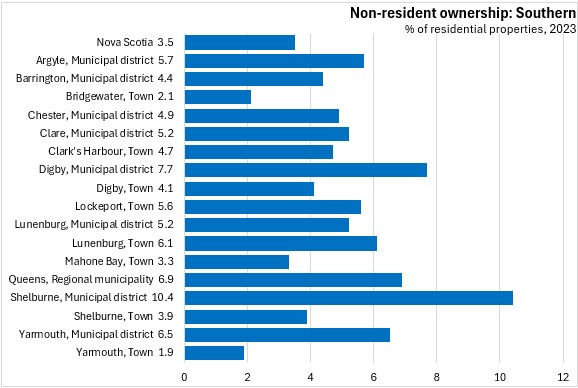
Across the province, non-resident ownership was highest in areas of Cape Breton (Richmond and Inverness), Shelburne Municipal District, and St. Mary's Municipal District. Non-residential ownership was notably lower across most of the Annapolis Valley, as well as parts of Northern Nova Scotia.
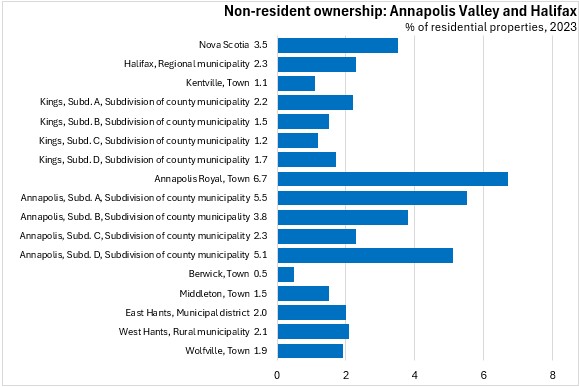
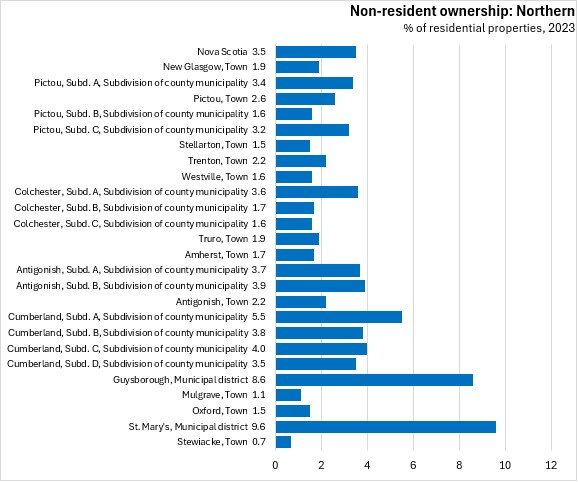
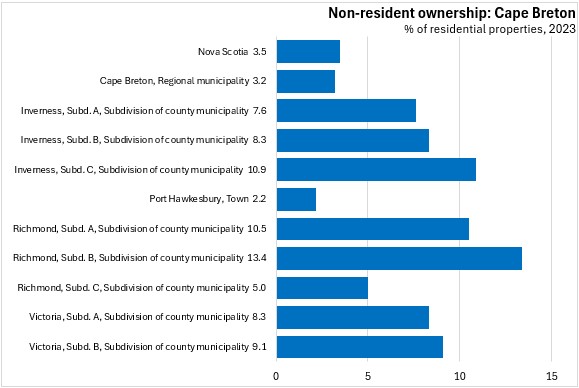
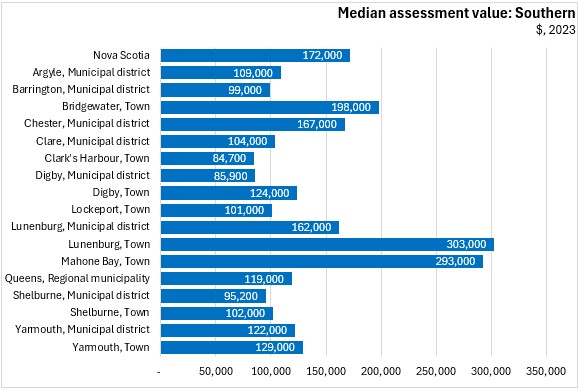
Median assessment values were lowest in parts of Northern Nova Scotia (notably parts of Cumberland county, St. Mary's Municipal District and Guysborough Municipal District). Median assessment values were highest in Halifax and Wolfville, followed by Lunenburg and Mahone Bay.
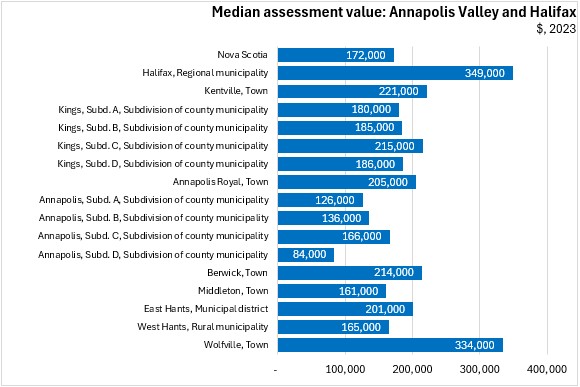
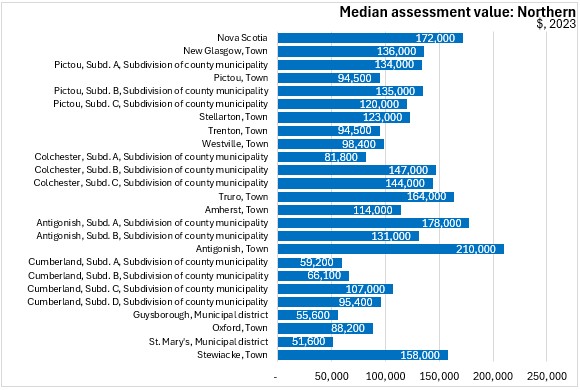
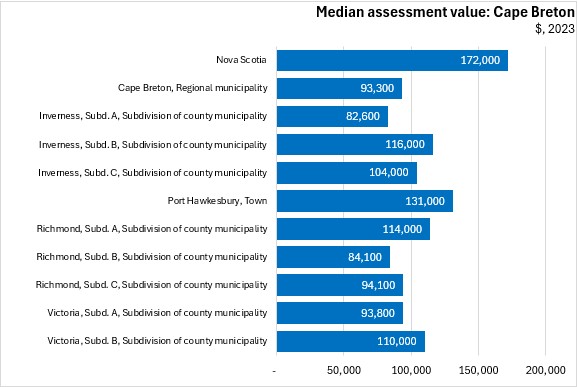
Notes: The Canadian Housing Statistics Program (CHSP) provides information on the residential property stock, defined as all residential properties in a given geographic region, excluding vacant land. Residential properties include all land and structures intended for private dwelling purposes. A residential property may consist of one dwelling, as is common for single-detached housing, or multiple dwellings such as apartment buildings or row housing.
An individual is considered a resident if their primary dwelling is in the economic territory of Canada, and are considered a non-resident if their primary dwelling is outside the economic territory of Canada. A property is classified as resident owned when the majority of owners are defined as residents. Conversely a property is classified as non-resident owned when the majority of owners are defined as non-residents. When there is an equal number of resident and non-resident owners for the same property, the property is classified as resident owned.
Source: Statistics Canada. Table 46-10-0094-01 Residential properties by characteristics and residency status
<--- Return to Archive


