The Economics and Statistics Division maintains archives of previous publications for accountability purposes, but makes no updates to keep these documents current with the latest data revisions from Statistics Canada. As a result, information in older documents may not be accurate. Please exercise caution when referring to older documents. For the latest information and historical data, please contact the individual listed to the right.
<--- Return to Archive
For additional information relating to this article, please contact:
October 30, 2025PAYROLL EMPLOYMENT AND AVERAGE WEEKLY EARNINGS, AUGUST 2025 Monthly (August 2025 vs July 2025, seasonally adjusted)
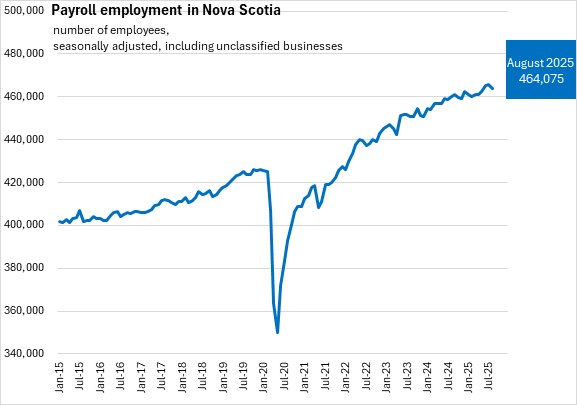
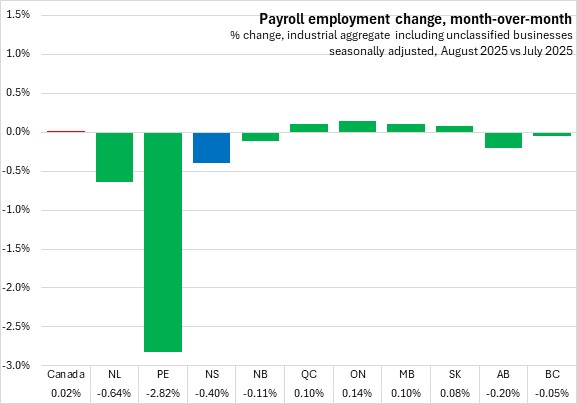
Nova Scotia had 464,075 payroll employees in August 2025, down 0.40% (-1,855) compared to July 2025. Canada had 18.27 million employees, up 0.02% from July 2025 despite declines in six provinces. The fastest decline was reported in Prince Edward Island while the fastest gain was in Ontario.
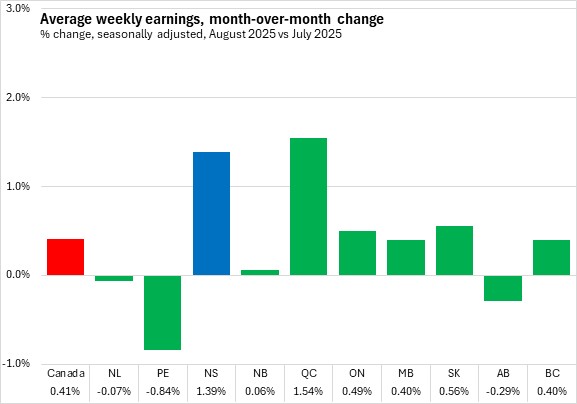
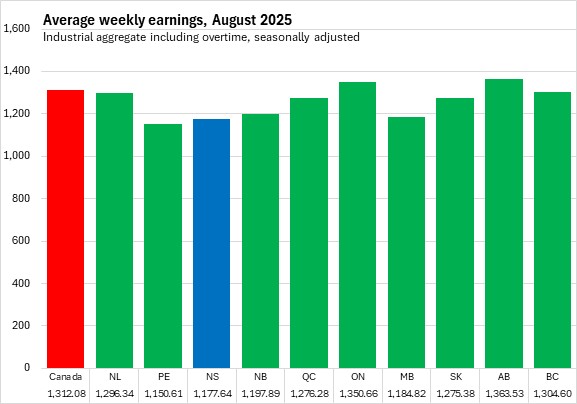
Nova Scotians' average weekly earnings were $1,177.64 in August 2025, a gain of $16.15 (+1.39%) from July 2025, the second fastest gain among provinces.
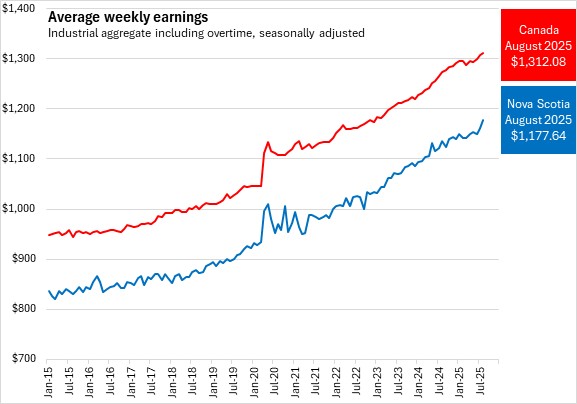
Nationally, average weekly earnings were $1,312.08, a gain of 0.41% (+$5.31) from average weekly earnings in July. Seven provinces reported gains in average weekly earnings with the fastest gain in Québec. The fastest decline was reported in Prince Edward Island.
Nova Scotia's average weekly earnings in August 2025 were second lowest among provinces, ahead of Prince Edward Island. Alberta reported the highest average weekly earnings.
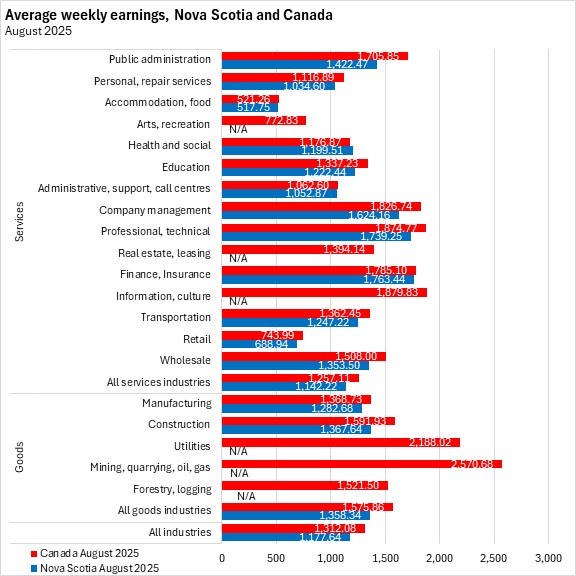
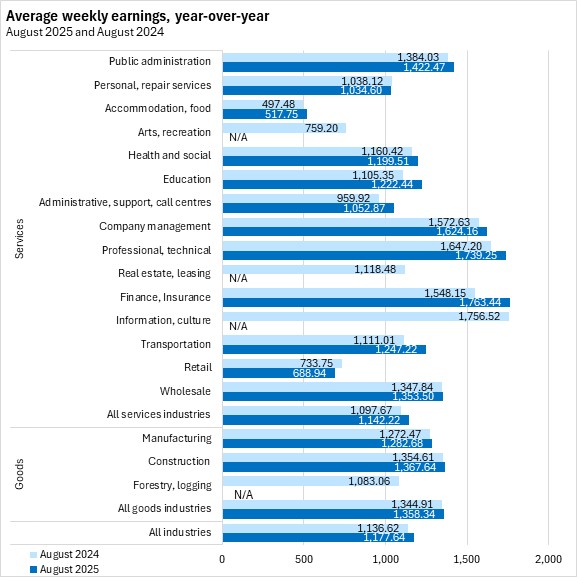
Nova Scotia's average weekly earnings were highest in finance/insurance, professional/technical services, and company management industries. The lowest average weekly earnings were reported in Nova Scotia's accommodations/food service industries, and retail trade.
(Note: data are not available for Nova Scotia's utilities and mining sectors, and were not available in August 2025 for: forestry/logging, information/culture, real estate/rental/leasing, and arts/entertainment/recreation.)
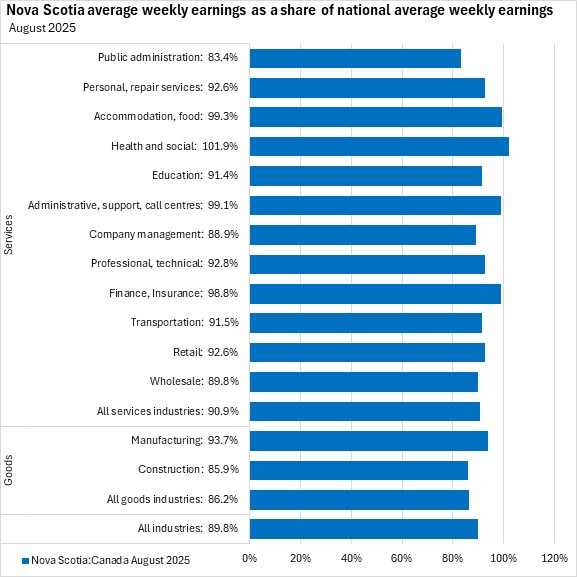
In August 2025, Nova Scotia's average weekly wages were 89.8% of the national average. Nova Scotia average weekly wages were below the comparable national average for every industry except health/social assistance. The smallest gaps were reported among accommodations/food services, and administrative/support/call centres. The largest gap was reported in public administration (83.4% of the national average).
Year-over-year (August 2025 vs August 2024)
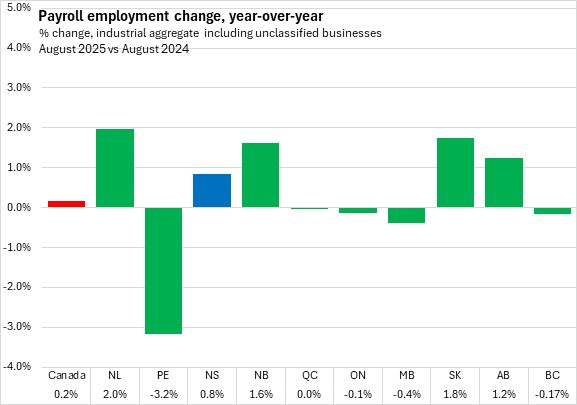
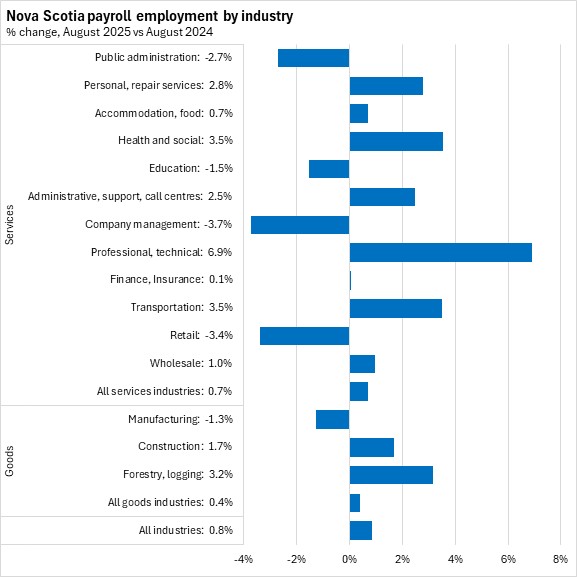
Compared with the same month in 2024, Nova Scotia's payroll employment grew by 0.8% (+3,858) in August 2025. This was faster than the national average gain of 0.2%. Five provinces reported growth in payroll employment, with the fastest gains in Newfoundland and Labrador, Saskatchewan, and New Brunswick. The fastest decline was reported in Prince Edward Island.
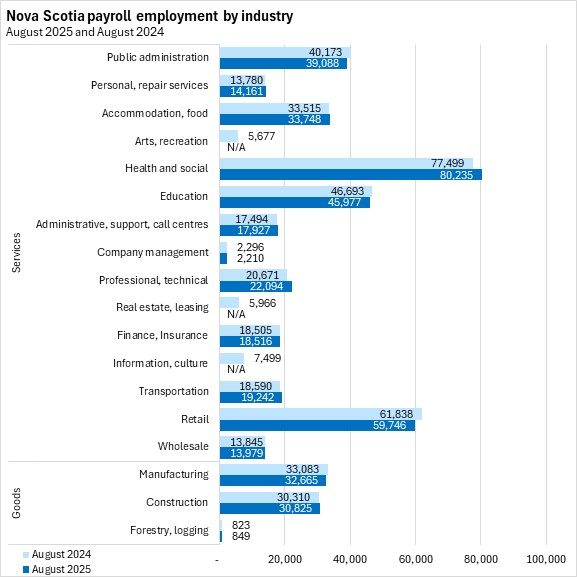
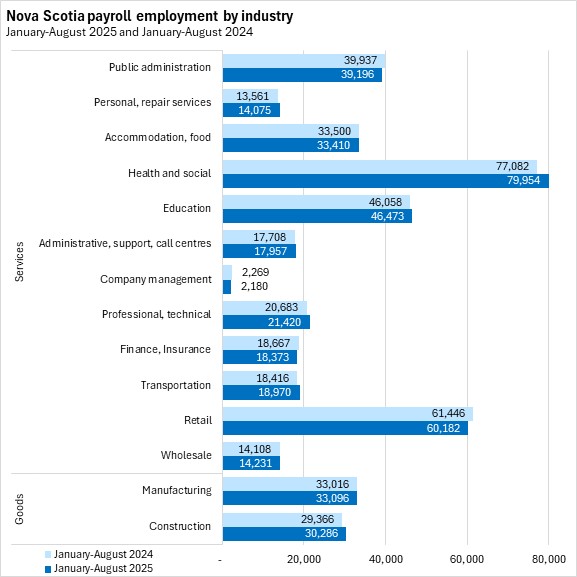
Among the industries reported on by Statistics Canada, Nova Scotia's largest industries of employment were health care/social assistance (which includes daycares), followed by retail trade and education.
(Note: data are not available for Nova Scotia's utilities and mining sectors, and were not available from January 2025 to August 2025 for: information/culture, real estate/rental/leasing, and arts/entertainment/recreation.)
Professional/technical services had the fastest year-over-year growth in payroll employment in Nova Scotia, followed by transportation and health/social assistance. Company management, public administration, retail trade, education, and manufacturing reported declines in payroll employment.
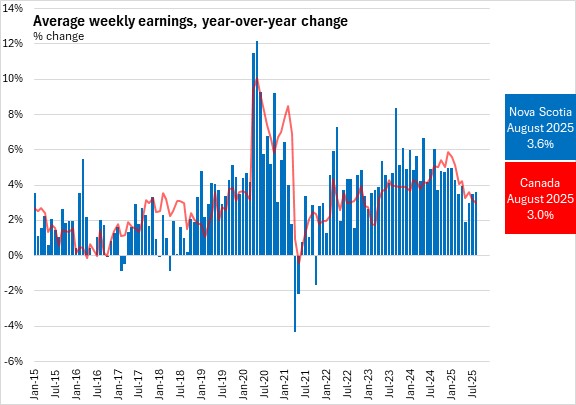
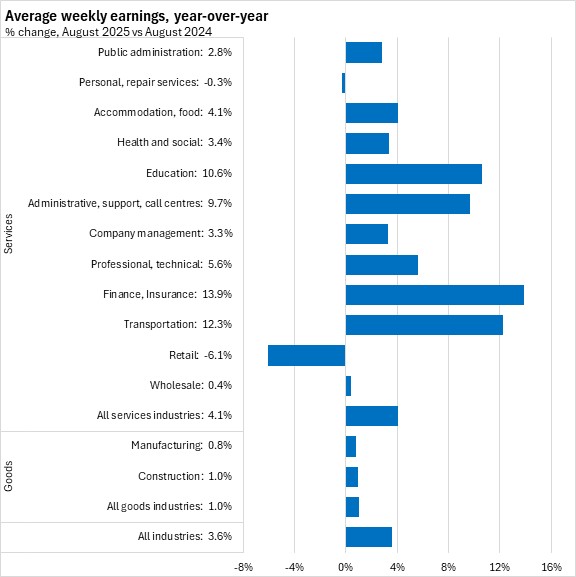
Average weekly wages grew by 3.6% in Nova Scotia from August 2024 to August 2025. This was stronger than the national pace of 3.0%.
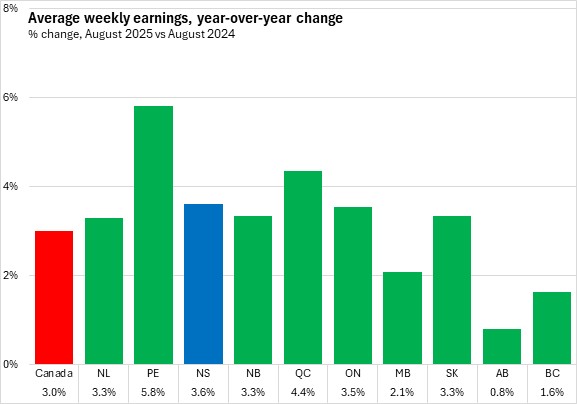
There were average weekly wage gains in each province, with the fastest increases in Prince Edward Island and Québec. Alberta reported the slowest gain.
Average weekly wages were up 1.0% in Nova Scotia's goods-producing industries and up 4.1% in Nova Scotia's services-producing industries. All of the reported industries except retail trade and personal/repair services had year-over-year growth in average weekly wages with the largest increases in finance/insurance and transportation.
(Note: data are not available for Nova Scotia's utilities and mining sectors, and were not available in August 2025 for: forestry/logging, information/culture, real estate/rental/leasing, and arts/entertainment/recreation.)
Year-to-date (January-August 2025 vs January-August 2024)
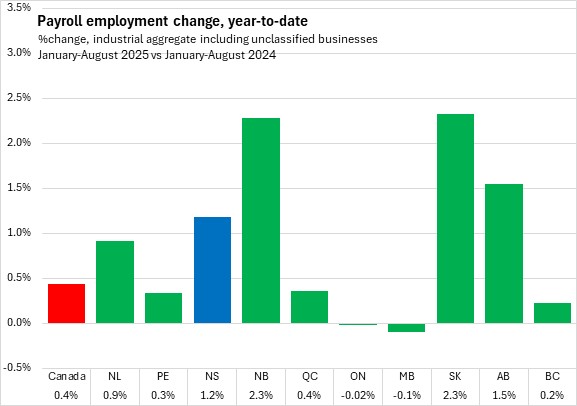
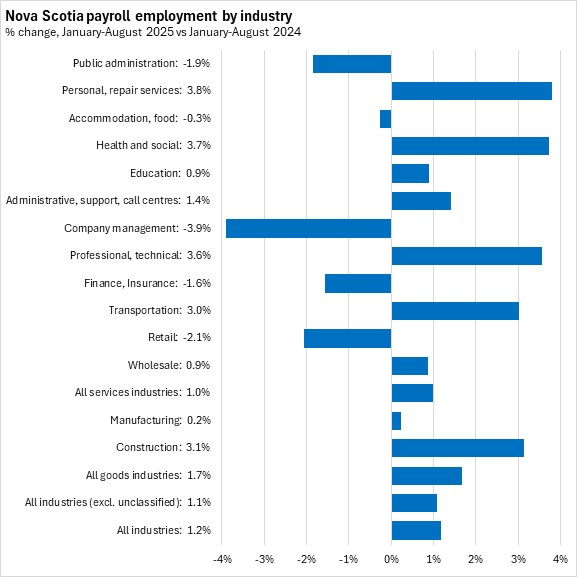
In the first eight months of 2025, Nova Scotia's payroll employment increased 1.2%. This was faster than the national average of 0.4% as all provinces reported growth except Ontario and Manitoba. The fastest year-to-date growth was reported in Saskatchewan and New Brunswick.
Personal/repair services, health care/social assistance, and professional/technical reported the fastest growth in payroll employment in the first eight months of 2025 in Nova Scotia. The fastest declines were reported in company management and retail trade.
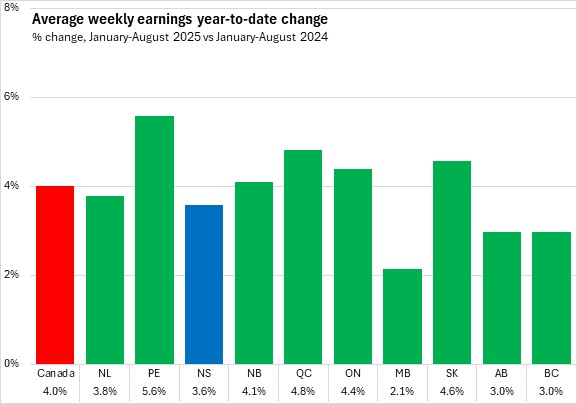
In January-August 2025, average weekly earnings grew 3.6% in Nova Scotia compared to the same period last year. National average weekly earnings grew 4.0% with all provinces reporting growth over this period. Prince Edward Island reported the fastest growth while Manitoba reported the slowest.
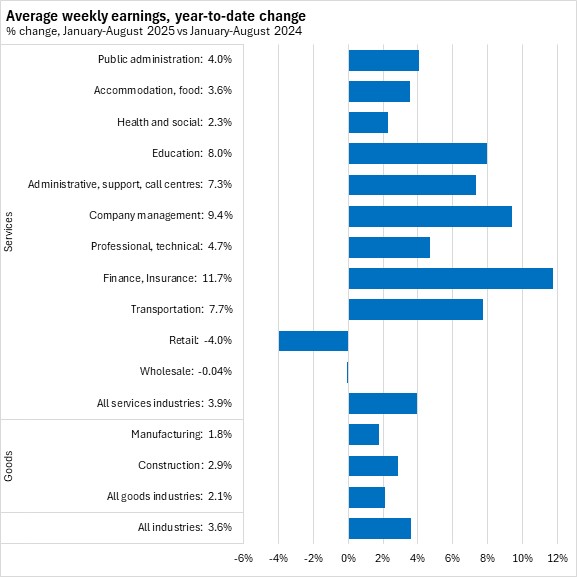
Nova Scotia's average weekly earnings were highest in professional/technical services, company management, finance/insurance, and public administration in the first eight months of the year. Average weekly earnings among payroll employees grew the fastest for finance/insurance, company management, and education. Retail and wholesale trade reported lower average weekly earnings, year-to-date.
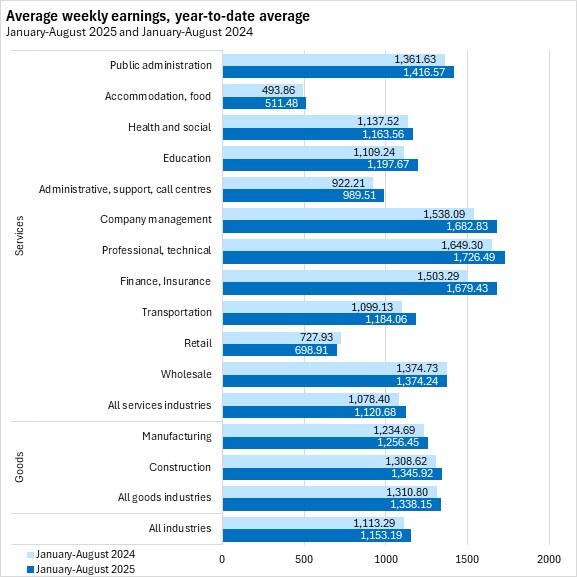
Nova Scotian average weekly earnings were below the national average for all reported industries in the first eight months of 2025 (average: 88.8%). The gap was smallest for health/social assistance (99.6% of the national average) and accommodation/food services (99.2% of the national average). The gaps were largest for public administration (84.3% of the national average) and construction (84.9% of the national average).
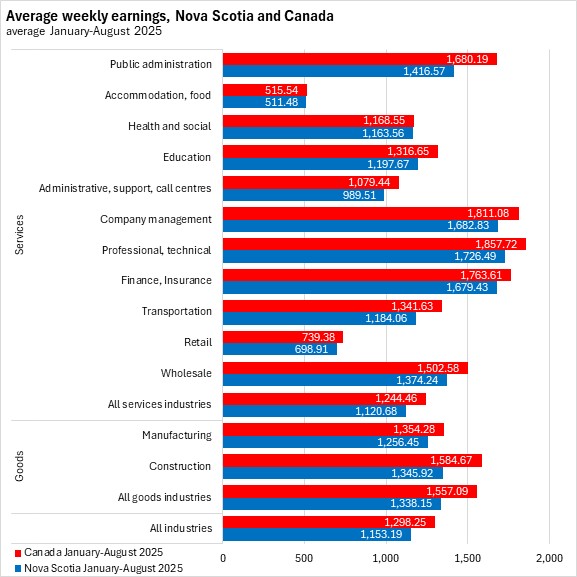
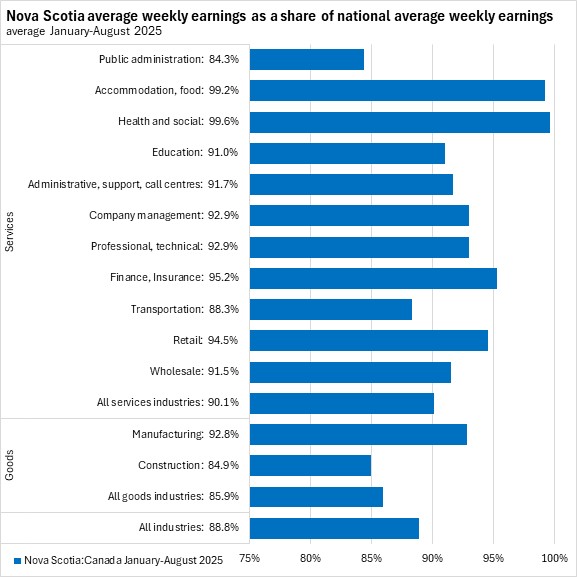
Source: Statistics Canada. Table 14-10-0222-01 Employment, average hourly and weekly earnings (including overtime), and average weekly hours for the industrial aggregate excluding unclassified businesses, monthly, seasonally adjusted; Table 14-10-0223-01 Employment and average weekly earnings (including overtime) for all employees by province and territory, monthly, seasonally adjusted
<--- Return to Archive


