The Economics and Statistics Division maintains archives of previous publications for accountability purposes, but makes no updates to keep these documents current with the latest data revisions from Statistics Canada. As a result, information in older documents may not be accurate. Please exercise caution when referring to older documents. For the latest information and historical data, please contact the individual listed to the right.
<--- Return to Archive
For additional information relating to this article, please contact:
November 10, 2025PROVINCIAL GDP BY INDUSTRY 2024 [REVISED] Statistics Canada released revised estimates of real GDP by industry for the provinces and territories in 2024. Real GDP growth is measured at the industry level with chained 2017 dollars at basic prices (sellers' prices before taxes less subsidies on products) that removes the effect of price changes.
2024 vs 2023
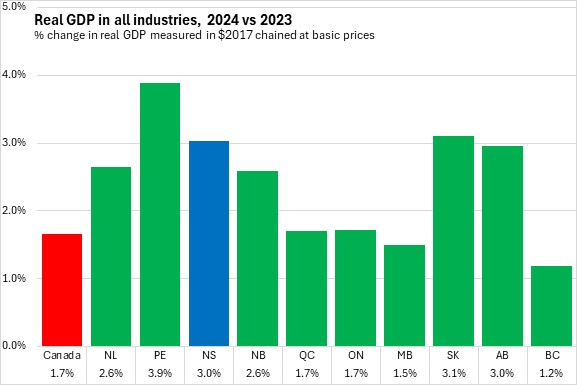
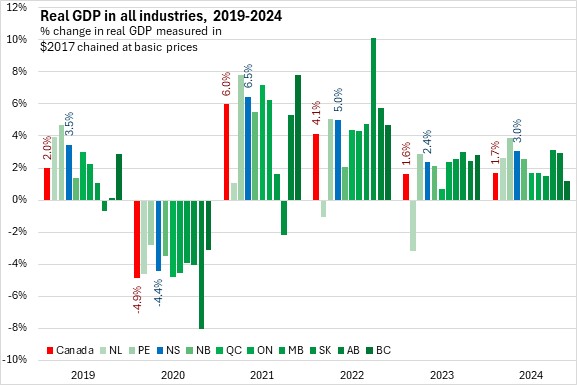
Nova Scotia's real GDP increased 3.0% in 2024, third fastest among provinces behind Saskatchewan and Prince Edward Island. Nationally, real GDP grew by 1.7%. All provinces reported rising real GDP in 2024 with the slowest gain in British Columbia.
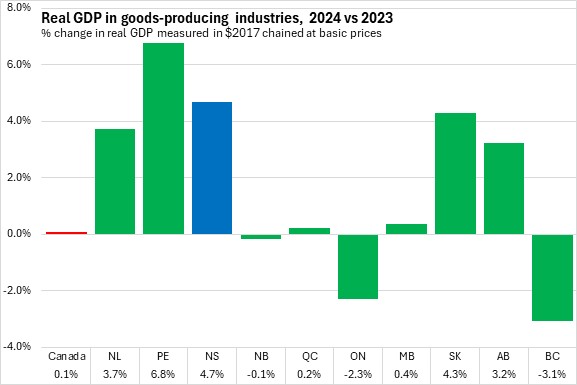
Real GDP from goods industries rose 4.7% in Nova Scotia in 2024. Real GDP from goods industries was up 0.1% nationally with gains in seven provinces. Prince Edward Island reported the fastest increase in real GDP from goods industries in 2024 (followed by Nova Scotia) while British Columbia reported the steepest decline.
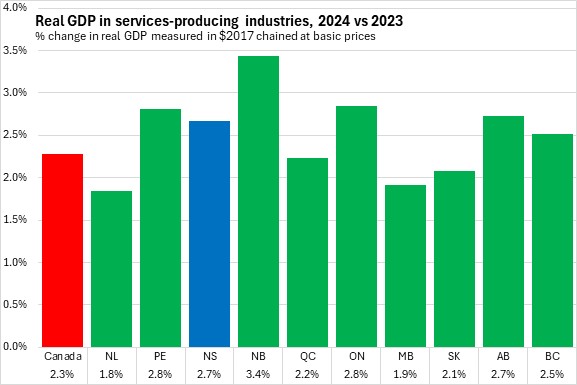
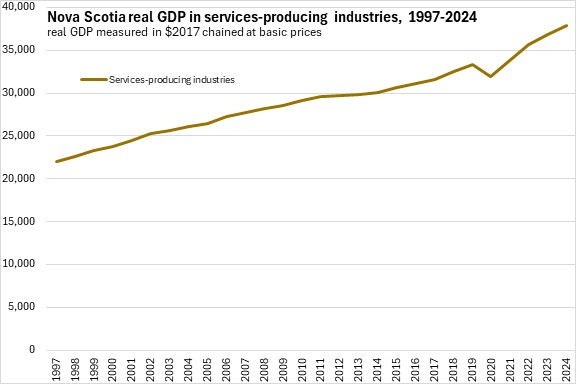
Nova Scotia's real GDP from services-producing industries was up 2.7% in 2024, faster than the national pace of 2.3%. Real GDP from services-producing industries was up for every province, led by New Brunswick. Newfoundland and Labrador reported the slowest real GDP growth from services-producing industries.
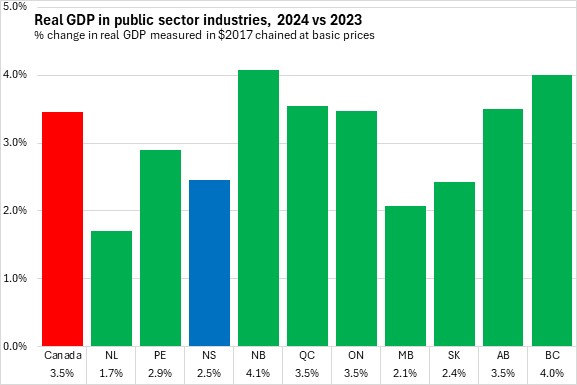
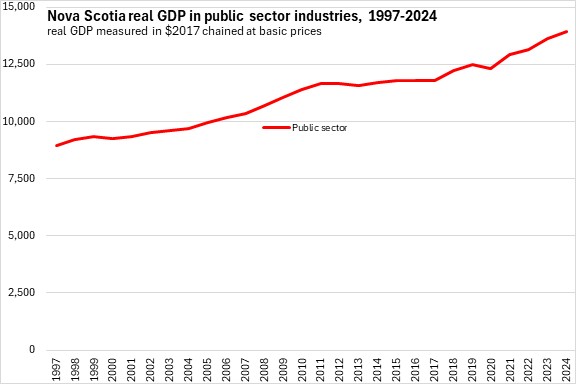
Nova Scotia's real GDP from public sector industries (which are a subcomponent of services-producing industries) was up 2.5% in 2024. Nationally, real GDP from the public sector increased by 3.5% with gains in all provinces. New Brunswick and British Columbia reported the fastest rise in real GDP from the public sector while Newfoundland and Labrador reported the slowest gain.
Trends
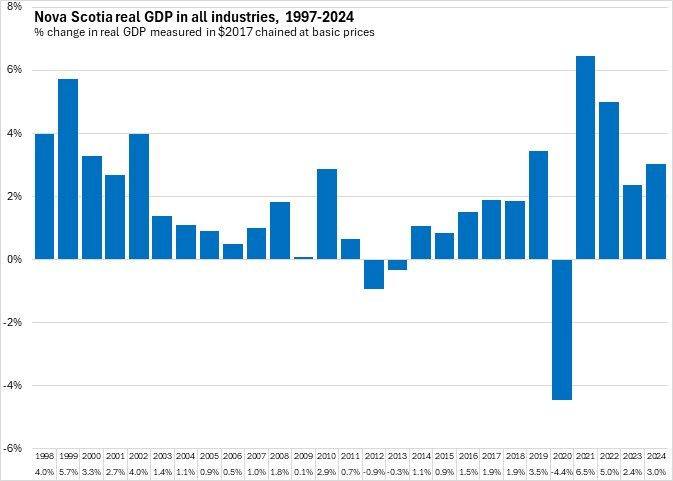
Nova Scotia's real GDP growth was distorted during the pandemic and recovery periods. Real GDP growth has normalized in 2023 and 2024.
Nova Scotia's real GDP growth in the last two years remains slightly above pre-pandemic trends.
Real GDP per capita
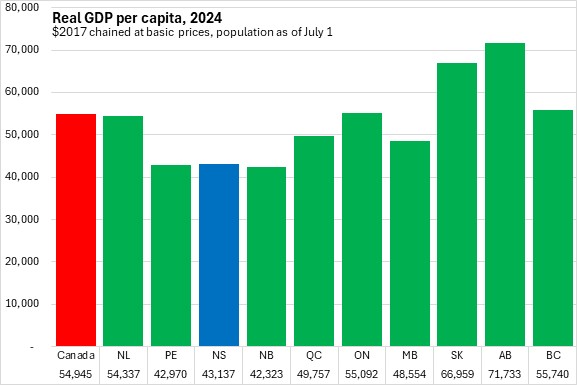
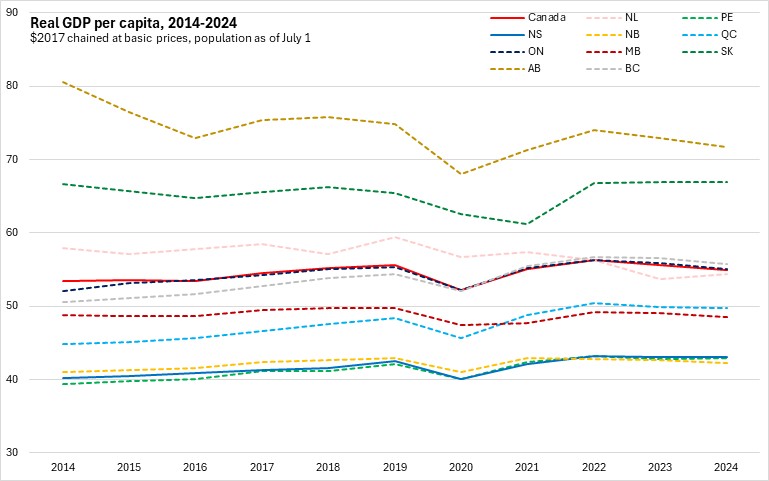
Nova Scotia has the third lowest real GDP per capita among provinces. The Maritime provinces have the lowest real GDP per capita, followed by Manitoba and Québec. Saskatchewan and Alberta report the highest levels of real GDP per capita among provinces. Real GDP per capita is similar to the national average in Newfoundland and Labrador, Ontario and British Columbia.
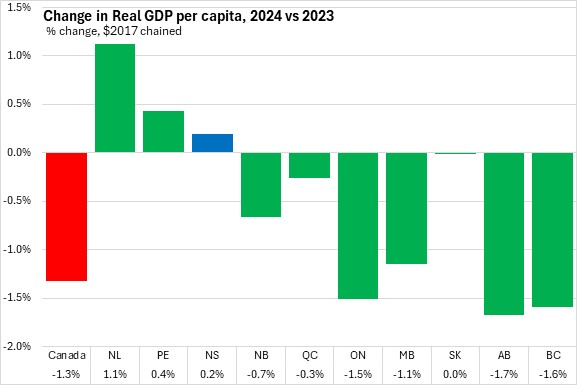
With real GDP growth outpacing population gains, Nova Scotia's real GDP per capita grew 0.2% in 2024. Three provinces reported growth in real GDP per capita. Nationally, population gains outpaced real GDP per capita growth resulting in a 1.3% decline in real GDP per capita. The steepest declines in real GDP per capita were in Alberta.
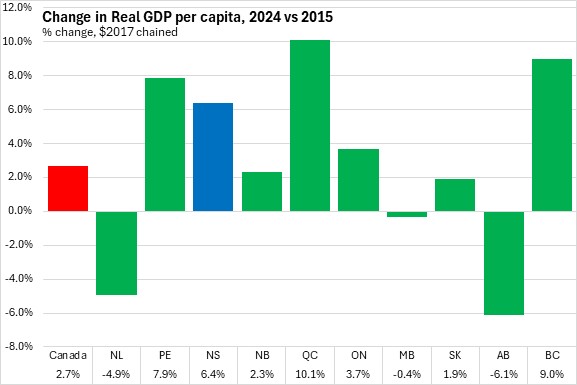
Over the last 10 years, Nova Scotia's real GDP per capita has increased by 6.4% - faster than the national average. Québec reported the fastest growth in real GDP per capita from 2015-2024, followed by British Columbia. Three provinces reported declining real GDP per capita from 2015-2024, led by Alberta and Newfoundland and Labrador.
Nova Scotia GDP by industry
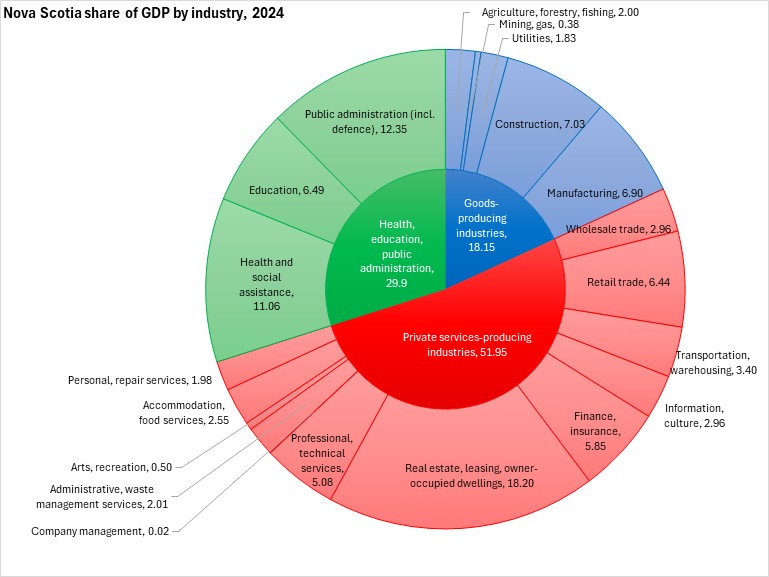
In 2024, goods production accounted for 18% of Nova Scotia's GDP while largely-private service producing industries accounted for just over 51% of Nova Scotia's GDP. Largely-public services (health, education, public administration) accounted just under 30% of Nova Scotia's GDP.
The fastest growing industry in Nova Scotia's economy in 2024 was construction. Although mining, oil and gas along with company management reported the largest declines in real GDP, these two industries are relatively small. Among larger industries, agriculture/forestry/fishing, repair/mantenance, and arts/entertainment/recreation reported the fastest real GDP declines in 2024.
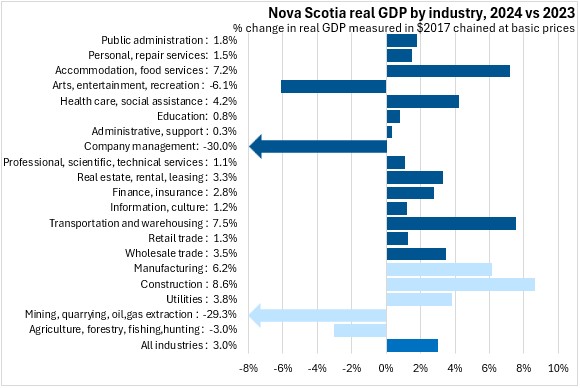
Based on size as well as change, real estate (including imputed rental GDP from owner-occupied dwellings) made the largest positive contribution to Nova Scotia's real GDP growth in 2024. This was followed by construction, manufacturing, and health care/social assistance (including daycare). The largest downward pressures on Nova Scotia's real GDP in 2024 came from mining and agriculture/forestry/fishing.
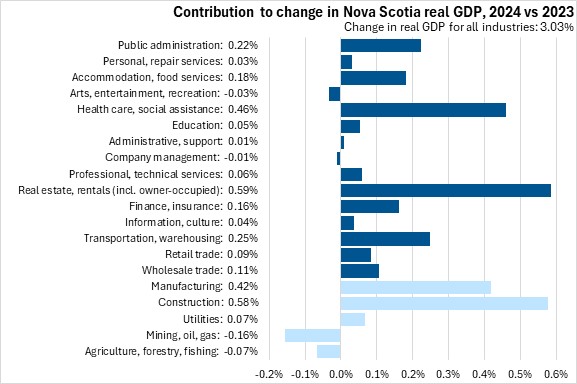
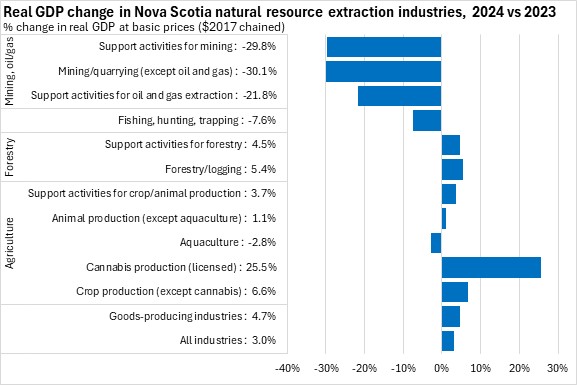
Real GDP was up for agriculture (small decline for aquaculture) and forestry in Nova Scotia in 2024, while there was a decline in fishing output. Mining/quarrying, as well as support activities for mining and oil/gas were down in 2024.
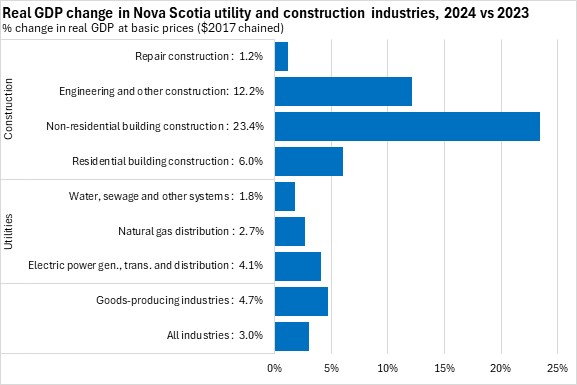
Nova Scotia's utilities real GDP was up for all subsectors, with faster growth for electric power than natural gas or water/sewage. GDP was up among all construction industries, with the strongest growth among the non-residential building construction.
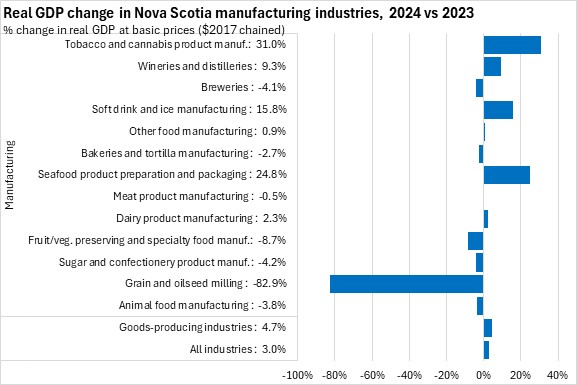
Real GDP was down in 2024 for many of Nova Scotia's food and beverage manufacturing industries, however, this was more than offset by a large increase in GDP from the seafood production preparation industry. The steepest decline was among grain and oilseed milling and strongest gain in tobacco and seafood product manufacturing.
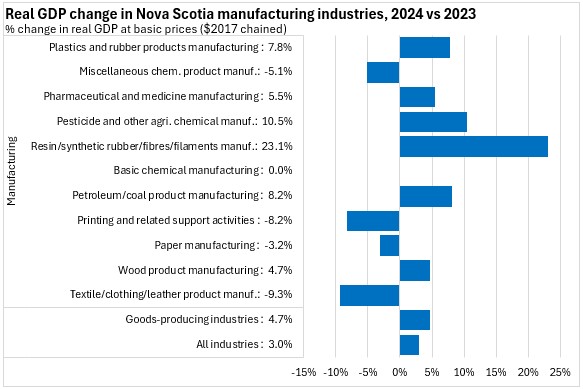
Rubber, plastics, resin/synthetic rubber, reported a notable rise in real GDP in 2024. There were declines in real GDP from Nova Scotia's textiles, clothing and printing manufacturing industries last year. Real GDp was up for wood products, but down for paper manufacturing.
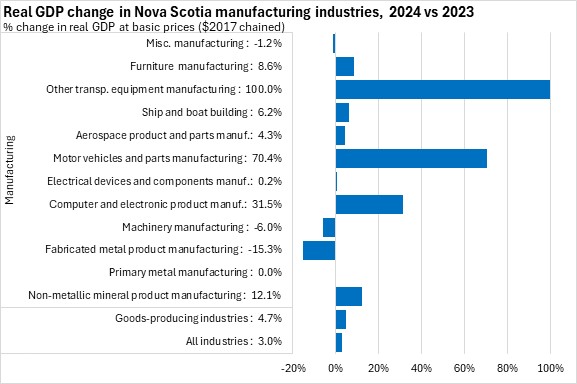
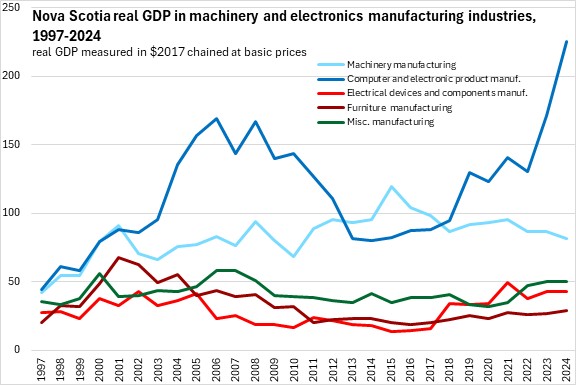
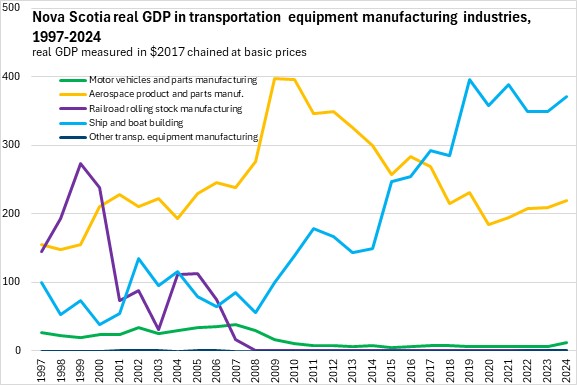
Nova Scotia's sizable aerospace and shipbuilding industries reported GDP gains. Real GDP increased significantly for Nova Scotia's motor vehicles and parts manufacturing, computer/electronics as well as in other transportation equipment (small value to start with) manufacturing, with declines among fabricated metal and machinery manufacturing.
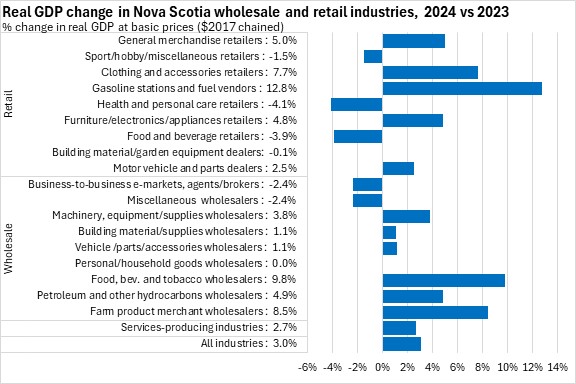
Most wholesale subsectors reported real GDP growth in 2024, with the strongest growth in food/beverage/tobacco and farm products. The fastest real GDP growth among retailers was for clothing/accessories and gas stations.
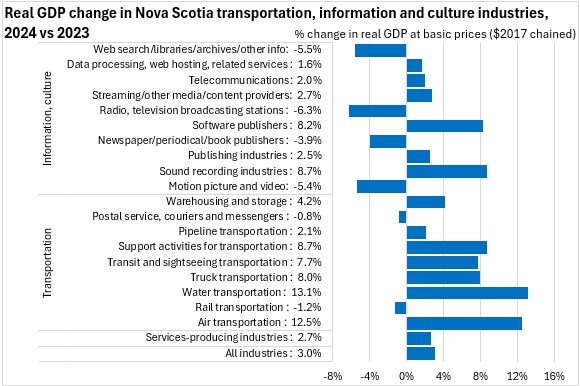
In transportation, all subsectors except rail and postal service/couriers reported growth, with the fastest gain for water transportation. In information/culture industries, software publishing and sound recording posted larger gains in real GDP. There were notable declines in real GDP from Nova Scotia's radio/television broadcasting motion picture/video, newspaper/periodical and web search/libraries/archives industries.
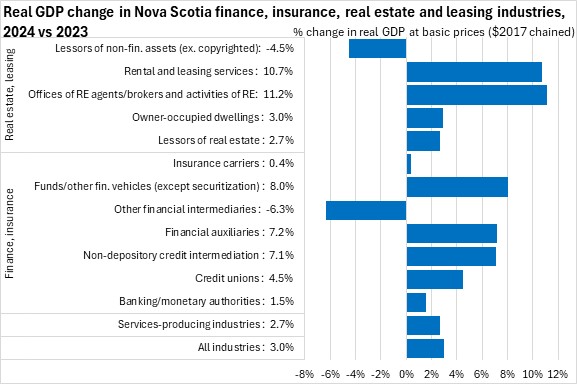
Finance and insurance industries (except other financial intermediaries) posted gains in real GDP 2024 in Nova Scotia. Rental/leasing and offices of real estate agents were up notably in 2024 with the only decline in lessors of non-financial assets (excluding copyrighted assets).
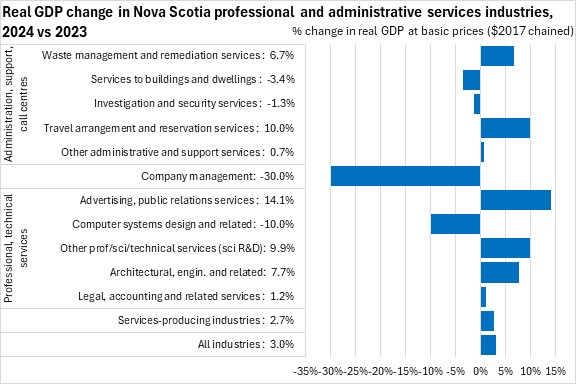
Real GDP from company management posted a substantial decline in 2024 (though this includes reclassification of activities into different industries). Among professional services, there was notable real GDP growth for advertising/public relations services and declines among computer systems design. In administrative/support industries (which includes call centres) there was growth in real GDP from travel arrangements and waste management/remediation.
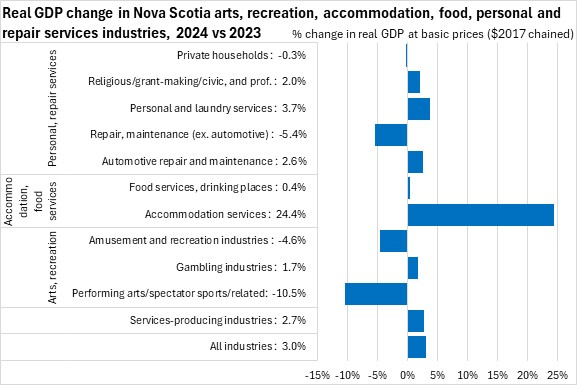
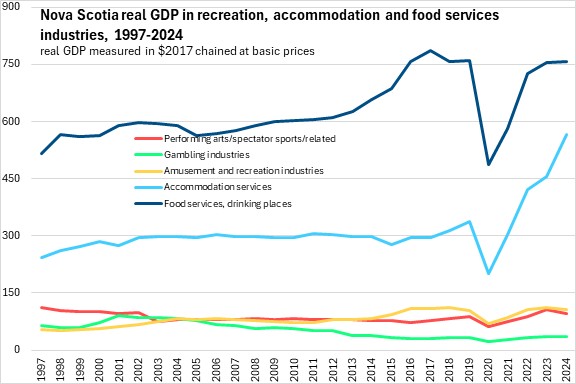
Growth was reported among gambling industries in the arts/recreation industries as well as accommodation/food services. Among other services, declines for repair (except automotive) and private households were largely offset by growth in automotive repair/maintenance and personal services.
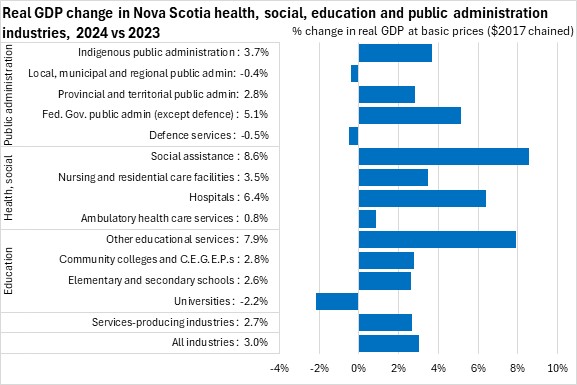
Most subsectors of health, education and public administration industries reported rising real GDP in 2024 - with the exceptions of universities. Other educational services, social assistance (including daycares) and hospitals reported the fastest gains.
Trends in Nova Scotia real GDP by industry
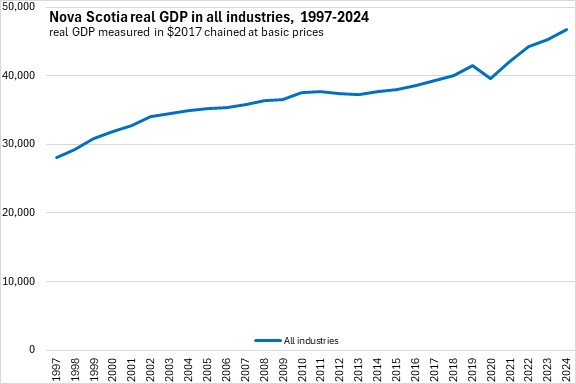
In the 28 years of data from 1997 to 2024, there have been notable changes in the real GDP generated by specific industries. These charts show the value of real GDP from 1997-2024 for most industries in the Nova Scotia economy. Real GDP is measured in 2017 (chained) dollars at basic prices. Changes in the level of real GDP for each industry indicate how its real output has changed, absent the effects of changes in output prices.
Nova Scotia's real GDP grew more rapidly from 1997-2002 as new production facilities (natural gas, supercalendered paper) were built and brought into production. Real GDP growth slowed, but remained largely positive from 2002-2011. In 2012 and 2013, Nova Scotia's real GDP contracted with industrial closures in forest products and petroleum refining as well as reductions in real GDP from the Federal government. Growth started to accelerate again from 2014 to 2019 before the contractions of the first waves of COVID-19 in 2020. Nova Scotia's real GDP rebounded quickly from the COVID recession of 2020 with stronger growth in both 2021 and 2022 before slowing in 2023. Growth appears to be returning to pre-pandemic trends.
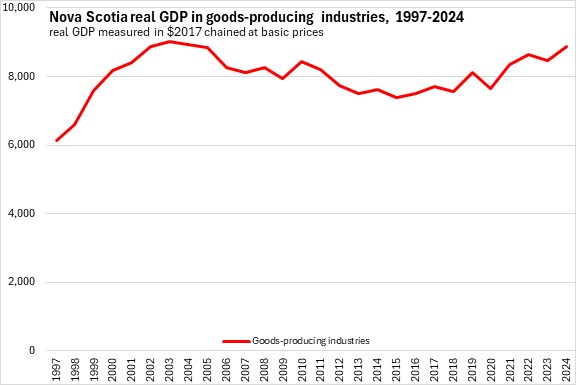
Real GDP from Nova Scotia's goods producing industries peaked in the early 2000s and trended down over the next ten years. Part of this contraction was due to slowing natural gas production as peak output on initial production is ordinary for this industry. Real GDP from Nova Scotia's goods-producing industries started to recover prior to the pandemic, but there was a contraction in 2020 (including the end of wood pulp production). Nova Scotia's goods industry real GDP rebounded in the years following the pandemic and has reported growth in three of the four years following 2020.
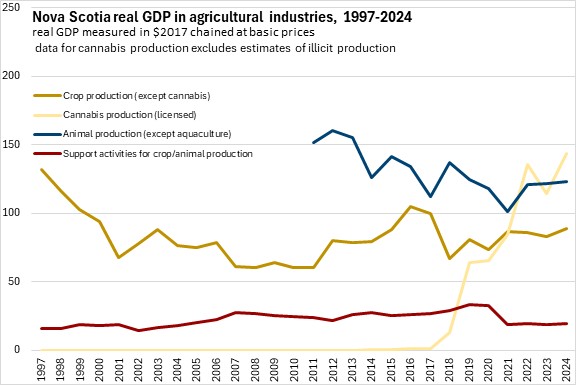
Nova Scotia's real GDP from agricultural industries has grown largely on rising cannabis production (this estimate excludes illicit production). Although there are intermittent periods of faster growth and decline, real GDP from non-cannabis crops has grown slowly while real GDP from animal production has trended down (and has remained relatively flat since 2021). Support activities for crop and animal production have grown modestly until 2019 and have not recovered after a decline in 2021 to pre-pandemic levels.
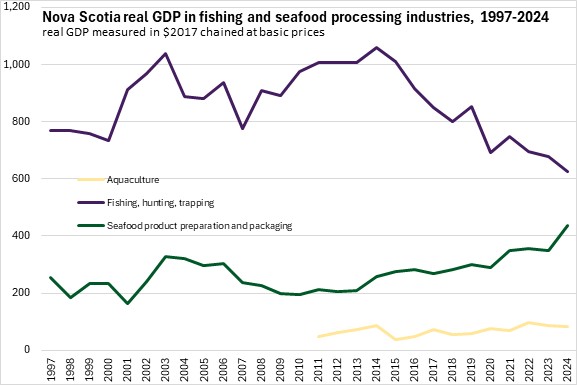
Real GDP from Nova Scotia's fishing and seafood industries has declined in recent years, despite rising export values. Although the volume of output has been lower, these industries have benefited from higher prices in more diverse markets.
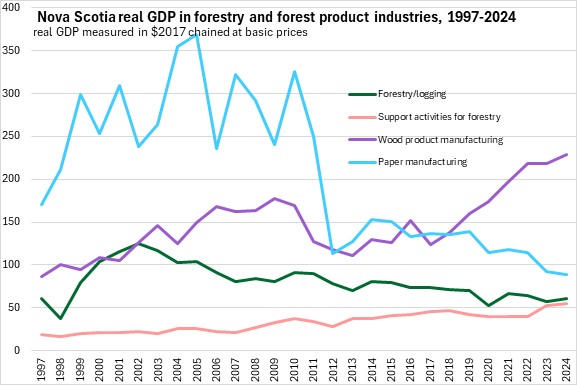
Nova Scotia's forestry and forest product industries have experienced substantial declines in recent decades, particularly with closures of paper production in 2012 and pulp production in 2020. Although real GDP from forestry declined, lumber production volumes increased from 2017 to 2021. Lumber production declined in 2022 and subsequently grew in 2024.
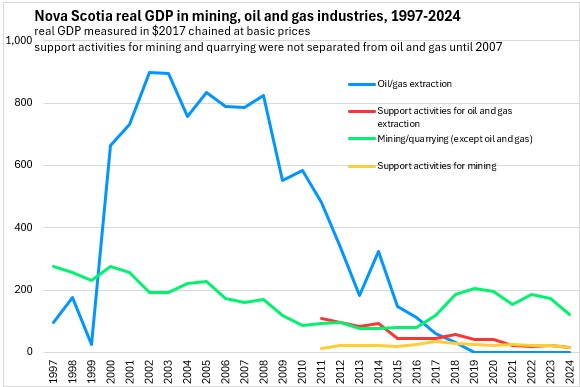
Nova Scotia's oil and gas output peaked in the early 2000s and ended by 2019. Mining and quarrying real GDP declined through 2013, but started to grow again from 2013-2019 before contracting again in the years since.
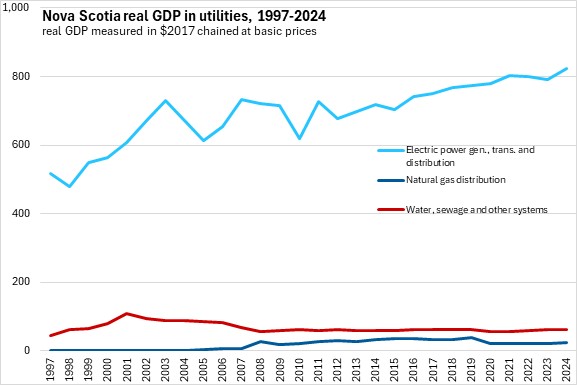
Nova Scotia's real GDP from electric power peaked in 2002 and declined over the next decade. Electric power real GDP has since trended upward at a slower pace.
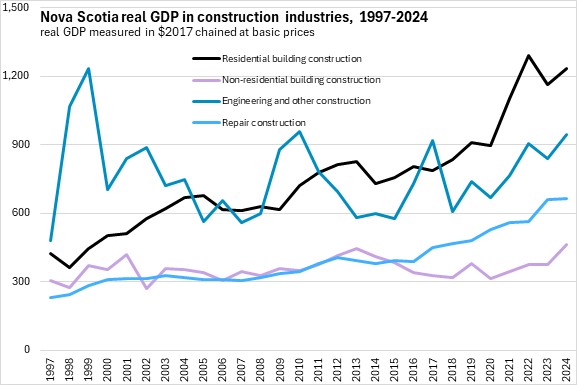
Nova Scotia's real GDP in construction industries has been led by gains in residential building and repair construction, with recent contributions from non-residential construction. Real GDP from engineering construction has been steadily growing since 1997.
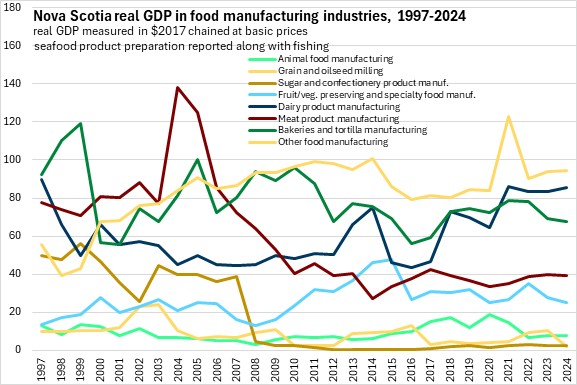
Within Nova Scotia's (non-seafood) food manufacturers, real GDP has been dominated by other food manufacturing category. Most other food manufacturing industries have relatively small real GDP.
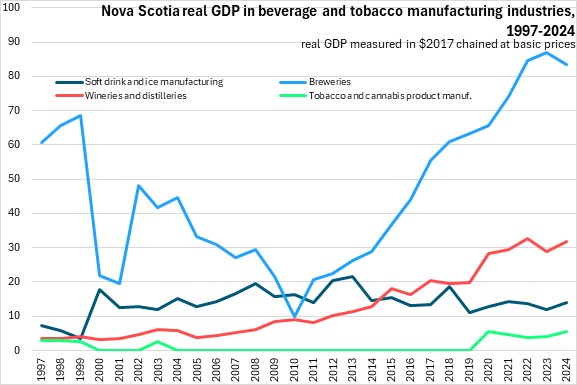
Real GDP from Nova Scotia's beverage and tobacco industries is notably smaller than from many other industries. There has been a notable rise in real GDP from wineries and distilleries (with a decline in 2023). From 2010 to 2023, there was a notable recovery in real GDP from breweries, with a decline in 2024. There has been a recent increase in tobacco and cannabis product manufacturing in Nova Scotia.
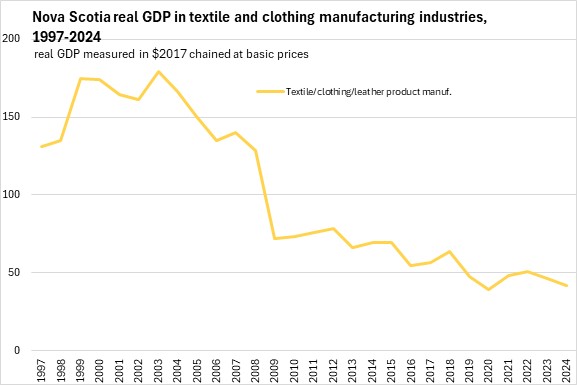
Nova Scotia's textile/clothing/leather product manufacturing reported a sharp decline in output in 2009 and has been on a gradual declining trend since.
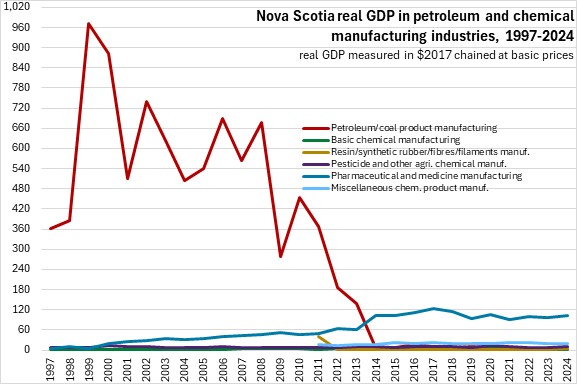
With the closure of the Dartmouth refinery in 2013, Nova Scotia's real GDP from petroleum product manufacturing fell to zero (it had been contracting for several years before that). There has been a steady increase in real GDP from Nova Scotia's pharmaceutical and medicine manufacturers.
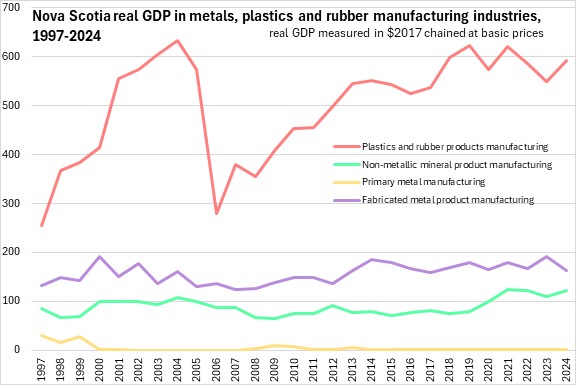
Real GDP from rubber products has exhibited significant increases and declines over the last 26 years. There has been an upward trend in GDP from rubber product manufacturing since 2006 (interrupted by declines and rebounds). In recent years, there have also been increases in real GDP from fabricated metal product manufacturers. Non-metallic mineral product manufacturers (including concrete) rose from 2019-2022 before contracting in 2023 and resuming growth in 2024.
Nova Scotia's computer and electronic product manufacturers experienced declining real GDP from 2006-2017, but have rebounded in the years since with particularly strong growth in the last two years.
Nova Scotia's ship and boat building real GDP has grown substantially since 2008 while Nova Scotia's aerospace/parts producers have trended down since 2010 with some recovery since 2020.
Real GDP from Nova Scotia's services-producing industries (including public sector) has risen steadily in most years with the exception of 2020.
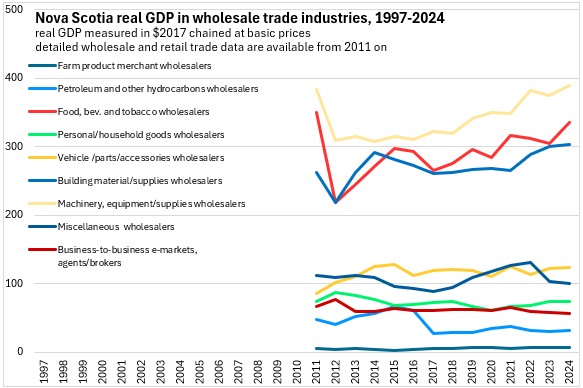
Within wholesale trade by industry (only available since 2011), real GDP has grown more rapidly in recent years for machinery/equipment wholesalers. Following contractions in 2022 and 2023, food/beverage/tobacco wholesalers reported notable growth in 2024.
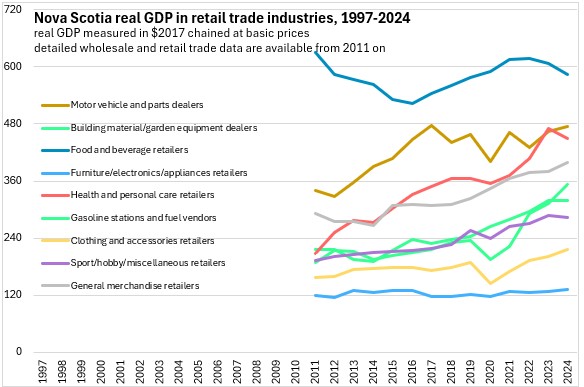
In retail trade, recent real GDP growth for food/beverage stores has eroded over the last three years. Motor vehicles/parts dealers have experienced volatile real GDP since 2017. There has been recent increases in real GDP from health/personal care stores, gas stations and building materials/garden supply retailers.
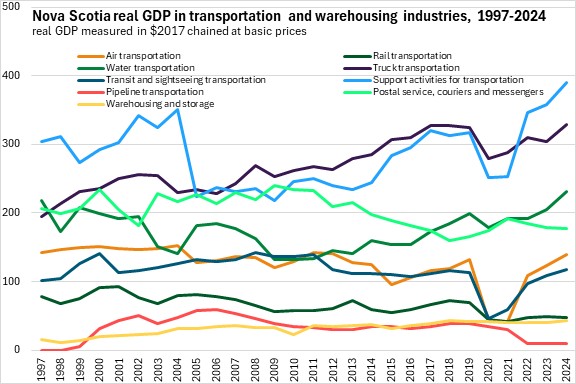
Transportation industries exhibited sharp declines during periods of pandemic-related restrictions (with the exception of postal/couriers and warehousing). Real GDP from truck transportation rose substantially from 2004-2017 but has levelled off since then. Real GDP from support activities for transportation has growth notably since the pandemic-induced lows. Postal service and courier real GDP has resumed its downward trend in Nova Scotia.
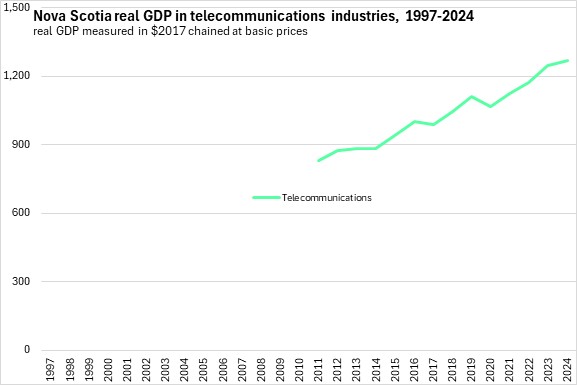
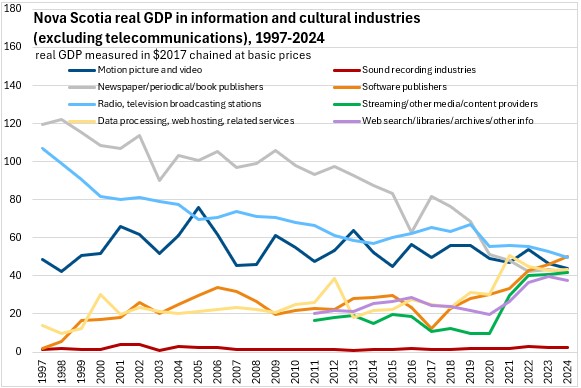
Telecommunications industries are by far the largest portion of Nova Scotia's information and cultural industries. With the exception of 2020, there has been steady and substantial growth in Nova Scotia's telecommunications real GDP since 2014.
Among smaller industries in information and culture, there has been declining real GDP from radio/television broadcasting, newspapers, periodicals/book publishers, and motion picture and video. Web search/libraries/archives, software publishers and streaming services have reported increased real GDP in the last 10 years.
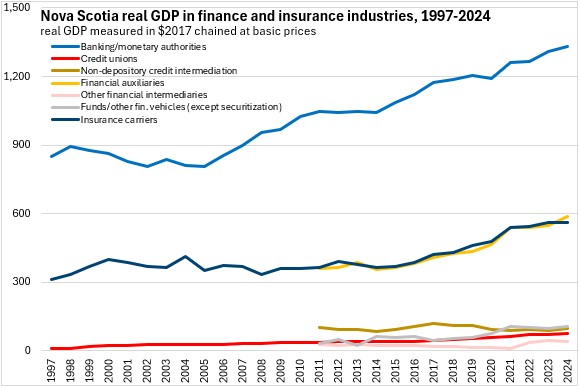
Real GDP from Nova Scotia banking and credit intermediation services has risen steadily since 2014 with the exception of 2020. Real GDP from investment services and funds reported growth from 2009-2021 with a contraction in 2022. Real GDP from insurance carriers rose steadily from 2009.
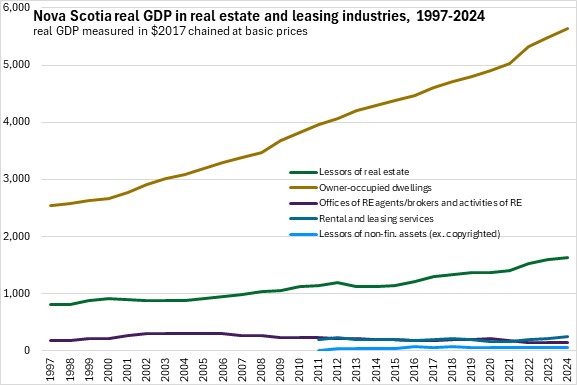
Real GDP by industry includes an imputed value for the real GDP generated by the housing services enjoyed by those who own the dwellings they occupy. This real GDP from owner-occupied dwellings has growth steadily and makes up the largest component of real GDP from real estate (even though it is never measured through an explicit housing services transaction). In contrast, the real GDP from leased real estate is measured explicitly and has also been rising steadily.
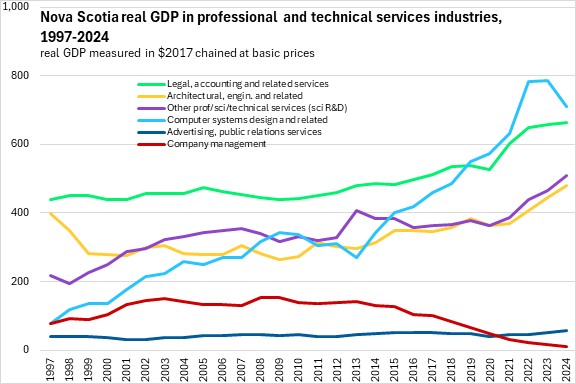
Professional and technical services in Nova Scotia accelerated during the pandemic, particularly for computer systems design. In 2024, computer systems design reported its first decline in real GDP since 2013. There have been increases in real GDP for legal/accounting and architecture/engineering (except in 2020). However, there have been steady declines in real GDP from company management in Nova Scotia (which is not categorized as part of professional/technical services).
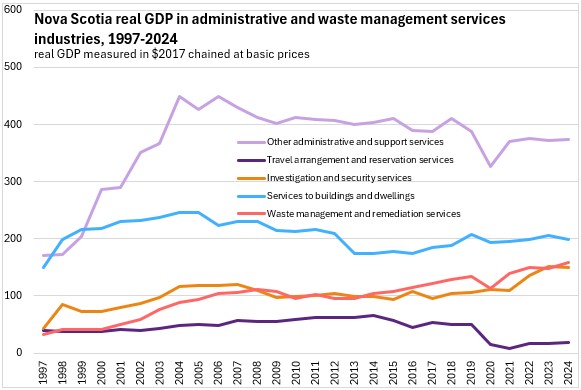
After rising rapidly from 1998-2004, there has been a protracted decline in real GDP from "other administrative/support" industries, which includes call centres. There have been gains in real GDP from investigation/security services and waste management/remediation. Travel arrangement services' real GDP fell sharply during the pandemic and has yet to post much recovery.
High-contact industries in arts/recreation and accommodation/food services exhibited the most severe contractions and rebounds during the COVID-19 pandemic. Food services and drinking places has yet to return to pre-pandemic levels of activity as of 2024, where accommodation services have surpassed pre-pandemic levels.
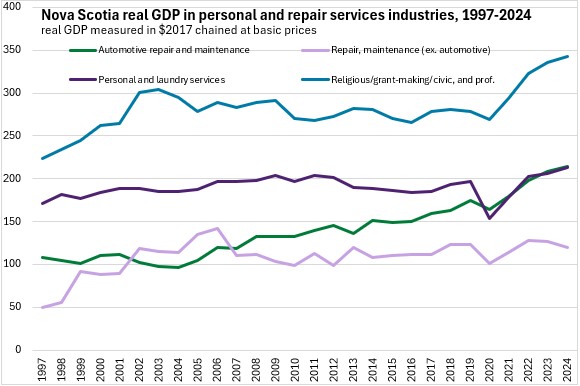
Among other services, there has been steady growth in real GDP from automotive repair since the early 2000s (despite a decline in 2024).
Public sector real GDP increased steadily from 1997-2011 before contracting in the next two years and stabilizing through 2017. Since 2017, there has been a mostly steady rise in public sector real GDP in Nova Scotia, with the exception of 2020.
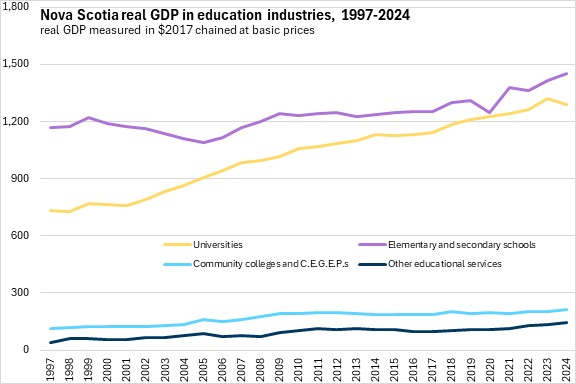
Nova Scotia's real GDP from education industries - which includes both public and private services - has increased largely on rising GDP from universities (along with elementary and secondary schools in since 2020).
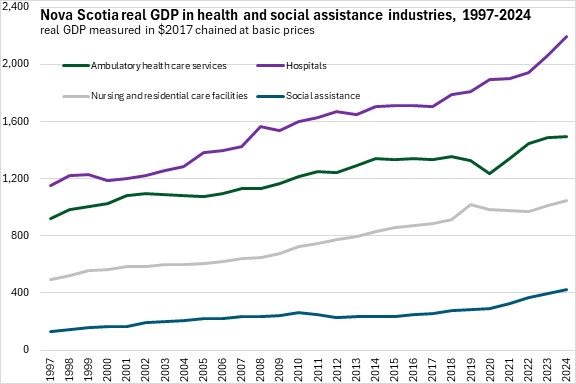
Real GDP from health care and social assistance (including both public and private industries) has been rising largely from hospitals and nursing/residential care facilities, though all subsectors have rising trends.
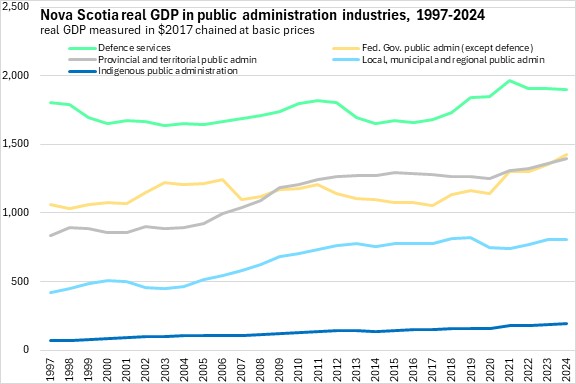
Within government services, there were notable declines in real GDP from Nova Scotia's defence services as well as the broader Federal government from 2011 through 2017. Real GDP from provincial government services contracted from 2013 to 2020, and has been growing since. Since 2017, real GDP from Federal government and defence services have risen faster than real GDP from other government services in Nova Scotia.
Source: Statistics Canada. Table 36-10-0711-01 Gross domestic product (GDP) at basic prices, by industry, provinces and territories (x 1,000,000); Table 36-10-0400-01 Gross domestic product (GDP) at basic prices, by industry, provinces and territories, percentage share
<--- Return to Archive


