The Economics and Statistics Division maintains archives of previous publications for accountability purposes, but makes no updates to keep these documents current with the latest data revisions from Statistics Canada. As a result, information in older documents may not be accurate. Please exercise caution when referring to older documents. For the latest information and historical data, please contact the individual listed to the right.
<--- Return to Archive
For additional information relating to this article, please contact:
December 15, 2025INFRASTRUCTURE ECONOMIC ACCOUNTS, [REVISED] 2024 Statistics Canada has revised infrastructure economic accounts for 2024. These data report the stock of infrastructure, which is diminished by estimated depreciation and increased by investment in new capital. The data are reported for both public and private owners of infrastructure as well as by the type of asset and public service function it performs (categorized in the broad Classification of Functions of Government). Except where public and private infrastructure are explicitly reported, this analysis focuses primarily on infrastructure by function performed, which includes both public and private infrastructure.
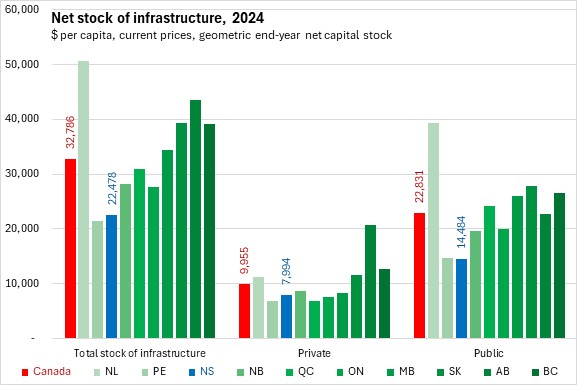
At the end of 2024, Nova Scotia's infrastructure net capital stock was $24.3 billion or $22,478 per person - the second lowest per capita stock of infrastructure after Prince Edward Island. Nationally, infrastructure net capital stock was $1,353 billion or $32,786 per person. Newfoundland and Labrador and Alberta had the highest per capita infrastructure stock at the end of 2024.
Public infrastructure assets make up 64.4% of infrastructure in Nova Scotia - the second lowest public share among provinces (only ahead of Alberta).
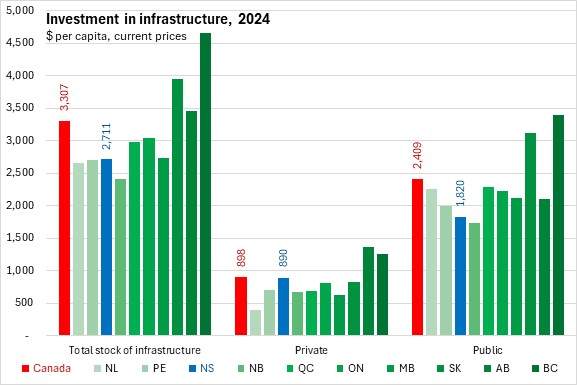
In 2024, a total of $2.935 billion in investments in infrastructure were made in Nova Scotia ($2,711 per capita). Nationally, investment in infrastructure was $3,307 per capita. British Columbia reported the highest per capita investments in infrastructure while New Brunswick reported the least investments. Investment in public infrastructure accounted for 67.2% of Nova Scotia's investment in infrastructure in 2024, the second lowest public share after Alberta.
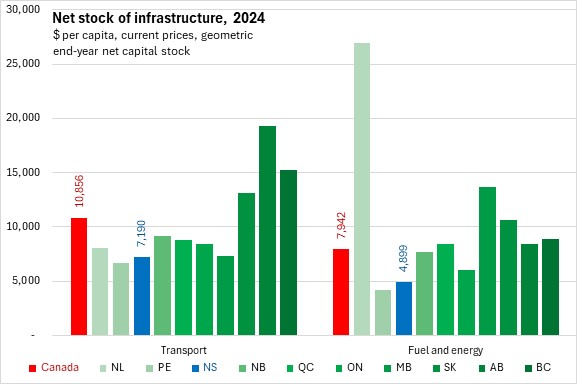
Across Canada, transportation infrastructure (roads, bridges, canals, rails, ports, airports, pipelines) accounts for the largest portion of the stock of infrastructure: $10,856 per capita. Nova Scotia had less transportation infrastructure per capita at $7,190 in 2024 (second lowest after Prince Edward Island).
Fuel and energy infrastructure (primarily power generation and transmission) accounts for the next largest category of infrastructure by function. Nationally, there was $7,942 in fuel and energy infrastructure per capita with the largest amounts in Newfoundland and Labrador and Manitoba. Nova Scotia's fuel and energy infrastructure capital stock was $4,899 per capita - the second lowest among provinces after Prince Edward Island.
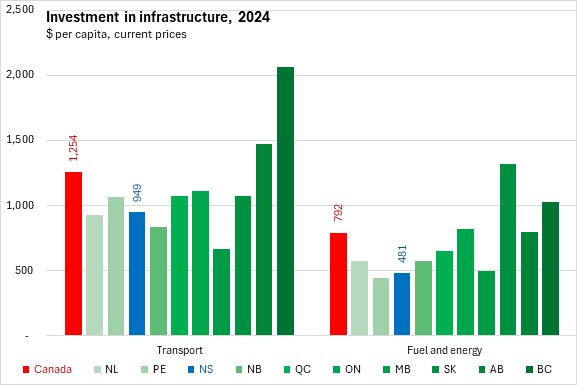
Nova Scotia's 2024 investment in new transportation infrastructure amounted to $949 per capita - below the national average of $1,254 per capita. The highest investments in transport infrastructure were in British Columbia. The lowest investments in transport in 2024 were in Manitoba.
Nova Scotia had $481 per capita in investment in fuel and energy infrastructure. Nationally, investment in fuel and energy infrastructure was $792 per capita with the highest investment in Saskatchewan and the lowest in Prince Edward Island (followed by Nova Scotia).
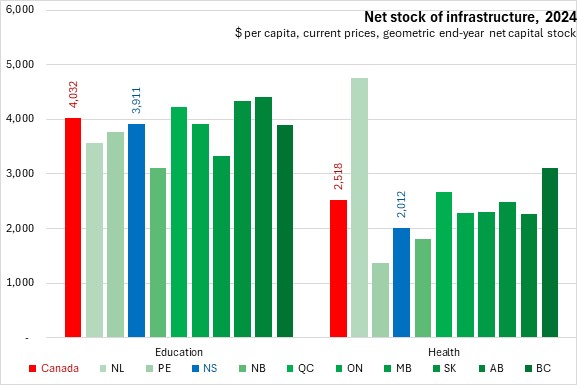
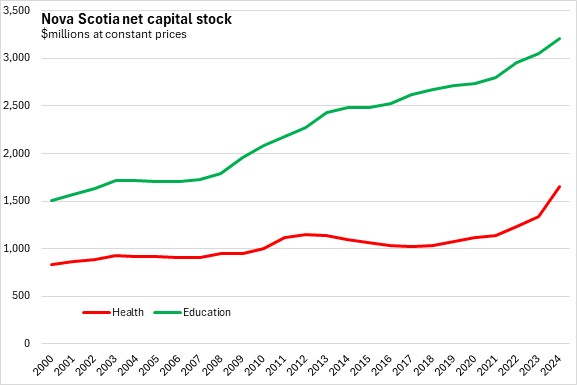
Education (primarily schools, universities, colleges) and health care (hospitals, nursing/residential care buildings) were the next two largest categories of infrastructure by function.
Nova Scotia's education infrastructure amounted to $3,911 per capita in 2024, below the national average of $4,032 per capita. Education infrastructure per capita was highest in Alberta and lowest in New Brunswick.
Health infrastructure in Nova Scotia was the third lowest per capita at $2,012 (ahead of Prince Edward Island and New Brunswick). Nationally, there was $2,518 per capita in health infrastructure, with the highest amount in Newfoundland and Labrador.
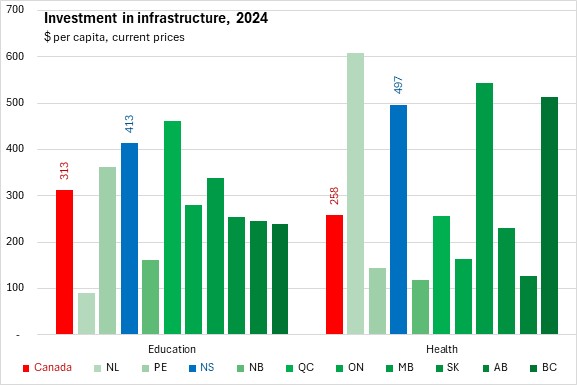
Nova Scotia's investment in education infrastructure was the second highest among provinces in 2024 at $413 per capita. Across Canada, there were $313 per capita worth of investments made in education infrastructure in 2024. The highest per capita investments in education infrastructure were in Québec. Newfoundland and Labrador had the lowest per capita investments in education infrastructure.
Nova Scotia's investment in health infrastructure was $497 per capita, which was higher than the national average of $258 per capita. Newfoundland and Labrador reported the largest per capita investments in health infrastructure. The lowest amount of per capita health infrastructure investments were reported in New Brunswick.
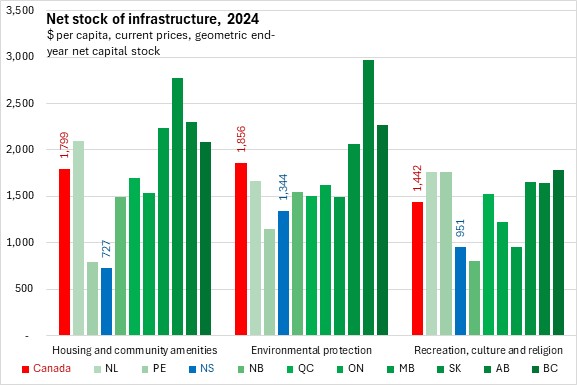
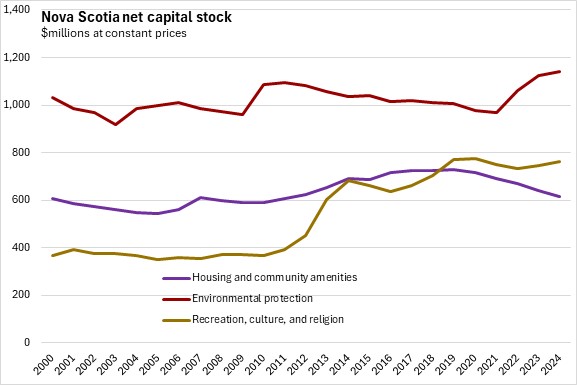
The next three largest categories of infrastructure capital stock by function were: environmental protection (primarily wastewater collection and treatment), housing and community amenities (primarily water infrastructure), and recreation/culture/religion (mostly sport/recreation facilities - both indoor and outdoor).
Nova Scotia has the lowest per capita stock of housing and community amenities (ie: water) at $727. Saskatchewan had the highest housing/community per capita stock.
Nova Scotia has the second lowest per capita stock in environmental protection infrastructure (ie: wastewater) at $1,344, ahead of Prince Edward Island. Alberta had the highest per capita stock in environmental/wastewater infrastructure
Nova Scotia's recreation infrastructure amounted to $951 per capita in 2024, the second lowest among provinces (ahead of New Brunswick and just behind Manitoba). National average recreational capital stock was $1,442 per capita in 2024. Newfoundland and Labrador, Prince Edward Island and British Columbia reported the highest per capita recreational capital stock.
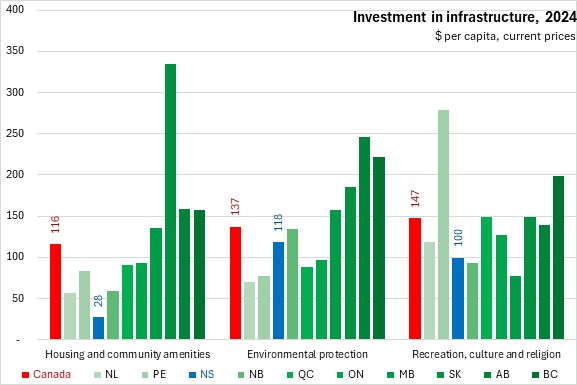
Nova Scotia's per capita investment in housing/water infrastructure ($28 per capita) was the lowest among provinces. National average investments were $116 per capita in 2024 with the highest investment in Saskatchewan.
Nova Scotia's investment in environmental/wastewater infrastructure ($118 per capita) was below the national average of $137 per capita. Alberta reported the largest investments in environmental/wastewater per capita while Newfoundland and Labrador reported the lowest.
Nova Scotia's investment in recreation infrastructure was $100 per capita in 2024. National average investment in recreational infrastructure was $147 per capita. Prince Edward Island reported the largest per capita investments in recreation infrastructure while Manitoba reported the lowest.
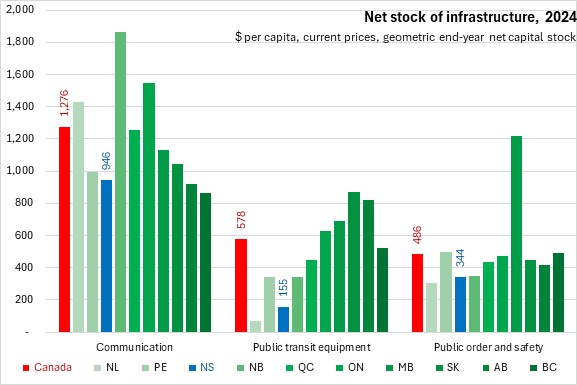
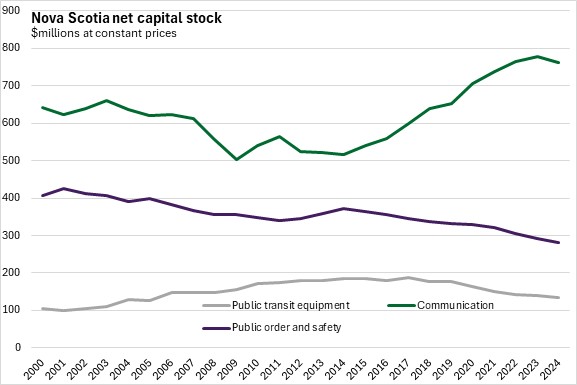
Infrastructure for communications (cables, structures), public transit (buses, rolling rail stock) and public order/safety buildings had the smallest value of per capita stocks as reported by public service function.
Nova Scotia reported communications infrastructure stock of $946 per capita. National communications infrastructure per capita was $1,276 with the highest amount in New Brunswick (lowest: British Columbia).
Nova Scotia's public transit equipment stock was $155 per capita in 2024 - second lowest among provinces ahead of Newfoundland and Labrador. The Atlantic provinces had lower per capita values of public transit infrastructure than central and western provinces. Nationally, there was $578 in public transit infrastructure per capita. The highest amounts were in Alberta and Saskatchewan.
Nova Scotia had $344 per capita in public order and safety infrastructure in 2024. This was below the national average of $486 per capita. The highest public order and safety infrastructure per capita was in Manitoba (by a wide margin) and the lowest in Newfoundland and Labrador (followed by Nova Scotia).
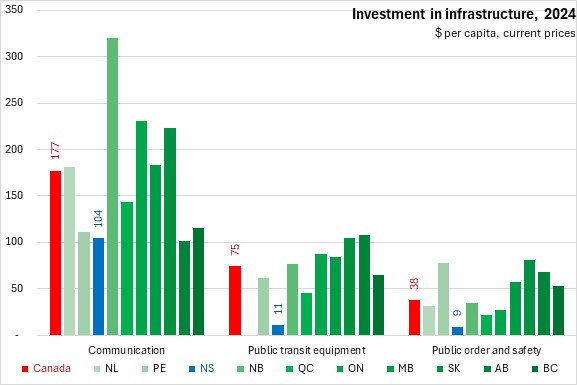
Nova Scotia reported lower than national average investments per capita in communications ($104 per capita), public transit ($11 per capita) and public order and safety ($9 per capita) in 2024. Communications investment was highest in New Brunswick and lowest in Alberta. Public transit investments per capita were highest in Alberta and Saskatchewan and lowest in Newfoundland and Labrador and Nova Scotia. Public order and safety investments per capita were highest in Saskatchewan and Prince Edward Island (lowest: Nova Scotia).
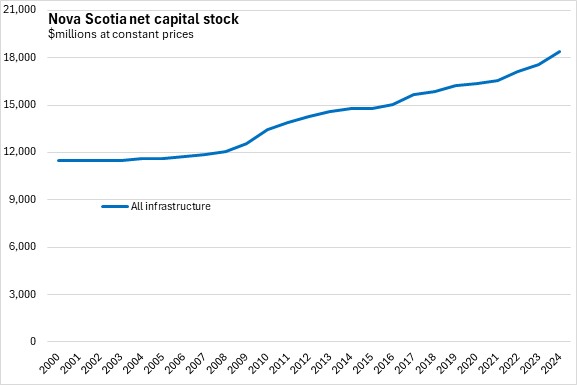
When measured at constant prices, the stock of Nova Scotia infrastructure assets remained largely stable from 2000 to 2008. Since then, there has been mostly steady increases in the stock of infrastructure in Nova Scotia.
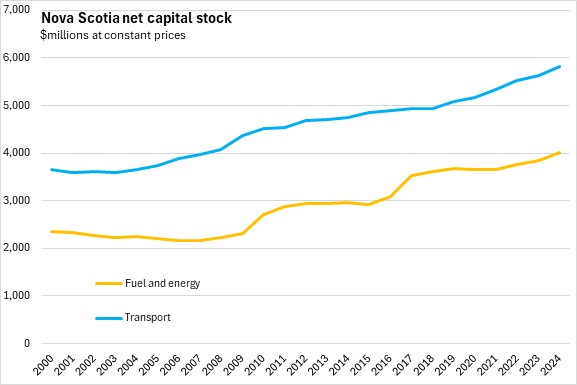
Transportation infrastructure in Nova Scotia has been rising steadily, with accelerated growth since 2019. Fuel and energy infrastructure exhibits periods of faster increases (2009-2010, 2015-2017 and 2021-2024), typically followed by periods with a stable stock of infrastructure.
Nova Scotia's education infrastructure has risen substantially since 2008. Health infrastructure stock declined from 2012 to 2017 (including depreciation), but has been rising since 2018, with a sharper acceleration in the last year.
Nova Scotia's housing (ie: water) infrastructure has been declining since 2019. Environmental (ie: wastewater) infrastructure values trended down from 2011 to 2021, but have been growing since then. Recreation infrastructure increased substantially from 2010 to 2014 and again from 2016 to 2020, with growth resuming in 2023 and 2024.
Communications infrastructure trended down in most years from 2003 to 2015 (except 2010 and 2011). There were substantial increases in Nova Scotia's communications infrastructure stock from 2015 to 2023, followed by a decline in 2024.
Nova Scotia's public transit equipment stock declined (in real terms) from 2017 to 2024.
The stock of Nova Scotia's public order and safety building infrastructure has generally trended down since 2014.
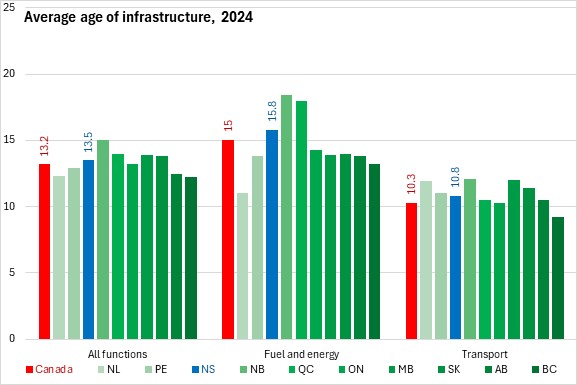
Infrastructure can also be measured by the "average age" of the assets used in public service functions. The average age of all infrastructure in Nova Scotia was 13.5 years in 2024, above the national average of 13.2 years. The oldest infrastructure in Canada was reported in New Brunswick while the newest was reported in British Columbia.
Nova Scotia's fuel and energy infrastructure (mostly electric power generation and transmission) had an average age of 15.8 years in 2024, which was above the national average age of 15.0 years. The oldest fuel and energy infrastructure was in New Brunswick and the newest in Newfoundland and Labrador.
Nova Scotia's transport infrastructure had an average age of 10.8 years in 2024, above the national average of 10.3 years. Newfoundland and Labrador, Manitoba and New Brunswick had the oldest transport infrastructure while British Columbia had the newest.
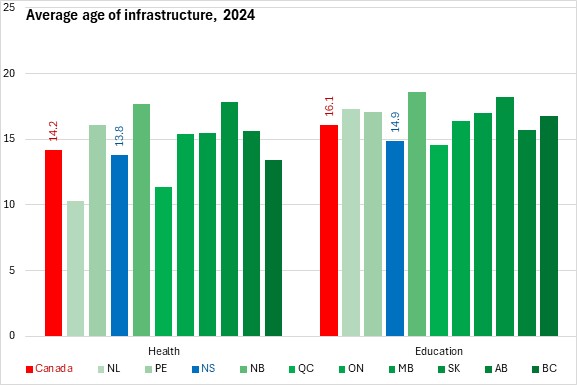
Nova Scotia's health infrastructure (hospitals, nursing/residential care facilities) had an average age of 13.8 years, which was below the national average of 14.2 years. New Brunswick and Saskatchewan had the oldest health infrastructure while Newfoundland and Labrador and Québec had the newest.
Nova Scotia's education infrastructure (schools, colleges, universities) had an average age of 14.9 years in 2024, which was the second newest among provinces (Québec had the newest). New Brunswick and Saskatchewan had the oldest education infrastructure in 2024.
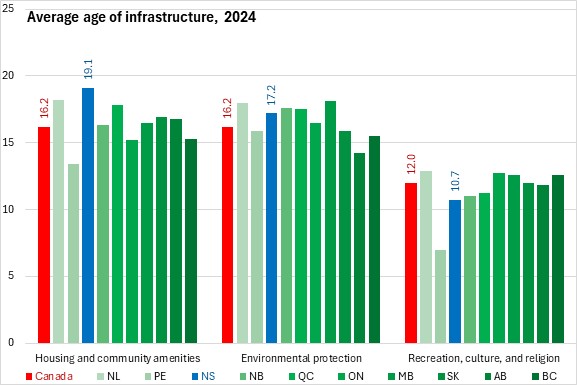
Nova Scotia's housing/water infrastructure (19.1 years) was the oldest among provinces. Prince Edward Island reported the newest infrastructure for housing/water.
Nova Scotia's environmental/wastewater (17.2 years) infrastructure assets were above the national average. Manitoba and Newfoundland and Labrador had the oldest environmental/wastewater assets while Alberta had the newest.
Nova Scotia's recreational facilities had an average age of 10.7 years - newer than the national average (12.0 years). Prince Edward Island reported the newest infrastructure for recreational facilities while the oldest were in Ontario and Newfoundland and Labrador.
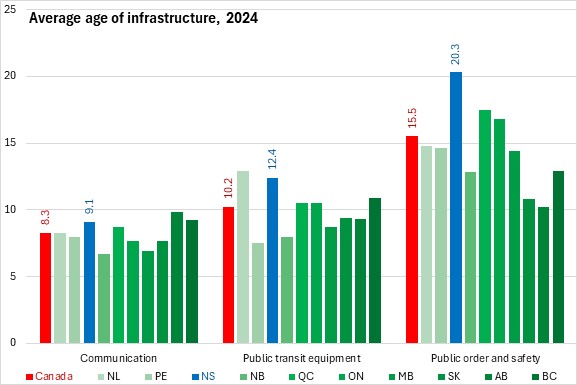
Nova Scotia's infrastructure for public order and safety (20.3 years) was the oldest among provinces. Nova Scotia's public transit equipment (12.4 years) was the second oldest among provinces after Newfoundland and Labrador. Nova Scotia's communications infrastructure had an average age of 9.1 years - the third oldest after Alberta and British Columbia.
Nationally, public transit equipment had an average age of 10.2 years with the newest infrastructure in Prince Edward Island. Communications infrastructure had an average age of 8.3 years across Canada with the newest infrastructure in New Brunswick. Public order and safety building infrastructure had an average age of 15.5 years across Canada, with the newest infrastructure in Alberta.
Notes: Infrastructure is defined as physical structures and systems that support the production of goods and service and their delivery to and consumption by governments, business and citizens. Infrastructure assets are tangible assets that generally enable or perform a support function and includes both economic asset (i.e. highways, road, energy generation/transmission, sewage systems) and social assets (i.e. hospitals, schools, pollution abatement, recreation facilities, law enforcement facilities). The value of the capital stock is measured using perpetual inventory method where investment are positive flows that accumulated the asset which is depreciated over time as assets age. Assets in the data can be separated by purchasing sector, asset type, or function. Infrastructure assets do not include all types of non-residential assets, for instance buses and trains are included while some other types of mobile assets (defense ships, aircraft, ambulances) are not considered part of infrastructure assets.
Source: Statistics Canada. Table 36-10-0608-01 Infrastructure Economic Accounts, investment and net stock by asset, industry, and asset function (x 1,000,000); Table 36-10-0611-01 Infrastructure Economic Accounts, average age and remaining useful service life ratio by asset and asset function; Table 17-10-0005-01 Population estimates on July 1, by age and gender
<--- Return to Archive


