The Economics and Statistics Division maintains archives of previous publications for accountability purposes, but makes no updates to keep these documents current with the latest data revisions from Statistics Canada. As a result, information in older documents may not be accurate. Please exercise caution when referring to older documents. For the latest information and historical data, please contact the individual listed to the right.
<--- Return to Archive
For additional information relating to this article, please contact:
January 14, 2026NOVA SCOTIA POPULATION ESTIMATES BY COUNTY AND CENSUS SUBDIVISION - JULY 1, 2025 Statistics Canada has released estimates of the population by county as of July 1, 2025.
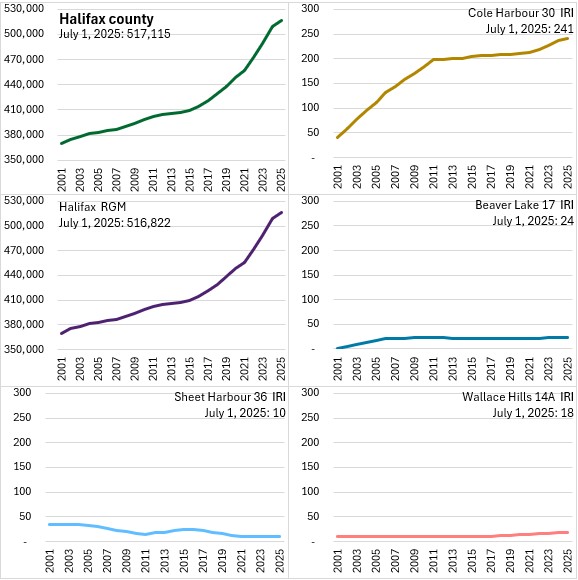
Halifax county's population has risen to 517,115 or 47.3% of the provincial population as of July 1, 2025 (1,093,245).
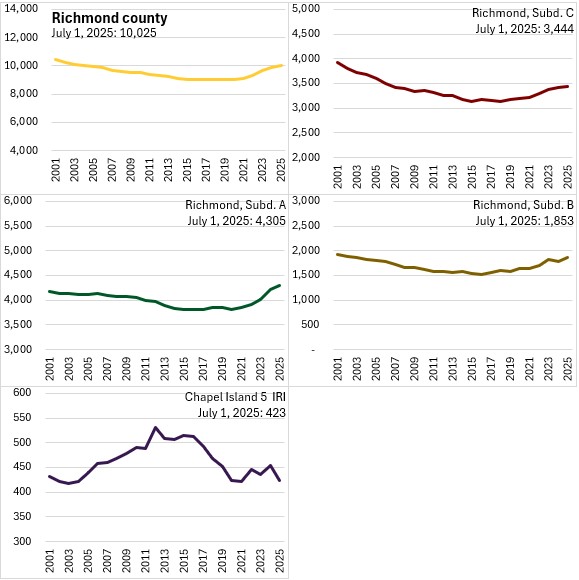
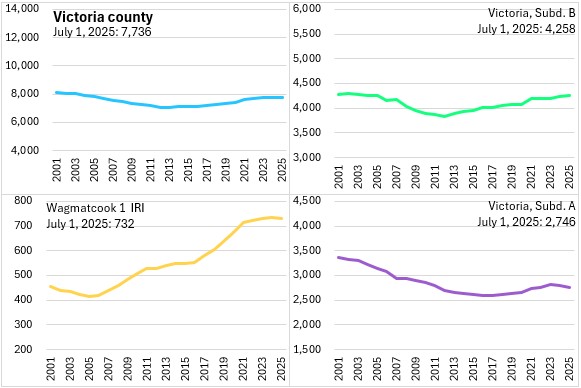
Cape Breton county's population was 111,929 and accounted for 10.2% of the provincial population. The other three counties on Cape Breton Island (Inverness, Richmond and Victoria) made up 3.3% of the provincial population (36,017).
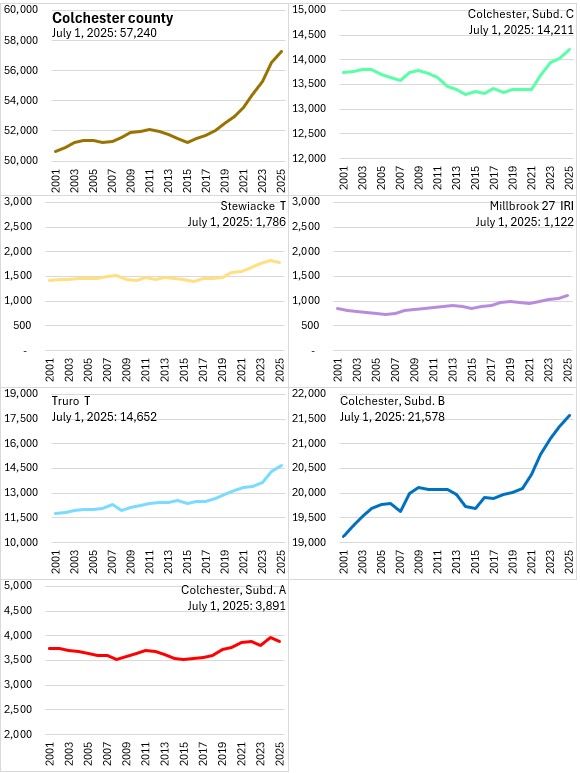
Counties in the North Shore economic region (Colchester, Cumberland, Pictou, Guysborough, and Antigonish) had a population of 165,526 or 15.1% of the provincial total.
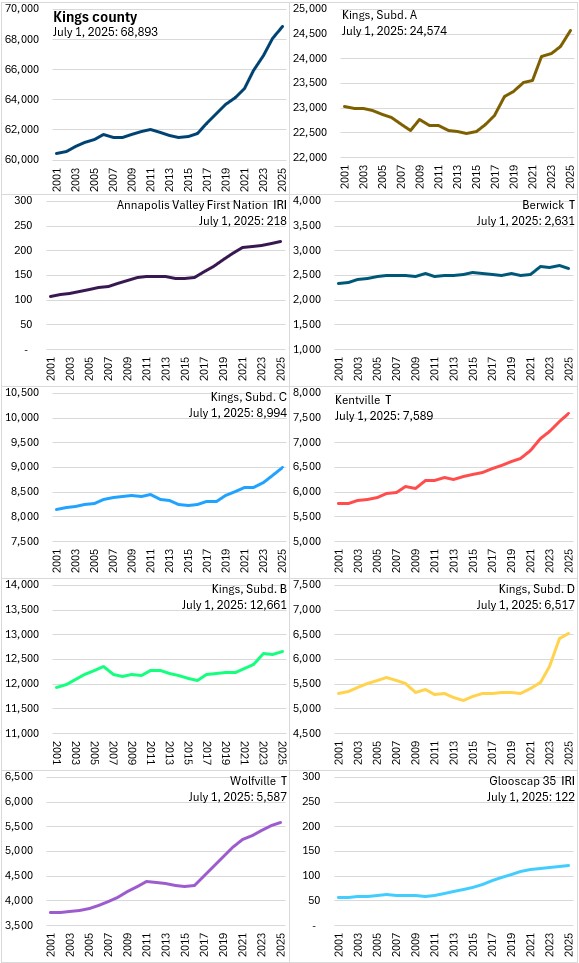
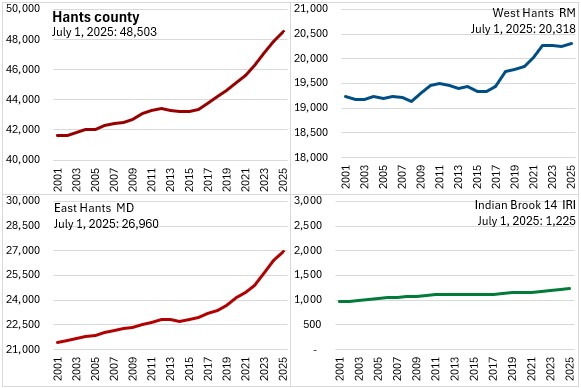
Counties in the Annapolis Valley (Annapolis, Kings and Hants) had 140,741 residents or 12.9% of Nova Scotia's population.
The counties of Southern Nova Scotia (Shelburne, Yarmouth, Digby, Queens and Lunenburg) had a population of 121,917 or 11.2% of the provincial total.
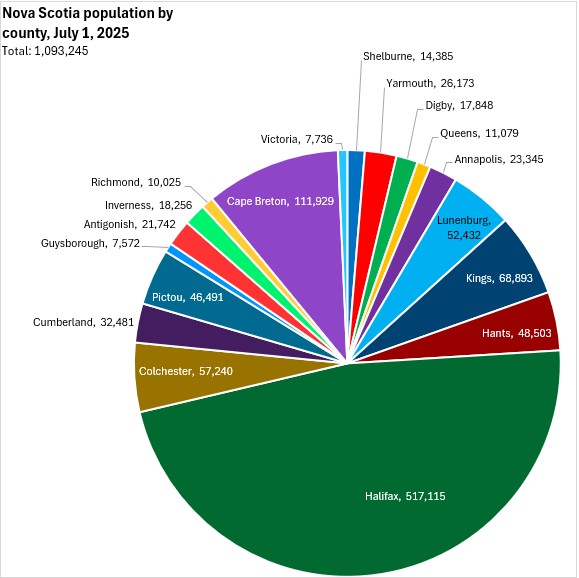
Provincial population estimates for July 1, 2025 were released on September 24, 2025 and updated to October 1, 2025 on December 17, 2025. These population estimates should not be confused with Census counts. Estimates of the population adjust for net undercoverage from the Census as well as incompletely enumerated Indian reserves.
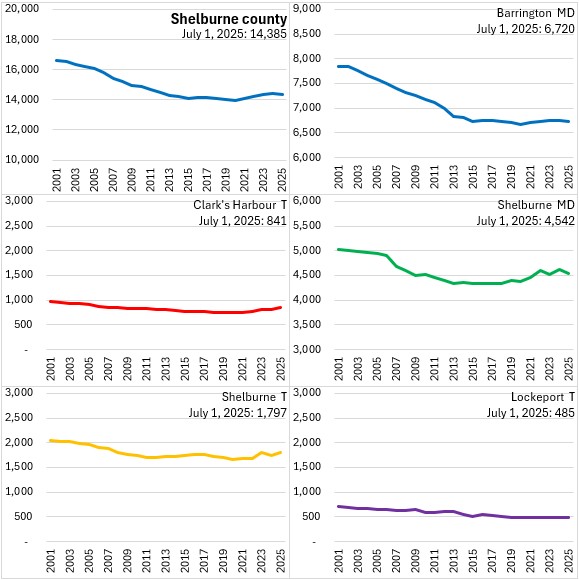
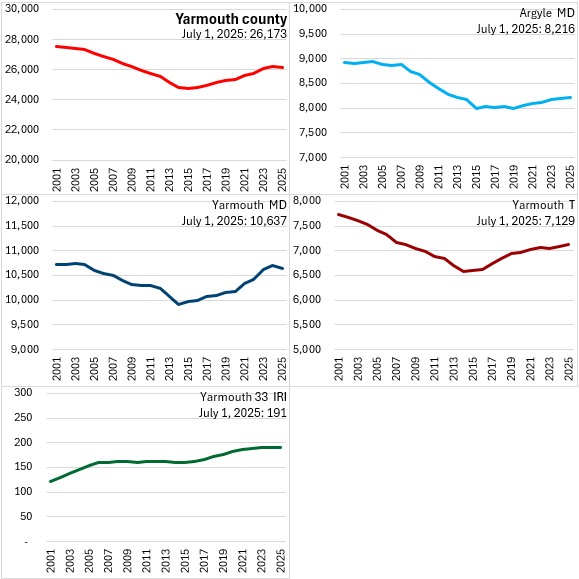
Between July 1, 2024 and July 1, 2025 Nova Scotia's population increased by 0.97% or 10,476 persons, reaching 1,093,245 as of July 1, 2025. Across Nova Scotia, 11 of 18 counties reported population growth from July 1, 2024 to July 1, 2025. Richmond (+1.56%) and Halifax (+1.54%) counties reported the fastest percentage growth in population. Populations declined over this period in: Shelburne, Yarmouth, Digby, Guysborough, Inverness, Cape Breton and Victoria counties.
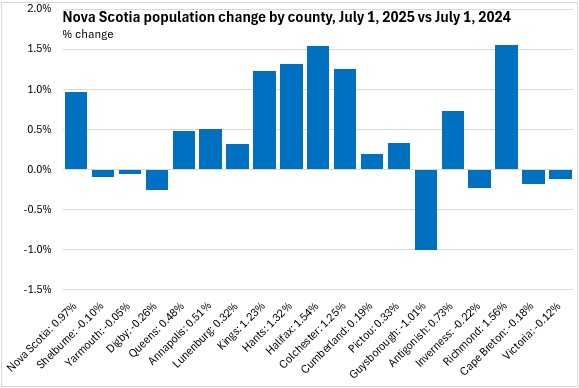
Of the 10,476 persons added to Nova Scotia's population from July 1, 2024 to July 1, 2025, Halifax accounted for the largest portion at 7,835. Cape Breton county accounted for the largest population decline with a net loss of 197 persons from the population. Outside of Halifax, Hants, Kings and Colchester counties reported faster growth.
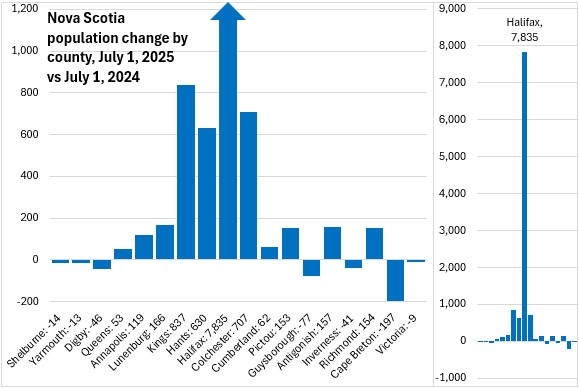
Components of county population change
Population estimates for counties change from one year to the next based on natural change (births less deaths), international migration (immigration, less net emigration, plus net change in non-permanent residents), net interprovincial migration (in-migrants from other parts of Canada to Nova Scotia less out-migrants from Nova Scotia to other parts of the country) and net intraprovincial migration (in-migrants from elsewhere in Nova Scotia less out-migrants bound for other parts of the Province).
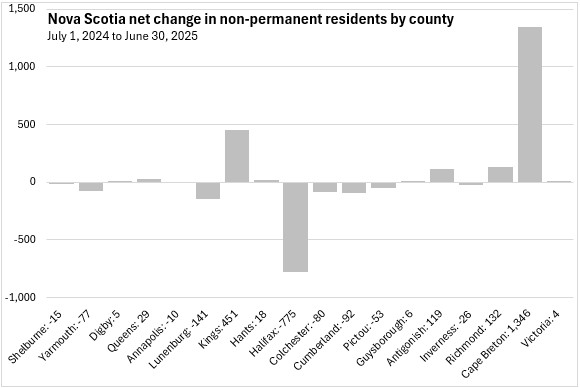
All counties except Halifax reported more deaths than births between July 1, 2024 and July 1, 2025.
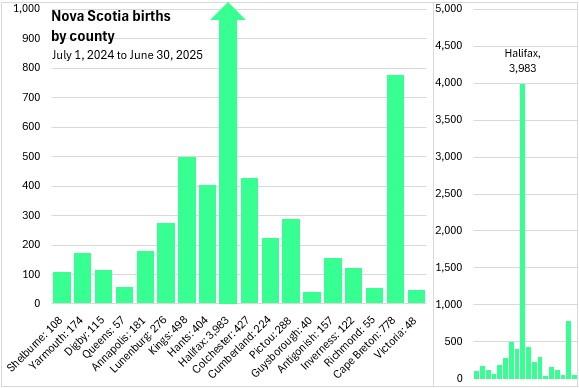

Halifax's modest natural population gain (+179) was more than offset by natural population declines across all other counties. The largest natural population decline was in Cape Breton (-741).
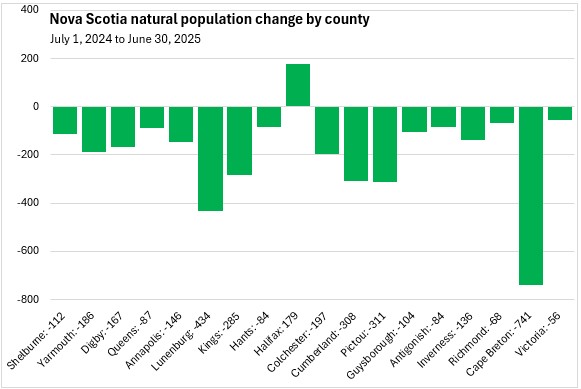
Immigration added 10,984 to Nova Scotia's population between July 1, 2024 and July 1, 2025. Immigration was concentrated in Halifax with 8,142 immigrants added to the population. The next highest numbers of immigrants added were in Kings (520) and Cape Breton (502) counties.
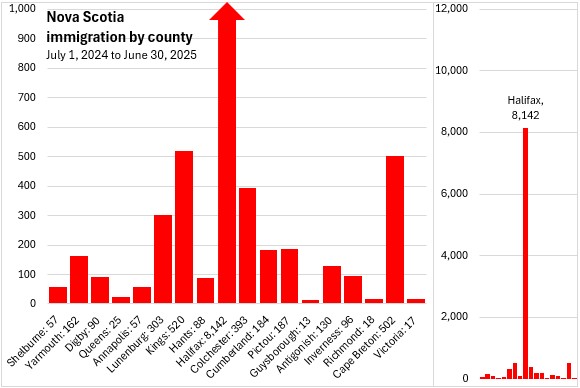
Net international emigration to another county (including temporary emigrants) is typically a small value for most counties with a total outflow of 1,248 persons from July 1, 2024 to June 30, 2025. Halifax reported net emigration of 728 from July 1, 2024 to June 30, 2025. Kings county reported the second largest net emigration.
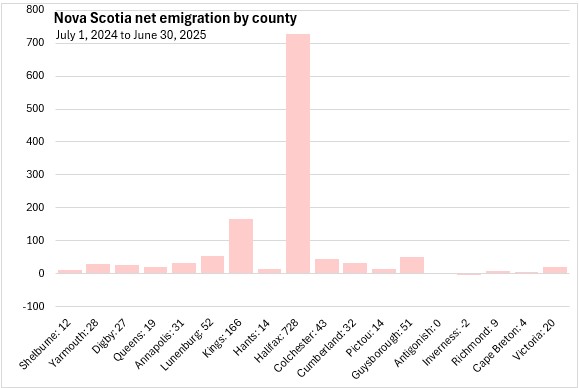
The flow of non-permanent residents (such as temporary foreign workers and international students) has been a significant contributor to population gains since 2021, but this has slowed, adding just 841 net residents to the population between July 1, 2024 and July 1, 2025. Cape Breton county added the most non-permanent residents with a net increase of 1,346. Halifax had the largest net outflow of non-permanent residents at 775.
From July 1, 2024 to July 1, 2025 there was net interprovincial migration of +3,226 for the province as a whole. Halifax (+980), Colchester (+348), Lunenburg (+306) and Kings (+295) counties had the largest net population gains from interprovincial migration. Antigonish (-14) and Cape Breton (-44) were the only counties to report negative net interprovincial migration.

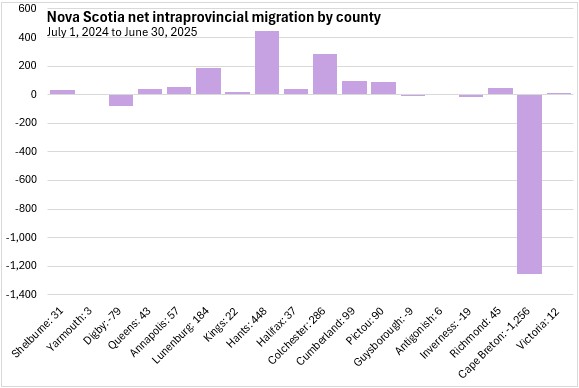
Cape Breton county reported the largest net outflow of residents to the rest of the province (-1,256). Net intraprovincial migration was most positive for Hants county from July 1, 2024 to June 30, 2025, with a net inflow of 448 persons from the rest of the province.
Cities
In the 2021 Census, Statistics Canada changed the Halifax Census Metropolitan Area's boundaries to include the population of East Hants as well.
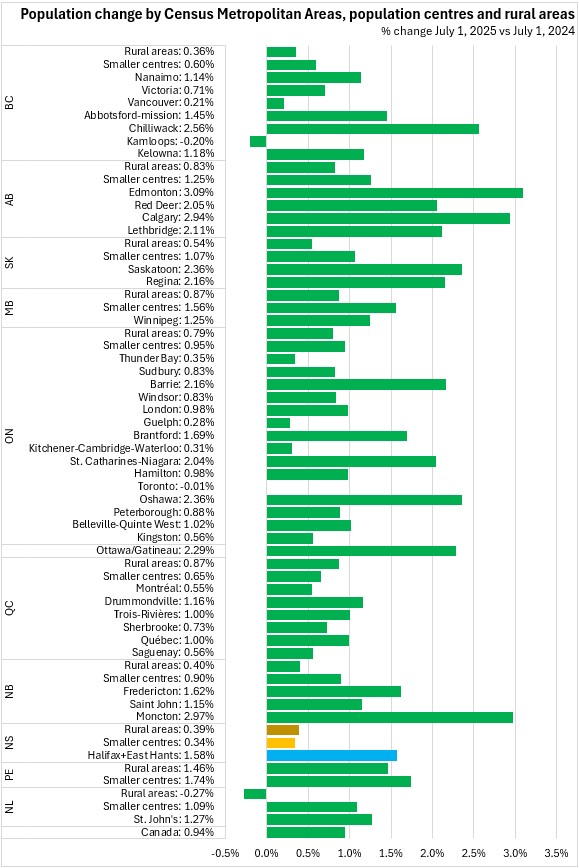
The Halifax and East Hants Census Metropolitan Area grew by 1.58% from July 1, 2024 to July 1, 2025. Outside Halifax and East Hants, Nova Scotia's population growth was 0.34% in the other population centres (defined as Census Agglomerations: Kentville, Truro, New Glasgow, Cape Breton Regional Municipality). Outside of the Halifax and East Hants Census Metropolitan Area and other population centres, Nova Scotia's population increased by 0.39% from July 1, 2024 to July 1, 2025.
Among Census Metropolitan Areas, Edmonton reported the fastest growth from July 1, 2024 to July 1, 2025. Population declines were observed only for Kamloops, Toronto and rural areas of Newfoundland and Labrador.
Census Subdivisions
Census subdivisions are towns (T), municipal districts (MD), regional municipalities (RGM), Indian reserves (IRI) and rural areas (identified as Subdivisions A, B, C, or D in their counties). A map of Nova Scotia's census subdivisions can be found here: Standard Geographical Classification, census division – census subdivision maps, Nova Scotia
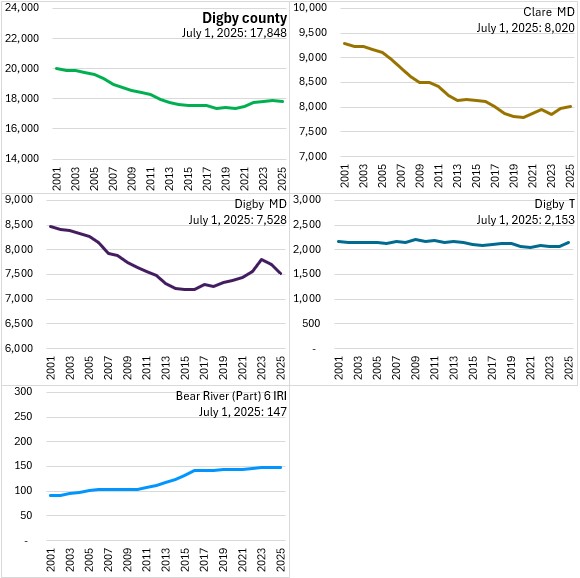
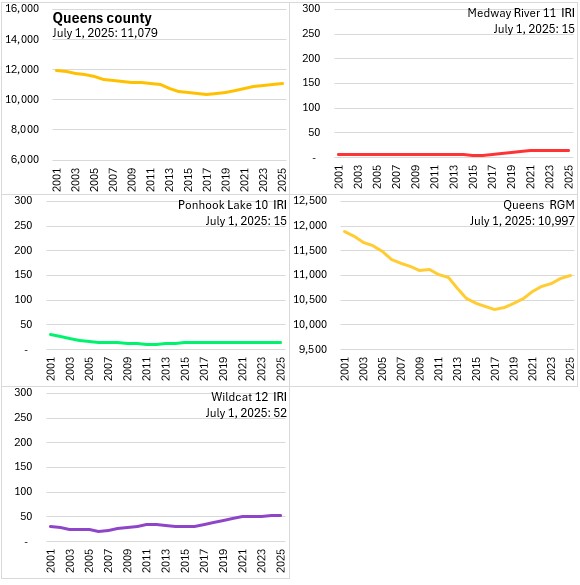
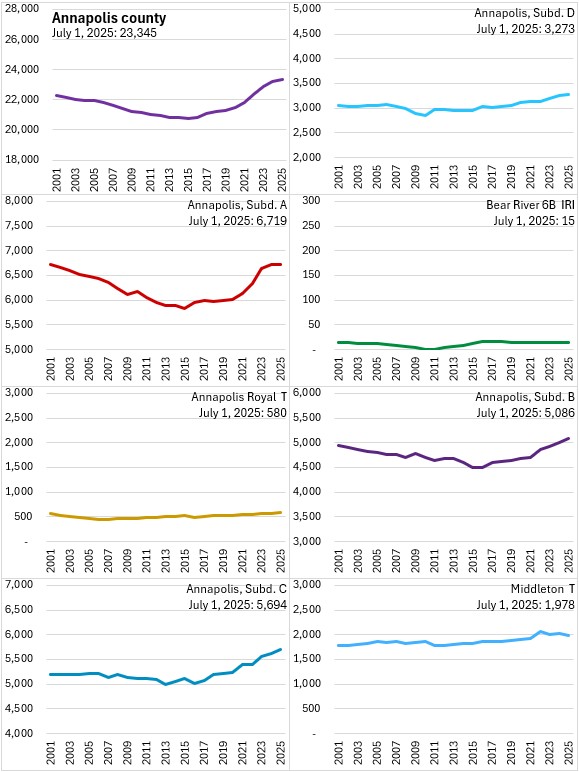
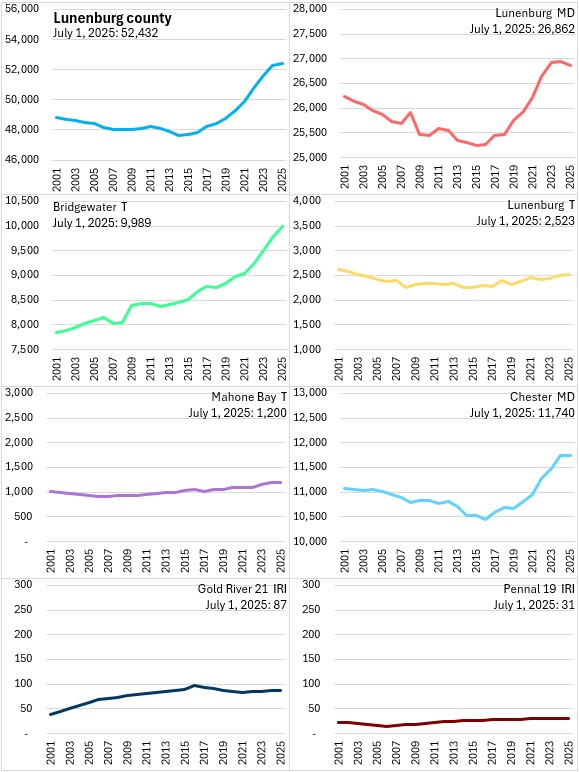

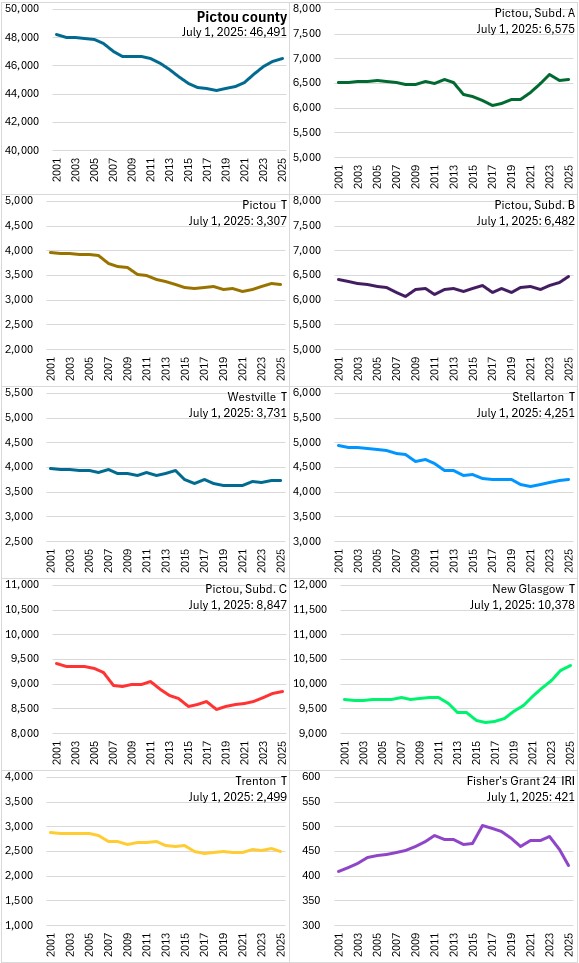
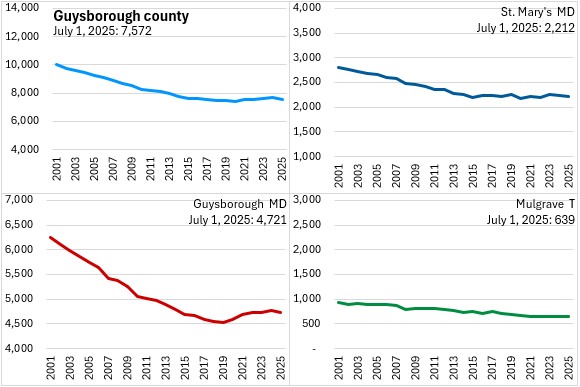
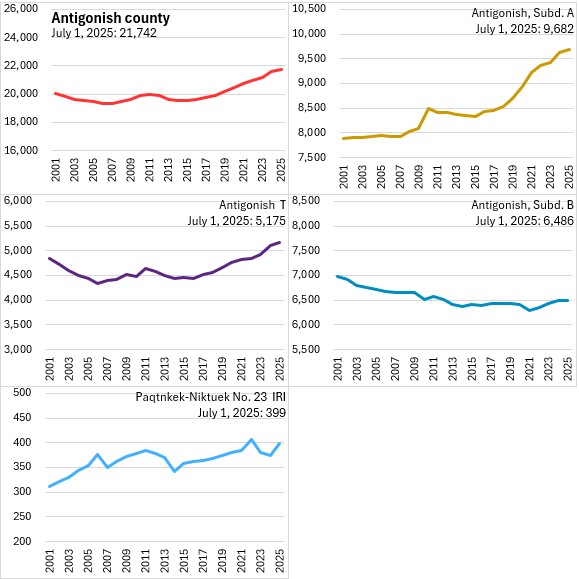
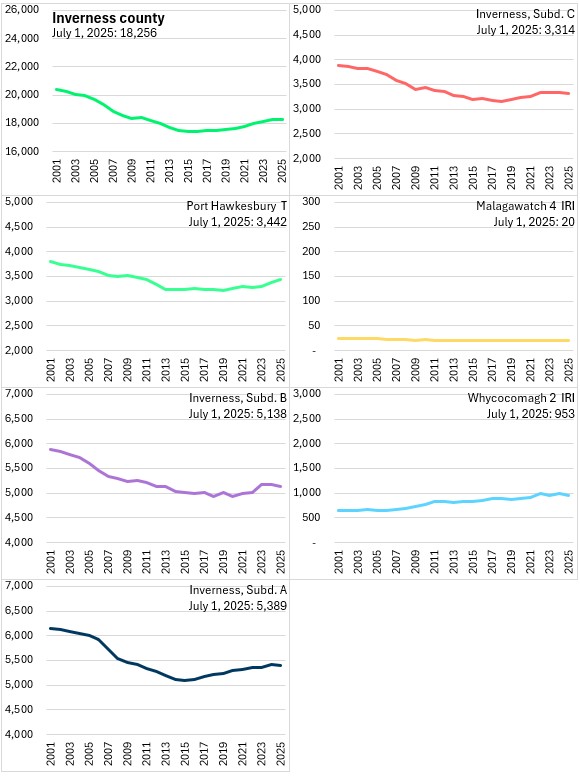

Age cohorts
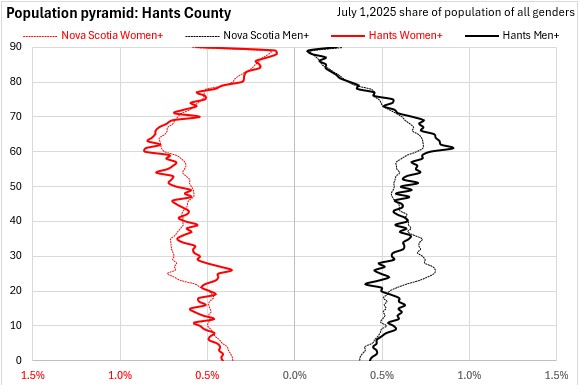
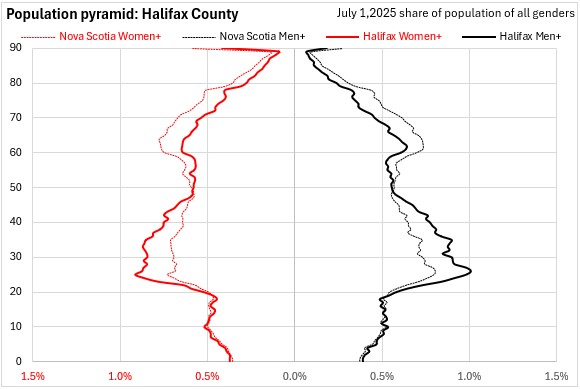
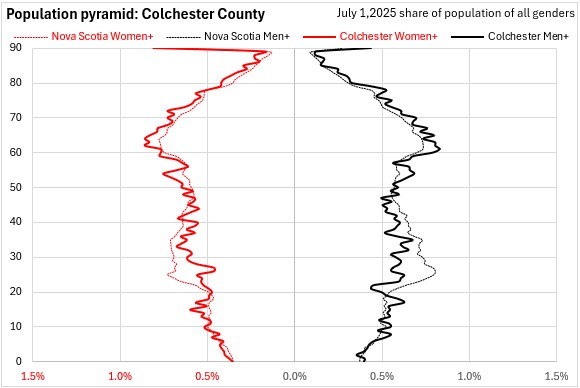
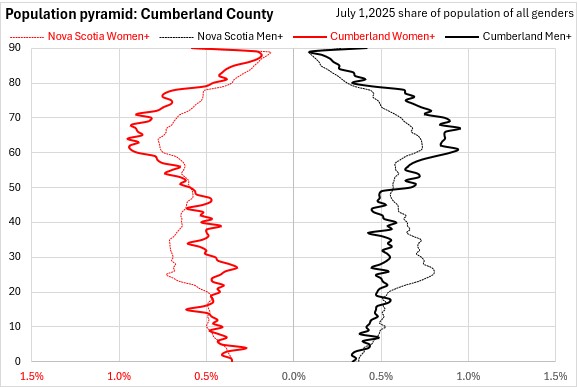
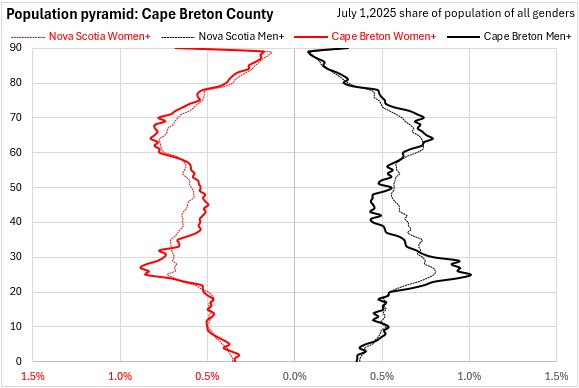
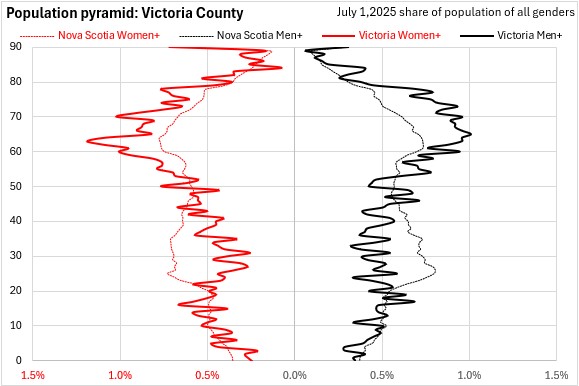
Nova Scotia's overall median age was steady at 43.3 years on July 1, 2025, unchanged from the median age on July 1, 2024. Guysborough county has the highest median age at 59.0 years (followed by Queens, Digby, Lunenburg and Victoria counties). Halifax county had the lowest median age at 38.9 years, followed by Antogonish, Kings and Cape Breton counties.

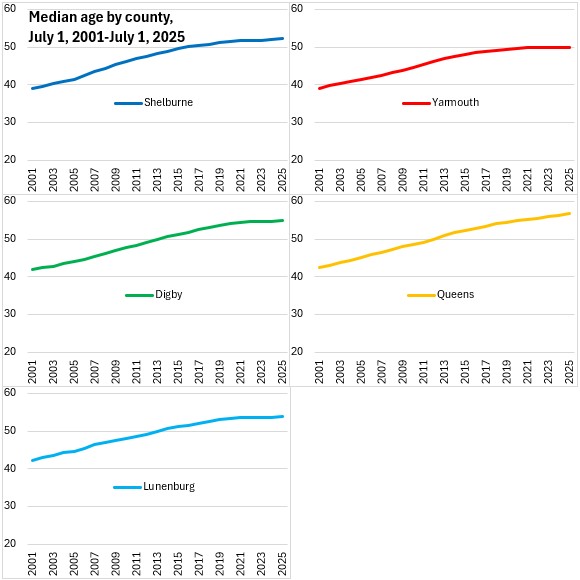
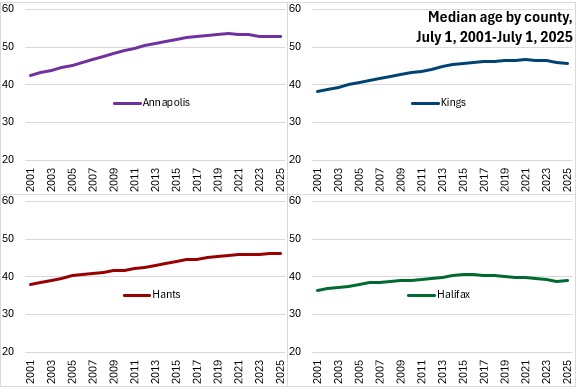
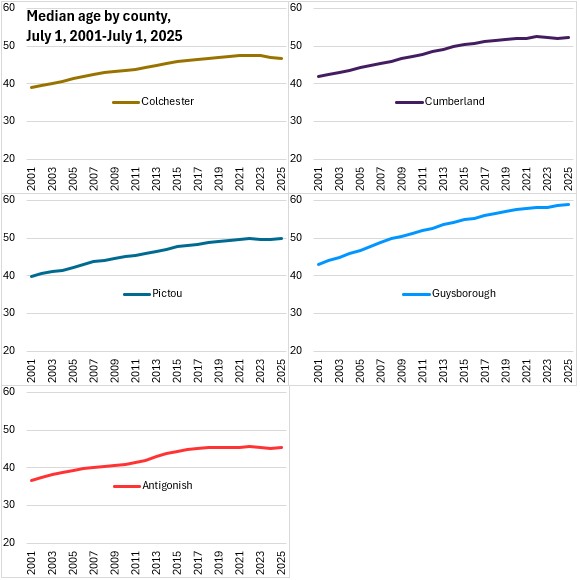
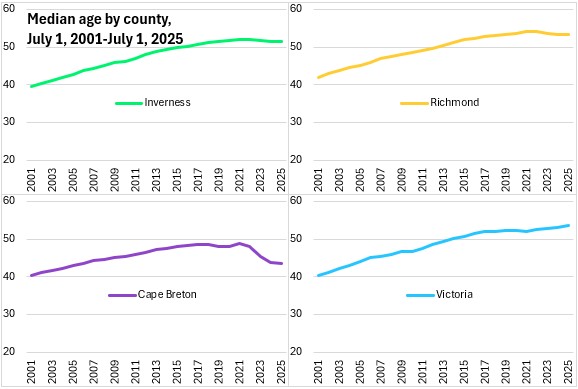
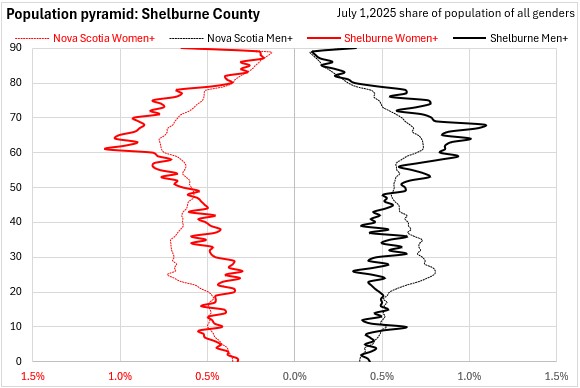
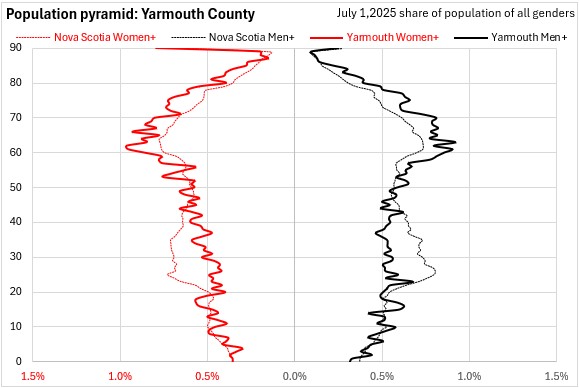
In population pyramids, Halifax, Cape Breton and Antigonish counties report higher than average shares of population in younger cohorts (20-40). Shares of population aged 50-70 were notably higher in Shelburne, Yarmouth, Digby, Queens, Annapolis, Lunenburg, Cumberland, Pictou, Guysborough, Inverness, Richmond and Victoria counties.

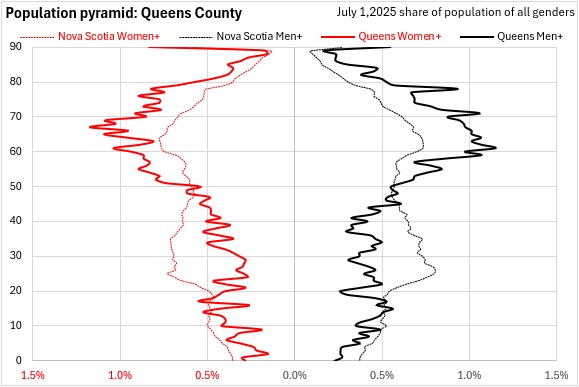
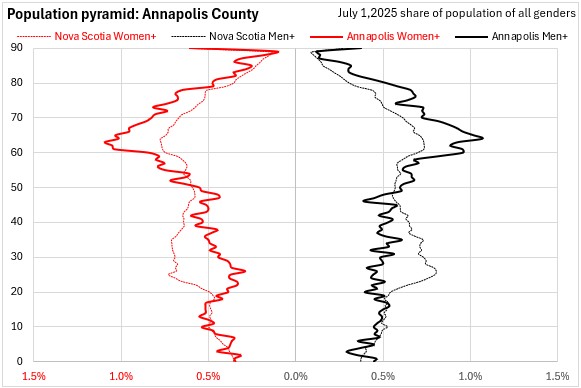
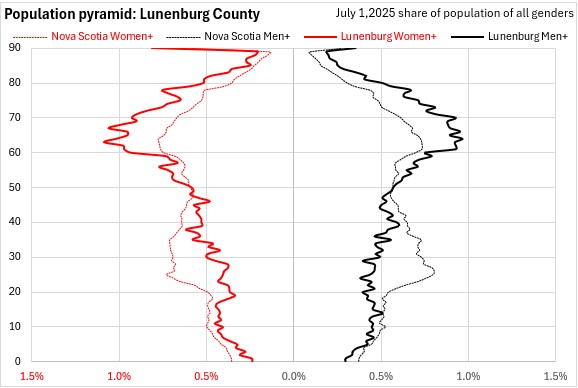
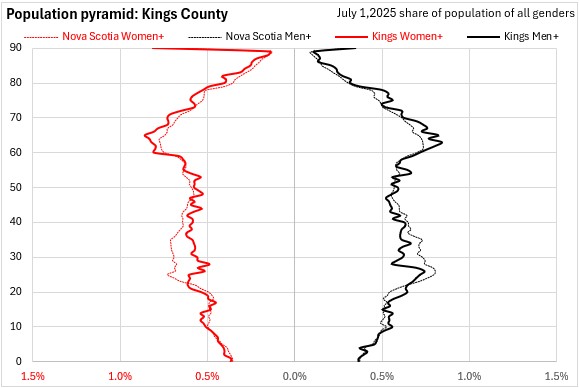
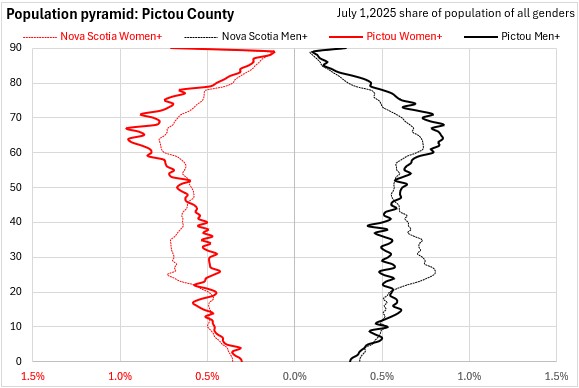
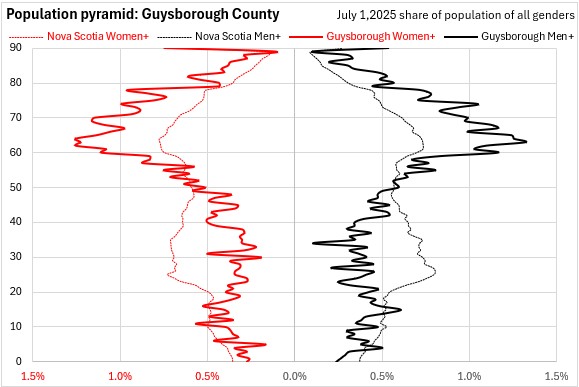
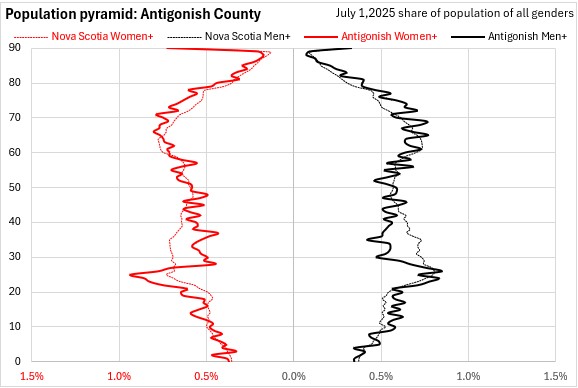

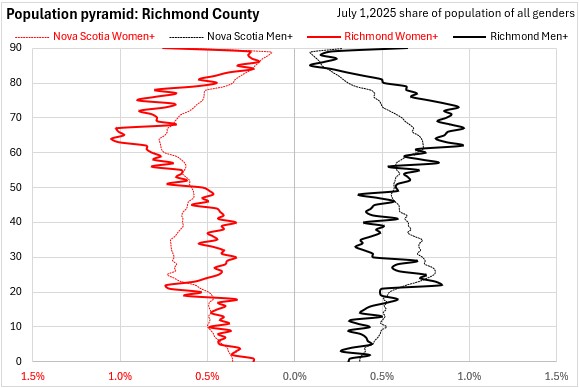
Sources: Statistics Canada. Table 17-10-0152-01 Population estimates, July 1, by census division, 2021 boundaries; Table 17-10-0153-01 Components of population change by census division, 2021 boundaries; Table 17-10-0155-01 Population estimates, July 1, by census subdivision, 2021 boundaries; Table 17-10-0148-01 Population estimates, July 1, by census metropolitan area and census agglomeration, 2021 boundaries
<--- Return to Archive


