The Economics and Statistics Division maintains archives of previous publications for accountability purposes, but makes no updates to keep these documents current with the latest data revisions from Statistics Canada. As a result, information in older documents may not be accurate. Please exercise caution when referring to older documents. For the latest information and historical data, please contact the individual listed to the right.
<--- Return to Archive
For additional information relating to this article, please contact:
January 19, 2026ANALYSIS OF CONSUMER PRICE INDEX FOR DECEMBER & ANNUAL 2025 Note that the removal of the consumer carbon price on April 1, 2025 has affected energy prices, with all provinces (except Québec) also removing provincial consumer carbon prices. While other factors such as global commodity prices will continue to affect Canadian energy prices, it is expected that this policy change will be reflected in year-over-year rates until March 2026.
The temporary Goods and Services Tax (GST)/Harmonized Sales Tax (HST) break has affected year-over-year all-items CPI. The tax exemption began on December 14, 2024 and ended on February 15, 2025.
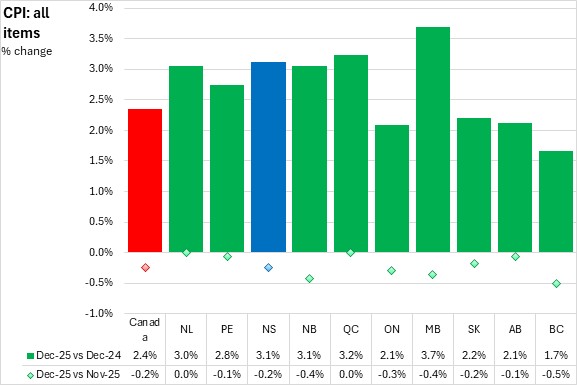
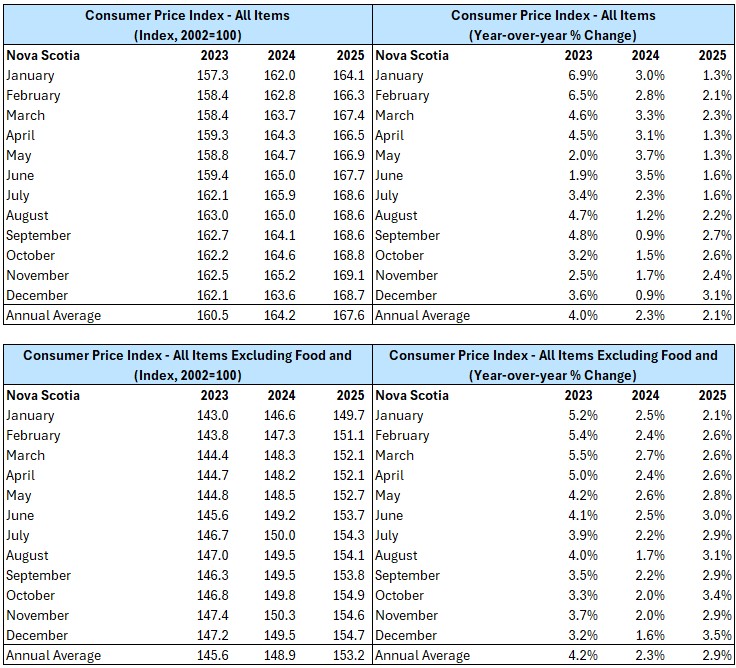
Nova Scotia’s all items Consumer Price Index (CPI) grew 3.1% year-over-year in December 2025, up 0.7 percentage points from the previous month.
Nationally, consumer prices grew 2.4% year-over-year in December 2025, up 0.2 percentage points from the previous month. Inflation was highest in Manitoba and slowest in British Columbia.
The most significant upward contributors (combining price increase as well as share of the consumption basket) to Nova Scotia's 3.1% year-over-year inflation were: food purchased from restaurants, rent, homeowners' replacement cost, mortgage interest cost, and telephone services.
The largest downward year-over-year contributions were from: gasoline, purchase and operation of recreational vehicles, women's clothing, inter-city transportation, and pet food and supplies.
On a monthly basis, Nova Scotia's all items CPI was down 0.2% from November 2025 to December 2025. National prices were also down 0.2% on average. There were price decreases reported in eight provinces (led by British Columbia) and unchanged in two provinces (Newfoundland and Labrador and Québec).
Major upward contributors to Nova Scotia's monthly consumer prices were: inter-city transportation, rent, food purchased from restaurants, travel tours, and homeowners' home and mortgage insurance. Major downward contributors were: gasoline, traveller accommodation, financial services, sugar and confectionery, and purchase and operation of recreational vehicles.
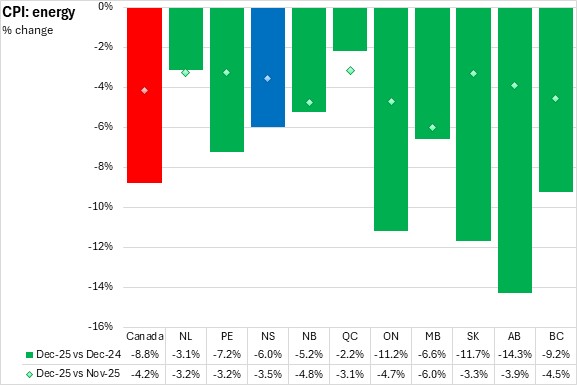
Energy prices play a significant role in inflation rates. Nova Scotia's energy prices (and overall inflation) are more sensitive to fluctuations in the global price of crude oil. Nova Scotia's energy prices were down 6.0% from December 2024 to December 2025. Year-over-year energy prices were down 8.8% nationally with all provinces reporting decreasing energy prices (fastest: Alberta). Québec reported slowest decline in energy prices year-over-year.
On a monthly basis, Nova Scotia's energy prices were down 3.5% from November 2025 to December 2025. National energy prices were down 4.2% with all provinces reporting lower prices compared to the previous month, led by Manitoba.
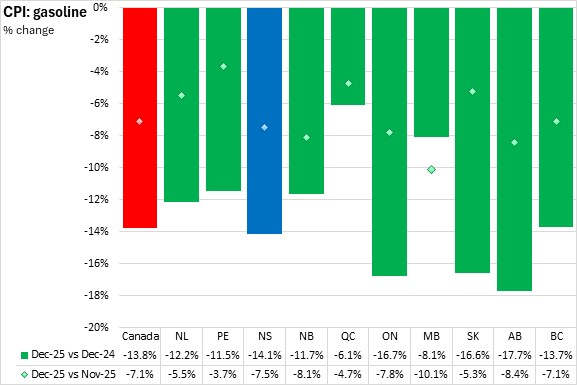
In December 2025, gasoline prices were down 14.1% compared to a year ago in Nova Scotia. All provinces reported lower gasoline prices, with Alberta reporting the fastest decline. Québec reported slowest decline in gas prices year-over-year.
Gasoline prices were down 7.5% from November to December in Nova Scotia. Nationally gasoline prices were down 7.1% with all provinces reporting monthly declines. Manitoba reported the fastest decline while the slowest decline was reported in Prince Edwad Island.
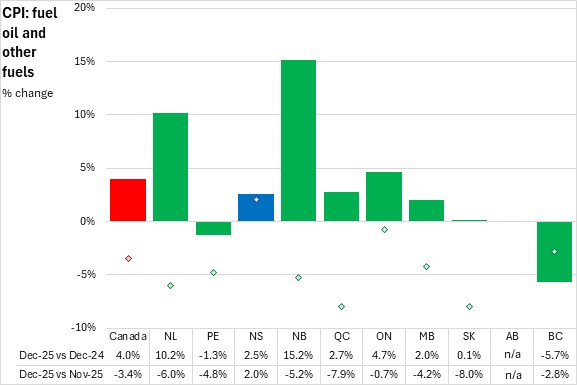
Nova Scotia's year-over-year fuel oil prices were up 2.5% in December 2025 compared with December 2024. Nationally, the fuel oil and other fuels price index increased 4.0% compared to December 2024, with seven provinces reporting increases. New Brunswick reported the largest increase in fuel oil prices while British Columbia and Prince Edward Island reported the only declines.
On a monthly basis, Nova Scotia's fuel oil prices were up 2.0%, the only gain among provinces. National fuel oil prices were down 3.4% from November to December, with decreases observed in eight provinces. Saskatchewan and Québec reported the fastest monthly fuel oil price declines.
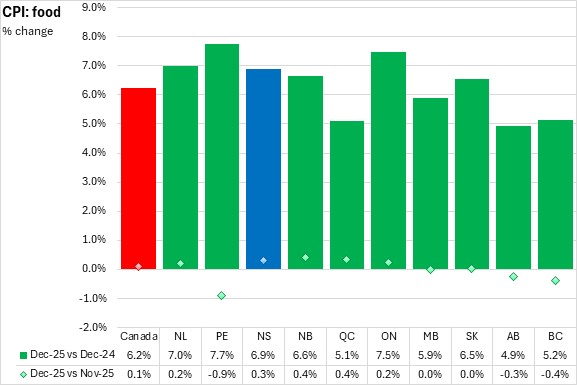
Food prices increased 6.9% in Nova Scotia year-over-year, above national average food price inflation of 6.2% in December 2025. Food prices were up in every province, led by Prince Edward Island.
On a monthly basis, Nova Scotia's food prices grew 0.3% from November to December. National food prices were up 0.1% with five provinces reporting growth. Québec and New Brunswick reported the fastest monthly growth while the fastest decline was in British Columbia.
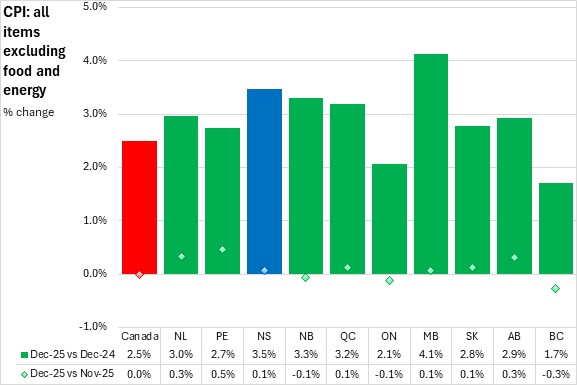
Food and energy prices are heavily influenced by volatile global commodity markets. Nova Scotia's underlying inflation rate excluding food and energy was 3.5% from December 2024 to December 2025. Nationally, inflation excluding food and energy was 2.5% with year-over-year increases in all provinces. Manitoba reported the fastest increases in inflation excluding food and energy prices while British Columbia reported the slowest growth.
On a monthly basis, Nova Scotia's prices for all items excluding food and energy were up 0.1% from November to December. Nationally, prices for all items excluding food and energy were unchanged, with seven provinces reporting growth, led by Prince Edward Island. The fastest decline was reported in British Columbia.
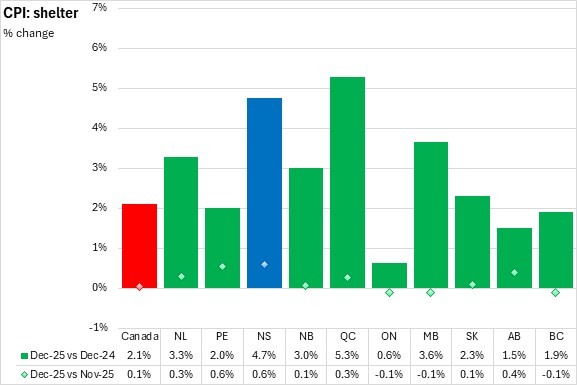
Year-over-year shelter cost inflation was 4.7% in Nova Scotia in December 2025, the second fastest increase among provinces. National shelter prices were up 2.1% with increases in all provinces. Québec had the largest increase in shelter prices, while Ontario reported the slowest increase.
Monthly shelter costs were up 0.6% in Nova Scotia from November to December, the fastest increase among provinces (slightly higher than Prince Edward Island). Nationally, shelter costs were up 0.1%, with increases in seven provinces. The monthly declines were reported in Ontario, Manitoba, and British Columbia.
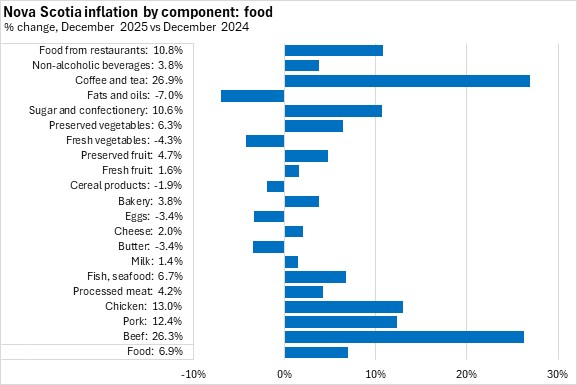
Among detailed food products with available data, Nova Scotia's year-over-year inflation was fastest for coffee/tea and beef. The largest year-over-year price declines were for fats/oils and fresh vegetables.
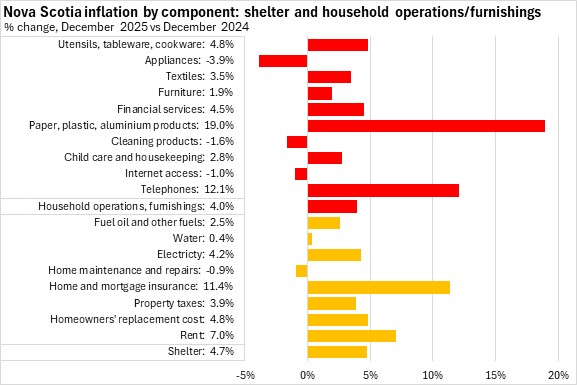
In detailed shelter cost components, all components except home maintenance/repairs had price increases year-over-year with the fastest growth for home/mortgage insurance and rent.
Household operations/furnishings costs were up 4.0% overall. The largest year-over-year price increase was for paper/plastic/aluminum products, while prices fell the most for appliances.
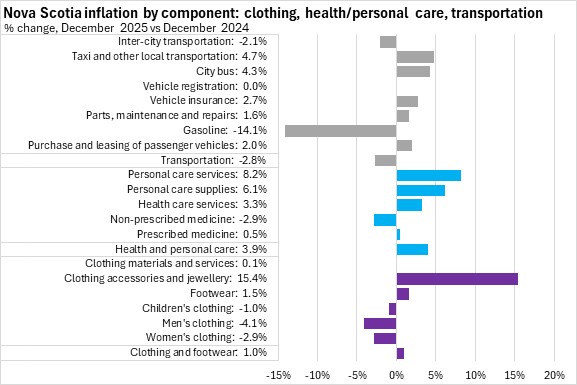
Clothing and footwear prices were up 1.0% year-over-year in December with the fastest price growth in clothing accessories/jewellery. Men's clothing prices declined the most in December.
Health and personal care costs were up 3.9% year-over-year on gains in all sub-components except non-prescribed medicine. Personal care services and supplies reported the largest price increases.
Overall transportation costs were down 2.8% year-over-year in December. The fastest increases were among taxis/other transportation, while there was notable decline for gasoline.
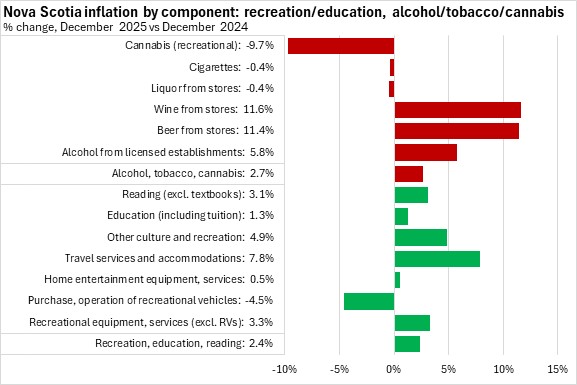
Nova Scotia's overall prices for recreation, education and reading were up 2.4% from December 2024 to December 2025 with the fastest increase for travel services/accommodations, and the only decline reported for purchase/operation of recreational vehicles.
Nova Scotia's prices for alcohol, tobacco and recreational cannabis were up 2.7% year-over-year, with an increase in prices for beer and wine from stores and alcohol from licensed establishments partially offset by declines in all other categories, led by recreational cannabis.
Trends
Since the start of the Bank of Canada's inflation-targeting monetary policy regime, inflation for all items has generally been in the 0-4% range. Periods of above target inflation are typically followed by periods of slow price growth or declines. The most recent acceleration in inflation was the strongest since the inflation-targeting era began, though this inflation has receded with tighter monetary policy and lower commodity prices.
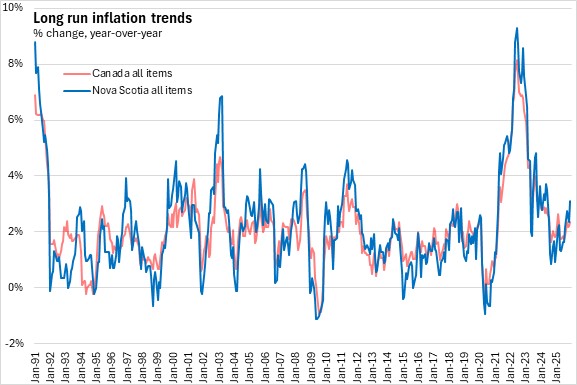
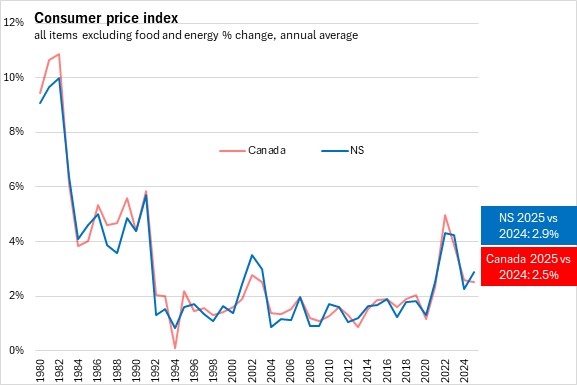
Many of these periods of accelerated and slowed inflation are attributable to volatile commodity prices, especially energy prices. Once the more volatile commodity prices are excluded, inflation in Nova Scotia has largely been below 2% for much of the last 20 years. However, the recent rise in inflation through 2021-2024 spread beyond commodity prices, resulting in the longest period under the Bank of Canada's inflation-targeting regime with Nova Scotia's CPI excluding food and energy above 3%.
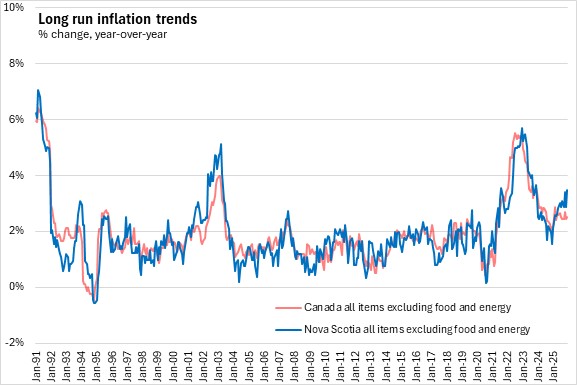
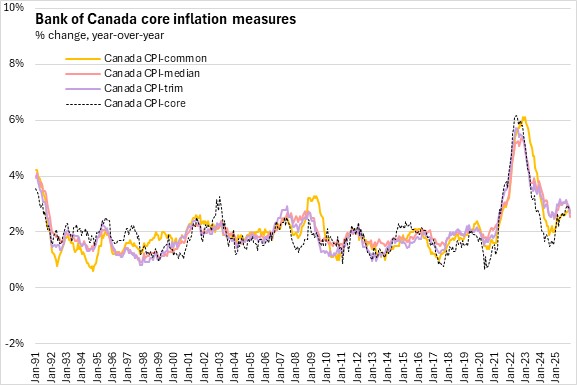
The Bank of Canada examines 'core' measures of inflation that are intended to remove the effects of volatile components and capture underlying inflation trends that are more connected to capacity in the Canadian economy. Core measures of inflation August also indicate where all items inflation is headed.
Canada's core measures of inflation remained mostly at or below the Bank's target of 2% for over a decade prior to 2021. However, core inflation measures rose in 2022, peaking at over 6% for the CPI-common measure before declining around the beginning of 2023. Core measures of inflation have been rising since the end of 2024.
The Bank of Canada's year-over-year core inflation measures in December 2025 were:
- CPI-common: 2.8% (unchanged from the previous month)
- CPI-median: 2.5% (down from 2.8% the previous month)
- CPI-trim: 2.7% (down from 2.9% the previous month)
The core CPI excluding volatile products and the effects of indirect taxes was up 2.8% (down from 2.9% the previous month).
ANNUAL (2025 vs 2024)
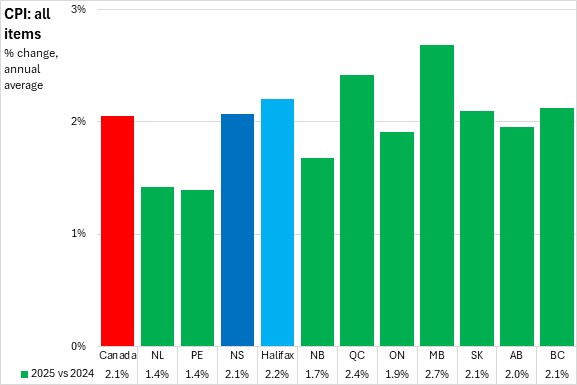
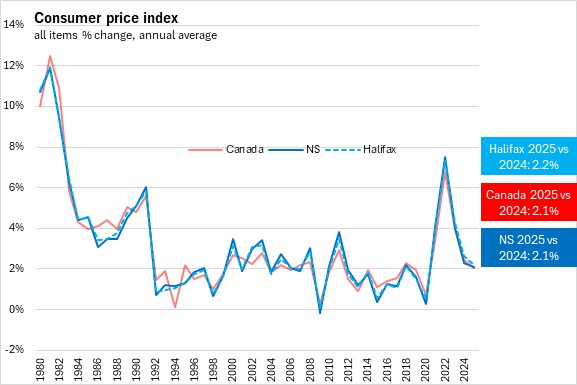
The annual average of Nova Scotia’s all items CPI slowed to 2.1% growth in 2025, compared to 2.3% average inflation in 2024. Nationally, consumer prices increased 2.1% in 2025 down from 2.4% in 2024. On average, Manitoba had the highest inflation in 2025 while Newfoundland and Labrador and Prince Edward Island had the lowest inflation.
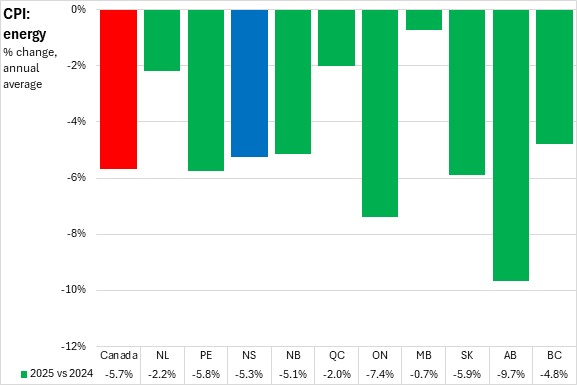
Nova Scotia's energy prices decreased 5.3% in 2025, slower than the national decline of 5.7%. All provinces reported declining energy prices in 2025, with the fastest decline in Alberta, and the slowest decrease in Manitoba.
Nova Scotia's food price inflation averaged 2.7% in 2025, slowest among provinces. All provinces reported rising food prices in 2025 with the fastest increase in Saskatchewan with the national average at 3.2%.
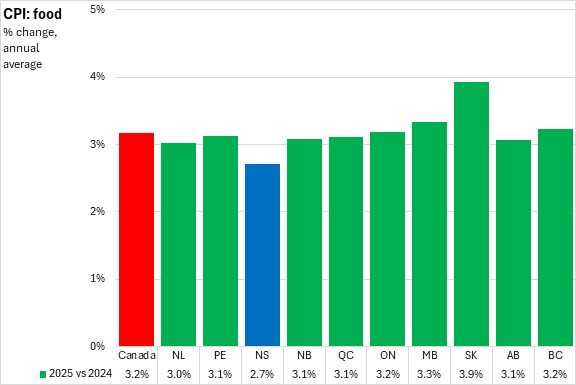
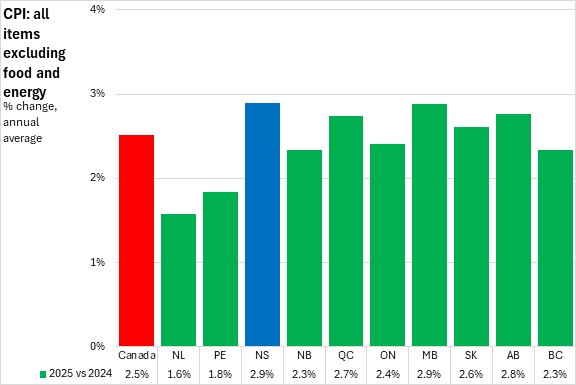
Nova Scotia's all items CPI excluding food and energy prices averaged 2.9% inflation in 2025, above the national average of 2.5%. All provinces reported higher prices with the fastest gains in Nova Scotia and Manitoba, and the slowest in Newfoundland and Labrador.
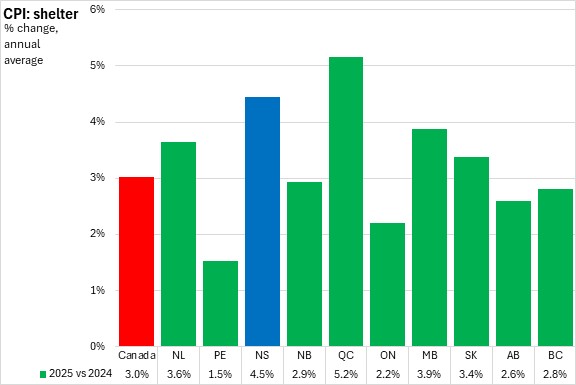
Nova Scotia's shelter prices averaged 4.5% inflation in 2025, faster than the national increase of 3.0%. All provinces reported higher shelter prices for the year with the fastest gain in Québec and slowest gain in Prince Edward Island.
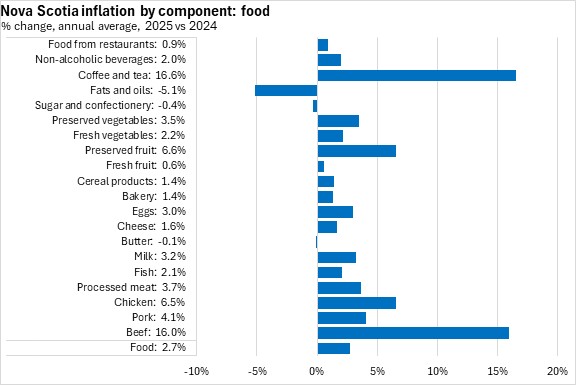
Among detailed food products with available data, Nova Scotia's average inflation in 2025 was fastest for coffee/tea and beef. The only price declines were reported in fats/oils, sugar/confectionary, and butter.
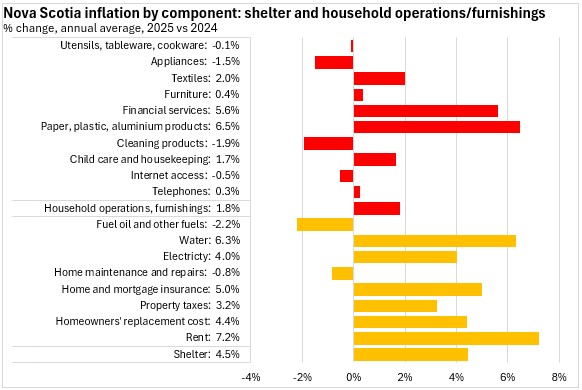
In detailed shelter cost components, rent and water reported the fastest average inflation in 2025. Home maintenance/repairs and fuel oil reported the only declines in prices compared to 2024.
Household operations/furnishings costs were up 1.8% overall in 2025. Prices increased the most for paper/plastic/aluminium products followed by financial services. The largest declines were in cleaning products, followed by appliances.
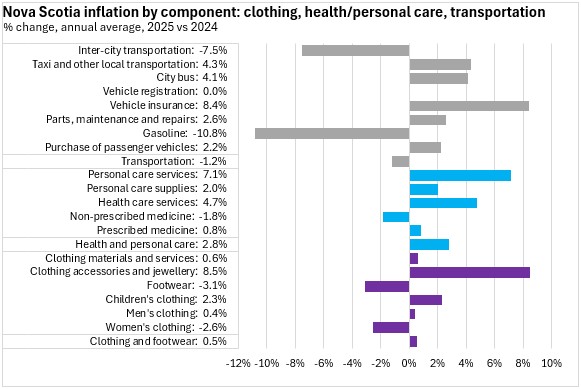
Overall transportations costs were down 1.2% on average in 2025, with the declines reported for gasoline and inter-city transportation. The fastest increase was reported for vehicle insurance in 2025.
Health and personal care costs were up 2.8% in 2025 with gains in all sub-components except non-prescribed medicine. Personal care services reported the fastest inflation.
Clothing and footwear prices were up 0.5% in 2025 with increases in all categories except footwear and women’s clothing, with clothing accessories/jewellery reporting the largest average annual increase.
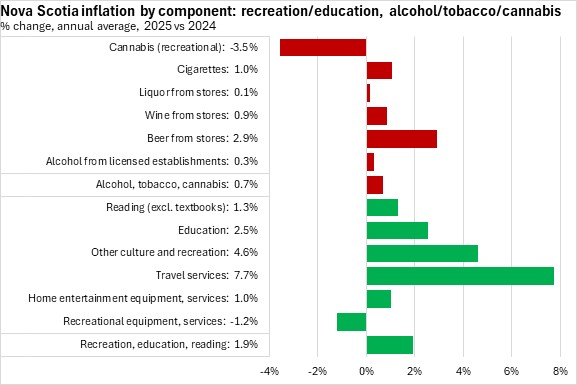
Nova Scotia's overall prices for recreation, education and reading were up 1.9% on average in 2025. The fastest price increases were in travel services, while recreational equipment/services reported the only drop in prices.
Nova Scotia's prices for alcohol, tobacco and recreational cannabis were up 0.7% in 2025 with gains in all categories except recreational cannabis. Bear from stores reported the fastest inflation.
Trends
From 2012 to 2020 Nova Scotia's all items CPI inflation remained within the 0% to 2% range, averaging 1.3% growth per year. Inflation accelerated to 4.1% in 2021, and again to 7.5% in 2022, before slowing to 4.0% in 2023, 2.3% in 2024, and 2.1% in 2025. Excluding energy and food prices, Nova Scotia's inflation was more stable through the 2010s. Starting in 2021, inflation in prices excluding food and energy increased to 2.5%, then 4.3% in 2022, before slowing slightly to 4.2% in 2023 and more rapidly to 2.3% in 2024. In 2025, inflation in prices excluding food and energy reaccelerated to 2.9%.
Source: Statistics Canada. Table 18-10-0004-01 Consumer Price Index, monthly, not seasonally adjusted; Table 18-10-0256-01 Consumer Price Index (CPI) statistics, measures of core inflation and other related statistics - Bank of Canada definitions
<--- Return to Archive


