The Economics and Statistics Division maintains archives of previous publications for accountability purposes, but makes no updates to keep these documents current with the latest data revisions from Statistics Canada. As a result, information in older documents may not be accurate. Please exercise caution when referring to older documents. For the latest information and historical data, please contact the individual listed to the right.
<--- Return to Archive
For additional information relating to this article, please contact:
February 09, 2026INTERPROVINCIAL WORKERS, 2022 Statistics Canada has revised and updated its estimates of interjurisdictional workers.
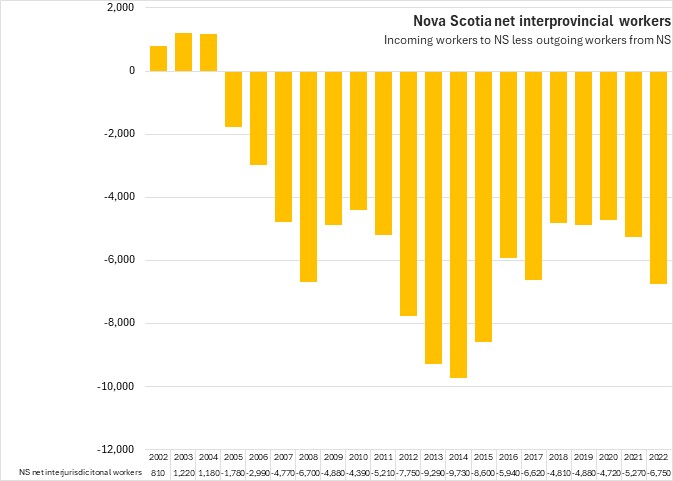
The number of net interprovincial workers refers to those coming to work in Nova Scotia from another province, less those leaving Nova Scotia to work in another province. Net interprovincial workers peaked at -9,730 in 2014. In 2022, net interprovincial workers increased to -6,750.
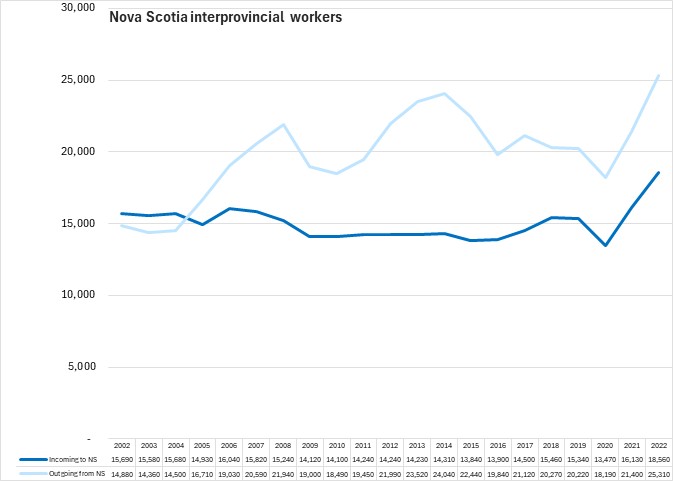
The number of Nova Scotian residents that worked in other provinces or territories increased to 25,310 in 2022, surpassing the previous peak recorded in 2014.
The number of workers inbound to work in Nova Scotia continued to increase, reaching a new high of 18,560 in 2022.
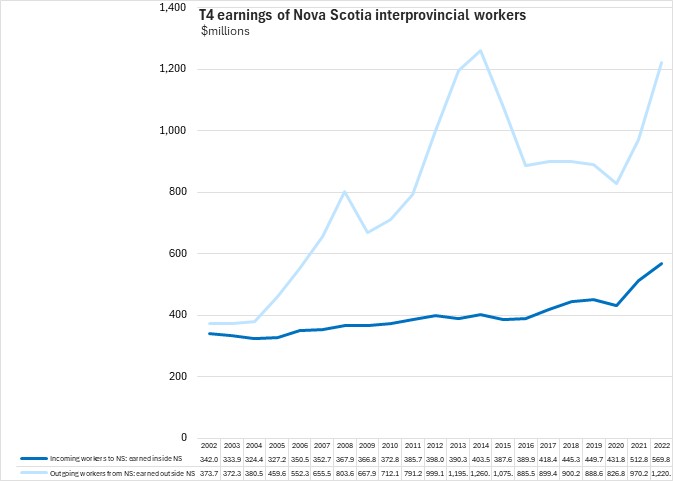
The amounts earned by Nova Scotia workers in other provinces increased to $1,220.7 million in 2022. Incoming workers earned $569.8 million for their work in Nova Scotia.
The rise in outbound interprovincial workers from Nova Scotia during 2002-2014 was concentrated in the construction sector and in oil/gas. Much of the decline in outbound workers from 2014-2021 was due to a decline in outbound workers in these sectors (particularly in construction).
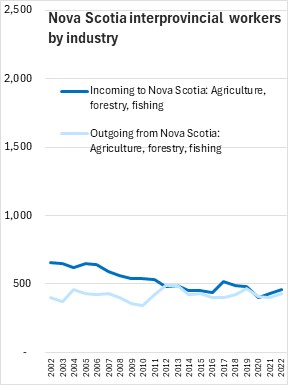
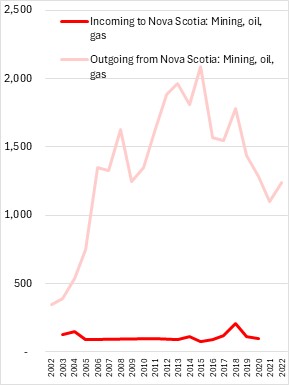
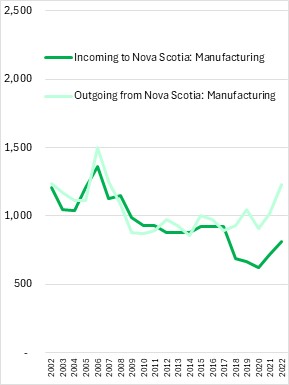
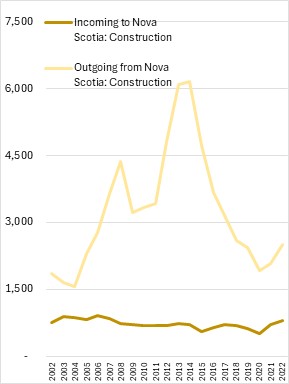
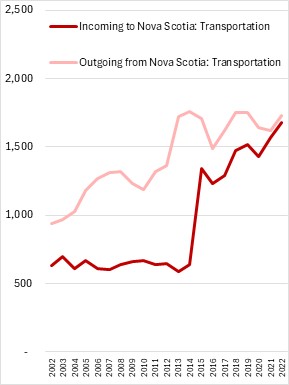
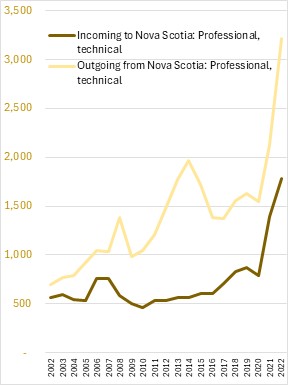
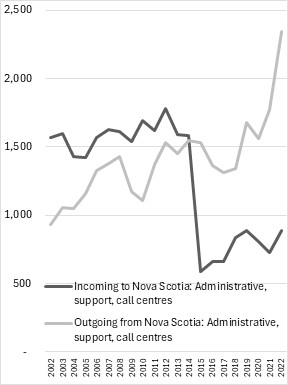
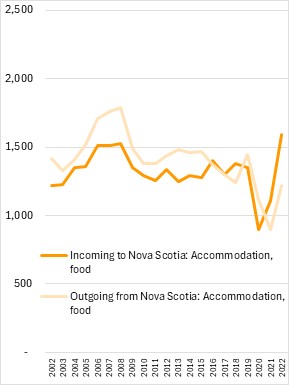
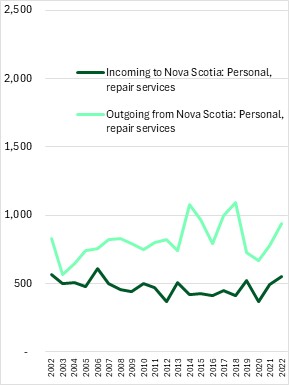
In recent years, there have been rising numbers of outbound interprovincial workers from Nova Scotia in: wholesale trade, transportation, professional/technical services and administrative support/call centres. There was also a significant rise in inbound workers arriving from other jurisdictions to work in Nova Scotia's professional/technical and accommodation/food services industries in 2022.
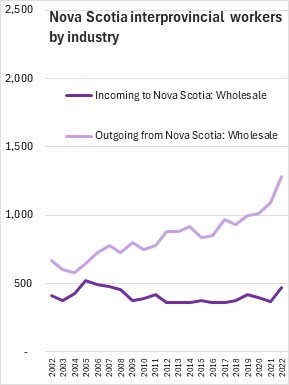
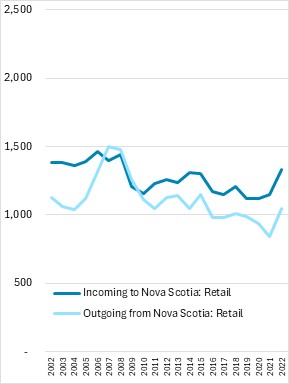
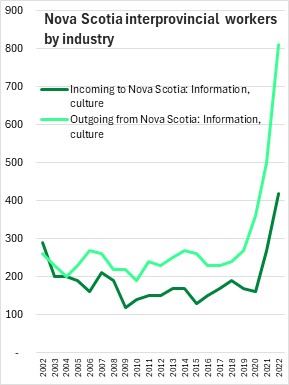
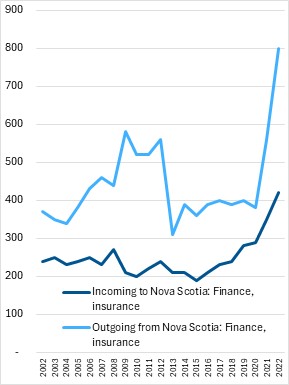
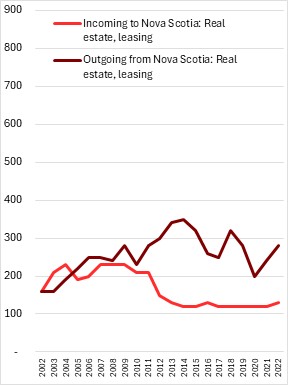
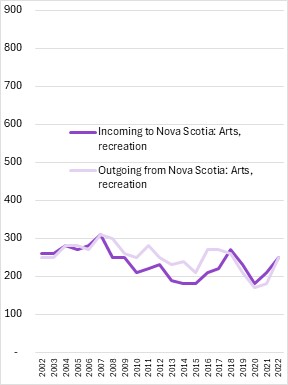
Although the volume of interjurisdictional workers was smaller, there have been notable increases in Nova Scotia workers heading outbound for jobs in information/culture and finance/insurance (these industries also reported higher volumes of inbound workers heading to Nova Scotia). Real estate and arts/recreation/culture both reported less interjurisdictional work (both inbound and outbound) in recent years, despite reporting increases in 2022.
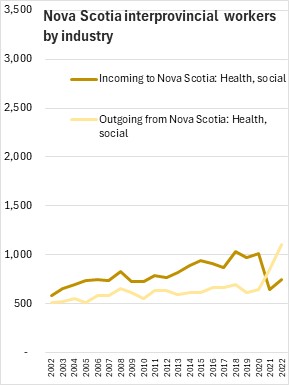
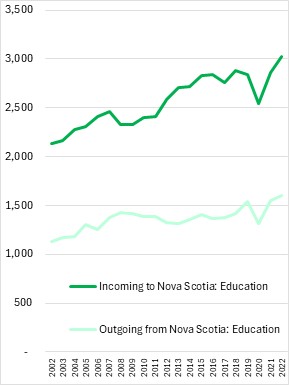
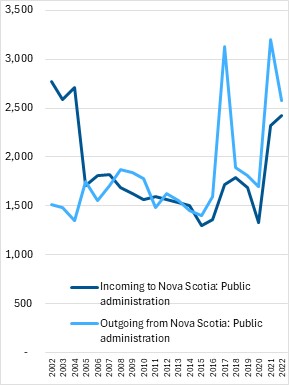
There was a sharp rebound in interjurisdictional work in public administration in 2021 (both inbound and outbound) followed by a decline in outbound workers in 2022. Education workers both inbound and outbound increased in 2022. The number of inbound health workers coming to Nova Scotia increased in 2022 after declining in 2021 while the number of Nova Scotian workers across Canada in health care and social assistance (including daycare) continued to rise.
Nova Scotia has its largest interprovincial worker flows with four provinces: Newfoundland and Labrador, New Brunswick, Ontario and Alberta. Outbound interprovincial workers from Nova Scotia destined for Alberta have declined from 10,550 in 2014 to 3,180 in 2022. New Brunswick and Newfoundland and Labrador were net positive contributors of interprovincial workers to Nova Scotia in 2022 while Ontario and Alberta were net negative drains on interprovincial workers from Nova Scotia. The numbers of workers outbound from Nova Scotia to Ontario increased sharply in 2021 and 2022 while the numbers outbound from Nova Scotia to Alberta increased at a slower pace.
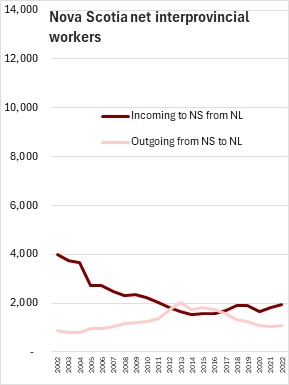
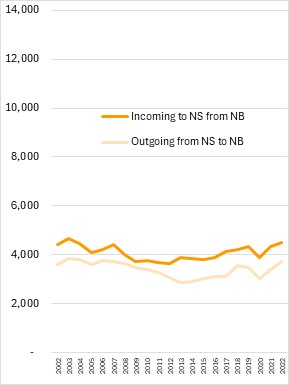
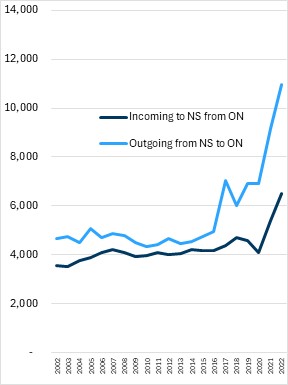
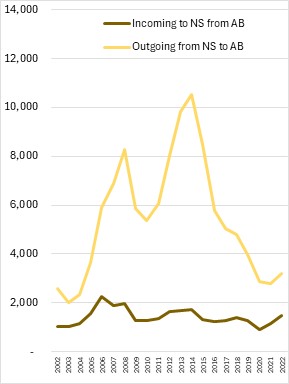
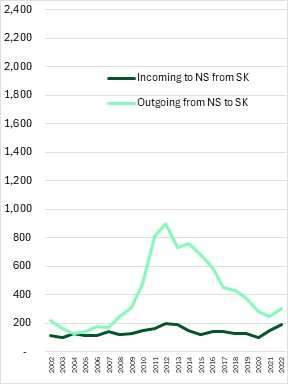
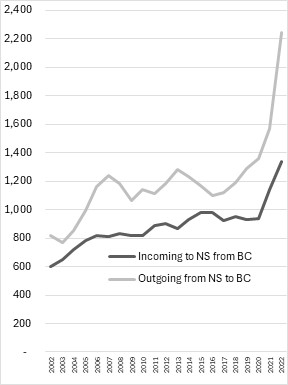
The volumes of interprovincial workers were comparatively smaller for the remaining 5 provinces (vertical axis scales are smaller than those for Ontario, Alberta, New Brunswick and Newfoundland and Labrador).
There were net positive interprovincial workers from Prince Edward Island and net negative interprovincial workers with all other provinces (Québec, Manitoba, Saskatchewan and British Columbia). In 2022, there were notable increases in outbound workers from Nova Scotia to British Columbia and Québec.
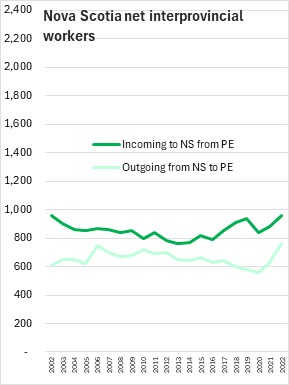
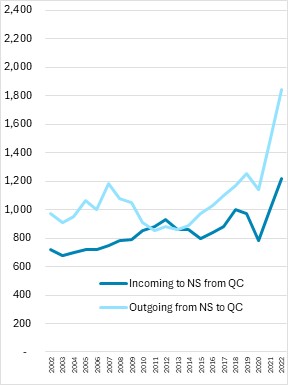
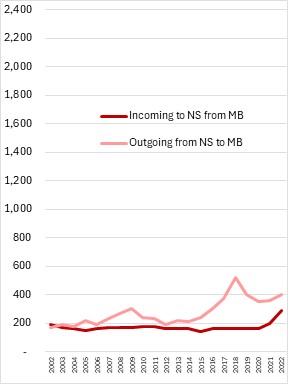
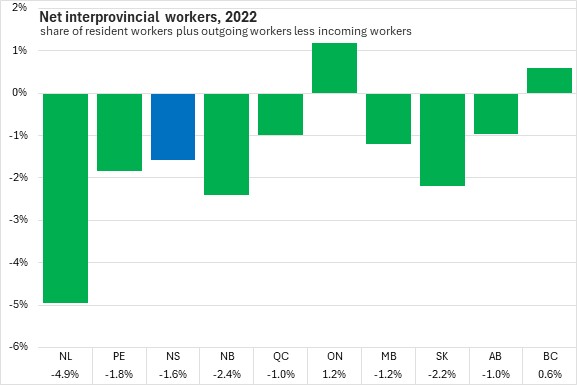
In 2022, the net impact of interprovincial workers (incoming less outbound) amounted to a drain of 1.6% on Nova Scotia's employment. This is measured as net interjurisdictional workers a share of resident workers plus those from other provinces working in Nova Scotia, less inbound workers to Nova Scotia. Only Ontario and British Columbia reported a net gain in employment as a result of interprovincial workers in 2022.
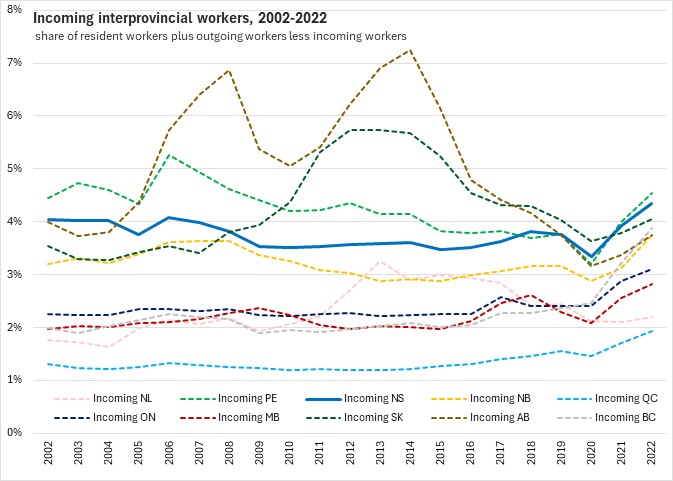
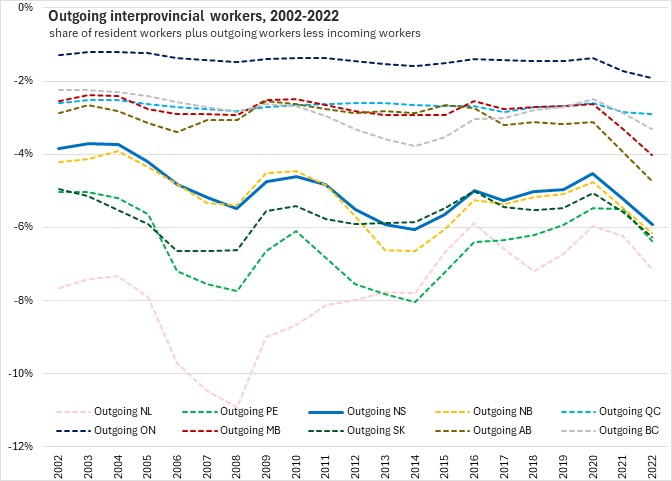
In 2022, Nova Scotia had the second highest proportion of inbound workers (after Prince Edward Island) and the 5th highest share of outbound workers (after the other Atlantic Provinces and Saskatchewan).
Note that those inbound from another province may not count the number who work in both their home province and another province.
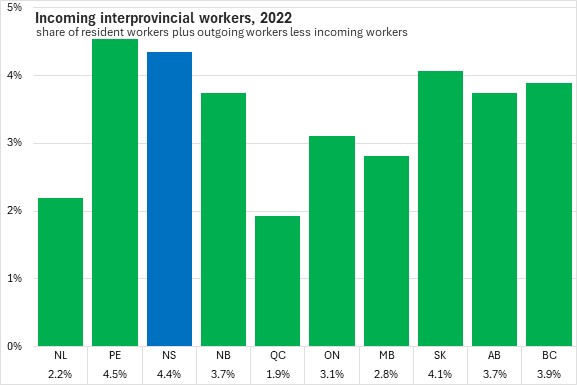
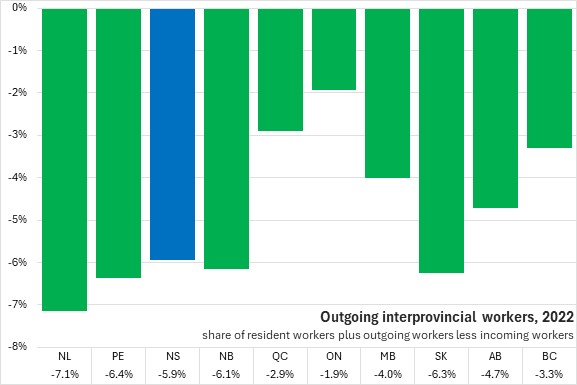
The number of incoming workers to natural resource-producing provinces (Alberta, Saskatchewan and Newfoundland and Labrador) has declined substantially over the last decade.
The share of outgoing workers from the Atlantic provinces as well as Saskatchewan and British Columbia declined between 2014 and 2020. Since 2020, most provinces have reported a higher share of outgoing workers.
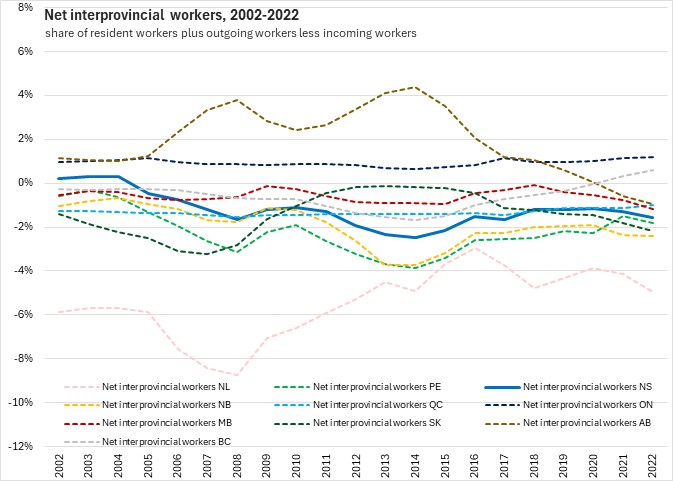
Net interprovincial worker flows have improved for all Maritime provinces since 2014, as well as British Columbia. Previous net gains of interprovincial workers for Alberta have largely been eliminated. Only Ontario has maintained a steady, positive net inflow of interprovincial workers.
Note: interjurisdictional workers refers to the number of people who report work (T4) earnings in one province while residing in another province.
Source: Statistics Canada. Table 14-10-0482-01 Count of interjurisdictional employees and resident employees by age group and sex, 2002-2022; Table 14-10-0483-01 Aggregate T4 earnings for interjurisdictional employees and resident employees, 2002-2022; Table 14-10-0484-01 Total count and T4 earnings of interjurisdictional employees by industry of employment, 2002-2022; Table 14-10-0485-01 Total count and T4 earnings of interjurisdictional employees by target province or territory, 2002-2022
<--- Return to Archive


