The Economics and Statistics Division maintains archives of previous publications for accountability purposes, but makes no updates to keep these documents current with the latest data revisions from Statistics Canada. As a result, information in older documents may not be accurate. Please exercise caution when referring to older documents. For the latest information and historical data, please contact the individual listed to the right.
<--- Return to Archive
For additional information relating to this article, please contact:
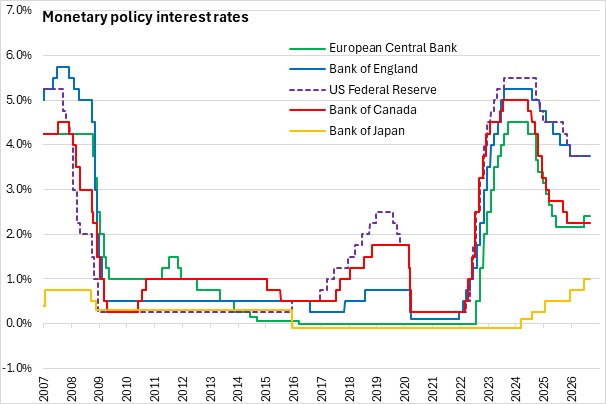
September 02, 2026BANK OF CANADA MONETARY POLICY The Bank of Canada maintained its target for the overnight rate at 2.25%, with the Bank rate at 2.50% and the deposit rate at 2.20%.
The ongoing conflict in the Middle East continues to keep energy prices elevated. In addition, new U.S. tariffs and Canadian countermeasures have been announced following the breakdown of trade talks between Canada and the United States. Both developments remain fluid.
Overall, the global economy has remained resilient despite geopolitical pressures, with growth broadly in line with the July Monetary Policy Report (MPR) projection. In the United States, economic growth remains strong, supported by consumer spending and AI-related investment. Growth in the euro area exceeded expectations in the second quarter, while China’s economy slowed. Inflation remains elevated in many countries reflecting high oil prices.
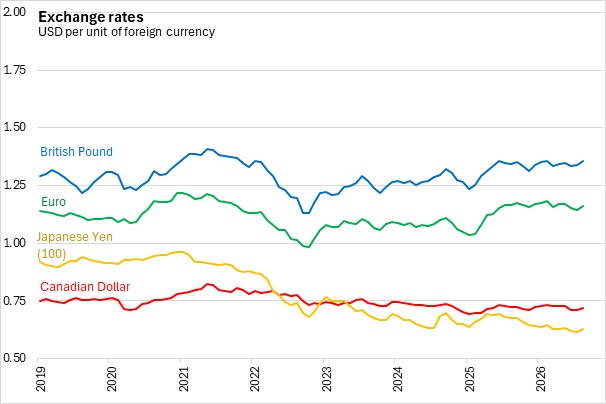
Financial conditions have tightened since July. The Canadian dollar has appreciated slightly on US-dollar weakness. Recent data supports Governing Council’s view of a broadening recovery in Canada’s economy. However, uncertainty is high and new US tariffs and threats of further action pose risks to the sustainability of the recovery.
As expected, Canadian economic activity picked up in the second quarter, with GDP rising 3.3% after very weak growth in the first quarter. Consumption increased, housing activity recovered somewhat after several weak quarters, and both exports and business investment rose sharply.
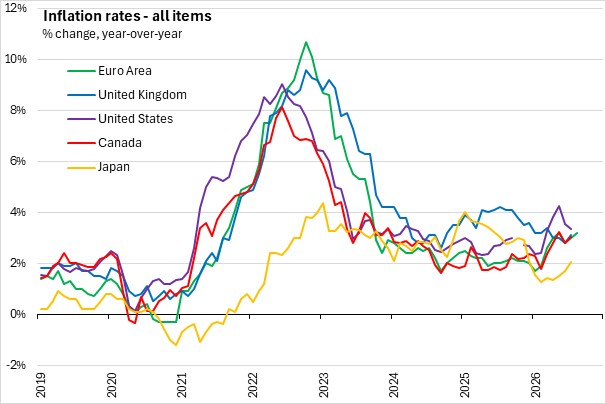
CPI inflation has hovered around 3% in recent months due to high gasoline prices. So far, there is limited evidence that higher energy costs are spilling over into other components of inflation: excluding gasoline, inflation was 2.2% in July, and core inflation measures remained close to 2%.
However, with the conflict in the Middle East ongoing and little progress in reopening the Strait of Hormuz, upside risks to the Bank’s inflation outlook have increased. New U.S. tariffs and Canadian counter-tariffs could also raise costs for some businesses and gradually pass through to consumer prices.
Labour market conditions have also improved recently, with the unemployment rate edging down to 6.4% in July. However, labour demand remains subdued, and indicators continue to point to excess supply in the economy.
Governing Council will assess the sustainability of the economic rebound and the outlook for inflation to keep it close to the 2.0% target and is prepared to adjust monetary policy as needed. The Bank remains committed to maintaining Canadians’ confidence in price stability through this period of global upheaval.
The next scheduled date for announcing the overnight rate target is October 28, 2026 and the Bank’s next Monetary Policy Report will be released at the same time.
Source: Monetary Policy press conference; Monetary Policy press release
<--- Return to Archive


