The Economics and Statistics Division maintains archives of previous publications for accountability purposes, but makes no updates to keep these documents current with the latest data revisions from Statistics Canada. As a result, information in older documents may not be accurate. Please exercise caution when referring to older documents. For the latest information and historical data, please contact the individual listed to the right.
<--- Return to Archive
For additional information relating to this article, please contact:
January 02, 2026CANADIAN COMMUNITY HEALTH SURVEY, 2024 Statistics Canada released annual results from the 2024 Canadian Community Health Survey (CCHS) in August. This survey is an annual population health survey that provides insight into life satisfaction, stress, perceived health, health conditions and behaviours of the Canadian population. The survey is representative of the population aged 18 and older living outside the territories. The CCHS survey excludes persons living on reserves and other Indigenous settlements in the provinces; full-time members of the Canadian Forces; the institutionalized population, and persons living in the Quebec health regions of Région du Nunavik and Région des Terres-Cries-de-la-Baie-James.
Life satisfaction
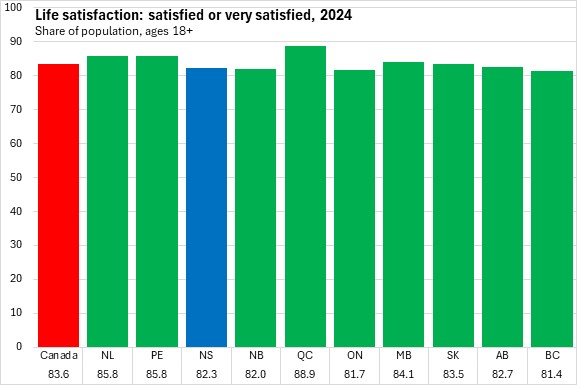
In Nova Scotia, 82.3% of the population reported being satisfied or very satisfied with their lives at the moment (reporting a score of 6 or greater on a scale of 1 to 10). Nova Scotia's life satisfaction was below the national average but above levels reported in British Columbia, Ontario and New Brunswick. Across Canada, 83.6% of the population reported being satisfied or very satisfied with their lives. Life satisfaction scores were highest in Québec.
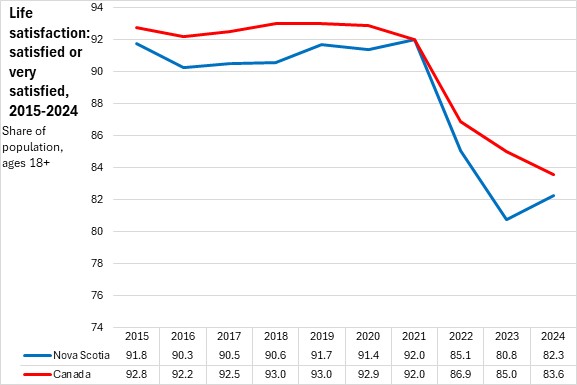
Prior to 2022, over 90% of the population consistently reported being satisfied or very satisfied with their lives. In 2022 and 2023, life satisfaction dropped markedly at both the national and provincial levels. In 2024, life satisfaction continued to decline nationally, while Nova Scotia's life satisfaction levels improved.
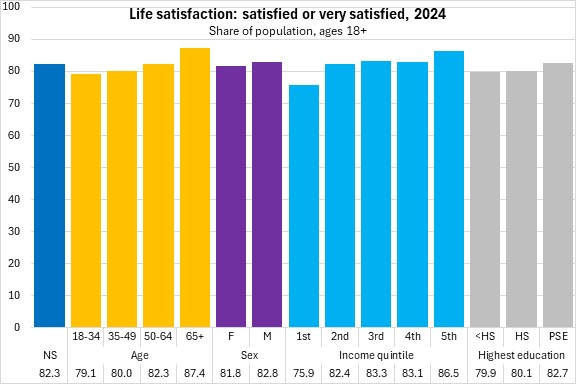
Nova Scotia's life satisfaction was higher for the oldest age cohorts (65 and older). Nova Scotia's lowest life satisfaction results were reported among those aged 18-34, particularly among females.
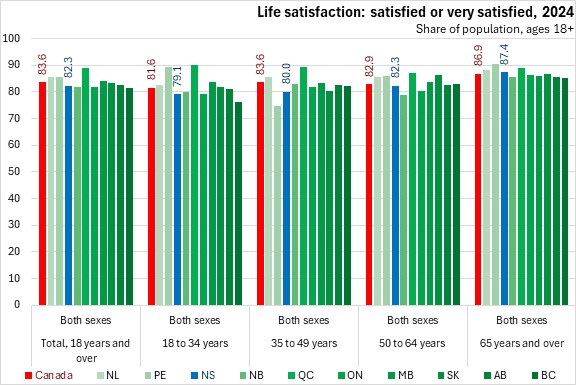
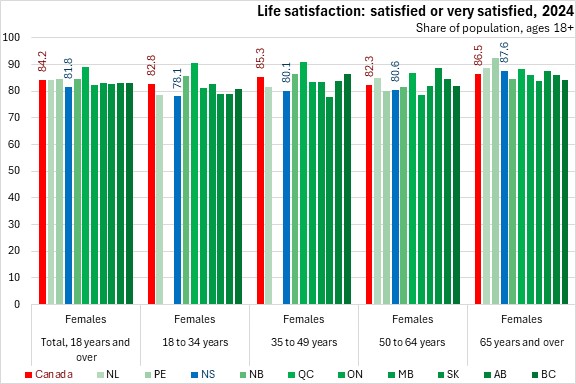
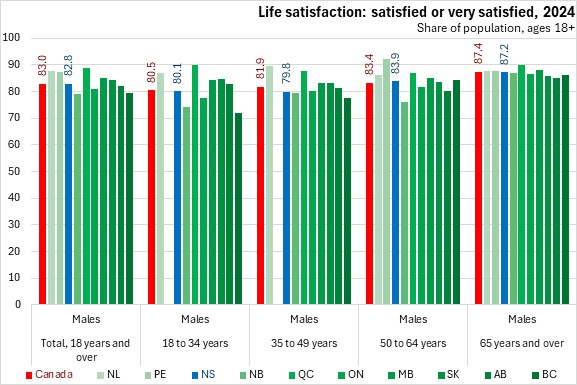
Life satisfaction by income group in Nova Scotia was lowest for those in the lowest quintile of earnings. Life satisfaction was higher for those in the highest income quintile. By education, those with a high school education (HS) or less (<HS) reported a lower percentage who were satisfied or very satisfied with their life at the moment than those with post secondary education (PSE). By age and sex cohorts, seniors in Nova Scotia reported the highest share who were satisfied or very satisfied with their lives while males reported greater life satisfaction levels than females.
Sense of belonging to community
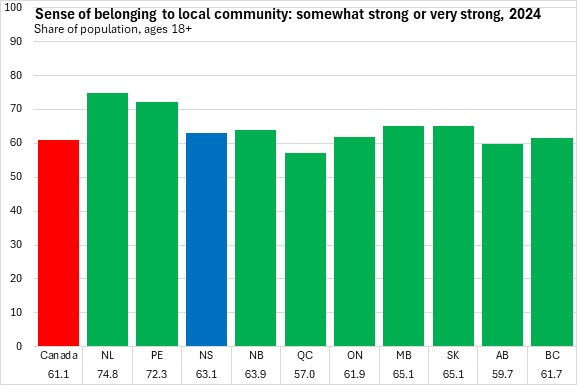
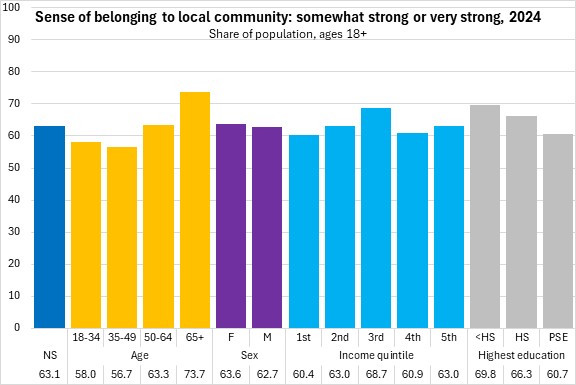
In Nova Scotia, 63.1% of the population reported feeling a somewhat or very strong sense of belonging to their local community, which was higher than the national average of 61.1%. The sense of belonging to community was strongest in Newfoundland and Labrador and lowest in Quebec.
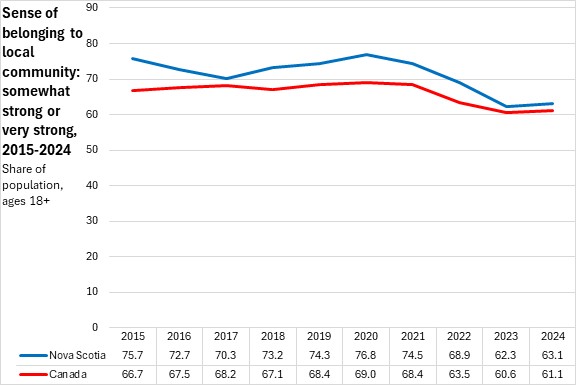
Sense of belonging to community recovered somewhat in 2024 after previously declining from 2020-2023.
In Nova Scotia, sense of belonging to community was highest among seniors (particularly among females) and lowest among those aged 35 to 49 (particularly among males). Nova Scotia females aged 50 to 64 had notably lower sense of belonging to community than males of the same age. Across Canada, sense of belonging to community was highest among seniors and lowest among those aged 18 to 34.
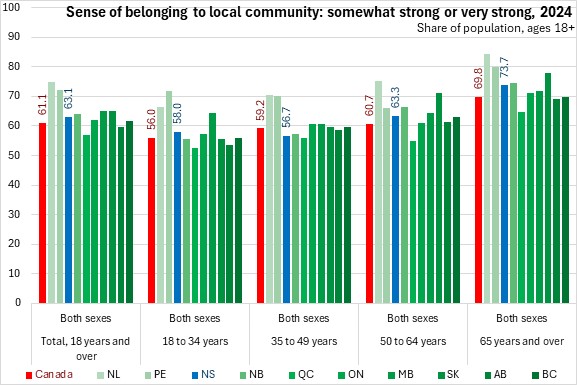
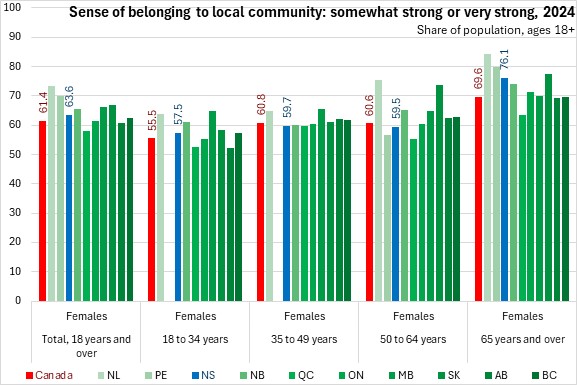
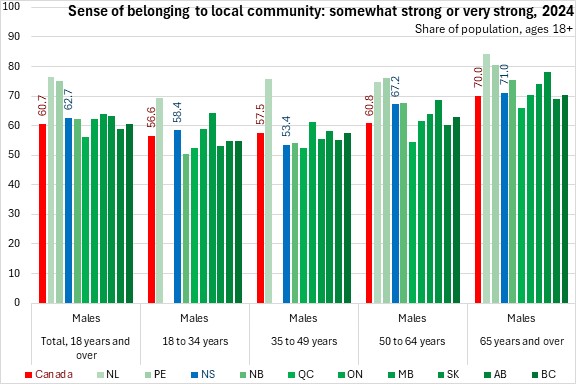
There was a lower sense of belonging to community among Nova Scotians in the lowest income quintile and a higher sense of belonging among those with less than a high school education.
Life stress
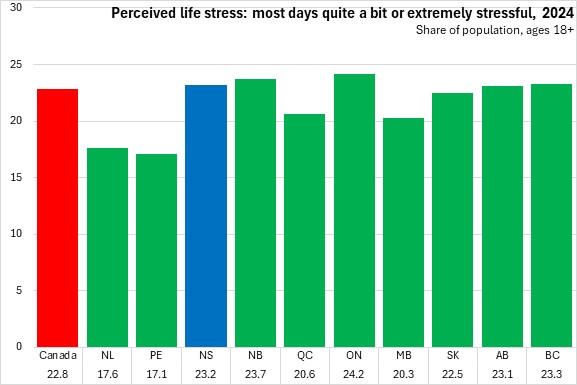
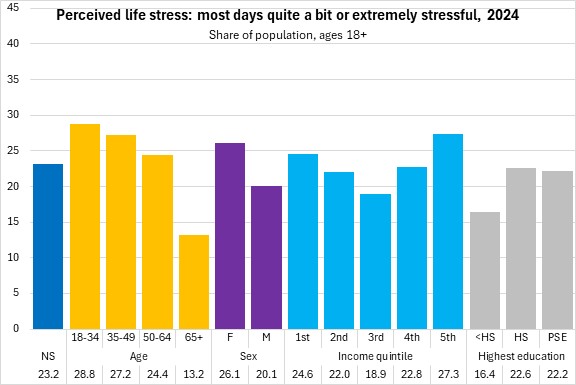
Nova Scotians (23.2%) reported slightly higher levels of life stress as the national average (22.8%). Life stress was highest in Ontario and lowest for Newfoundland and Labrador and Prince Edward Island.
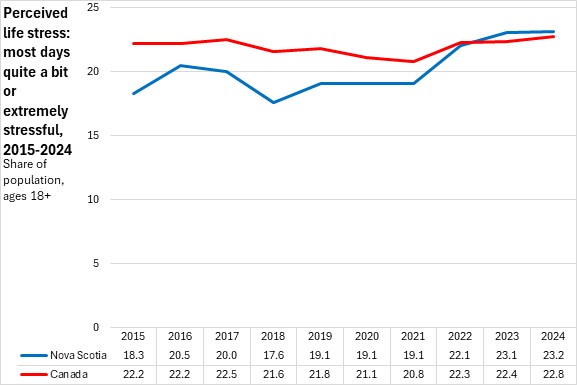
Life stress in Nova Scotia increased in 2022 and 2023, but this growth tapered off in 2024.
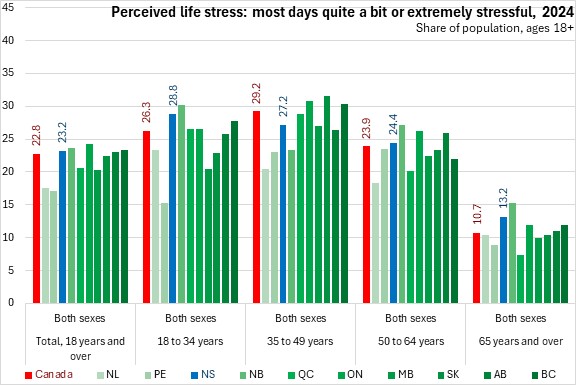
Life stress was felt most acutely by Nova Scotians aged 18 to 34 and 35 to 49 and quite particularly among females in these age cohorts. Seniors reported lower levels of life stress in Nova Scotia than other age cohorts, though Nova Scotia seniors reported the second highest levels of life stress compared with seniors in other provinces.
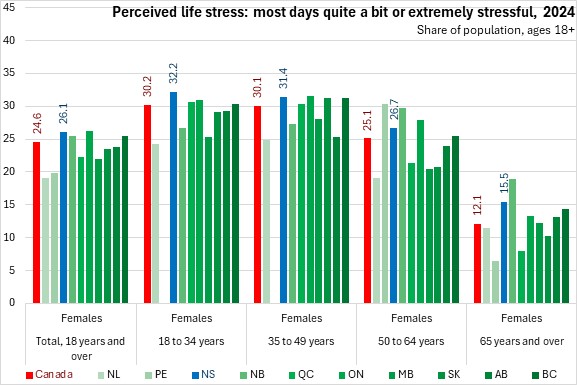
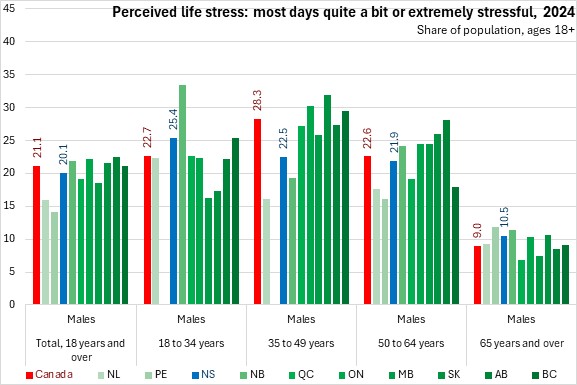
Life stress was higher for those in the top income quintile as well as in the bottom income quintile. Life stress was higher for those with high school and post-secondary education and lower for those with less than a high school education. Life stress was notably higher among females than among males in Nova Scotia.
Perceptions of physical and mental health
The CCHS asks Canadians how they perceive their physical and mental health.
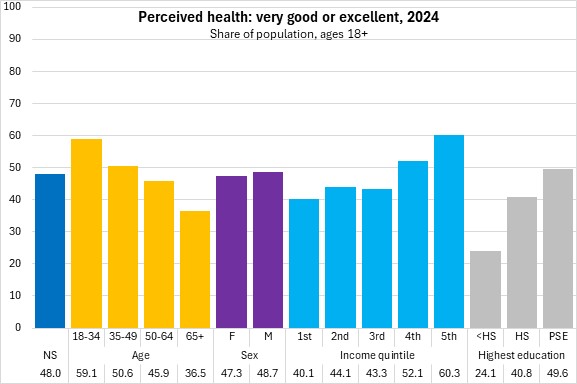
Among Nova Scotians aged 18 and up, 48.0% reported very good or excellent physical health, below the national average of 52.0%. Those in the New Brunswick and Nova Scotia had the lowest shares reporting excellent or very good physical health while those in Quebec reported the highest share.
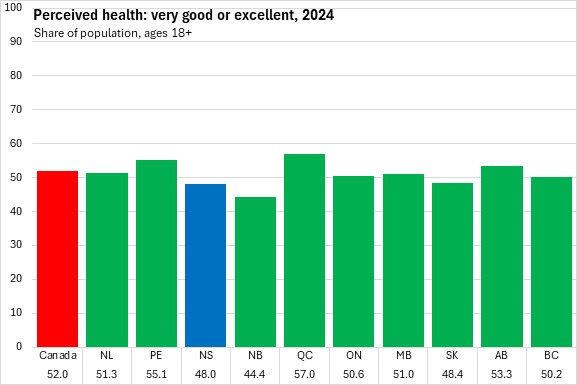
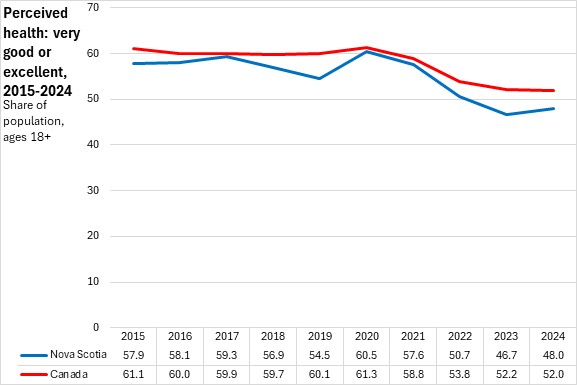
Perceptions of very good or excellent health declined considerably in Nova Scotia from 2020-2023, but recovered somewhat in 2024. National perceptions of very good or excellent health continue to slip.
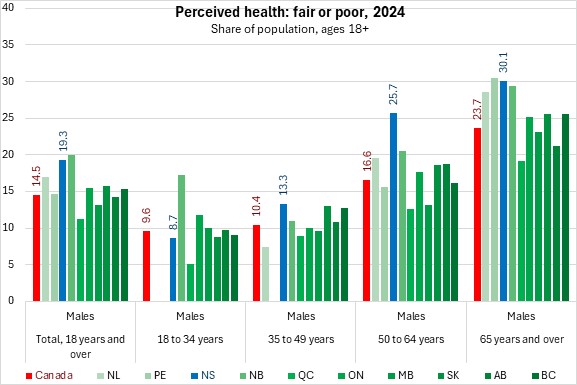
Perceived health declines with age. Males aged 18-34 reported the strongest perceptions of very good health, while male seniors report the weakest perceptions of very good health.
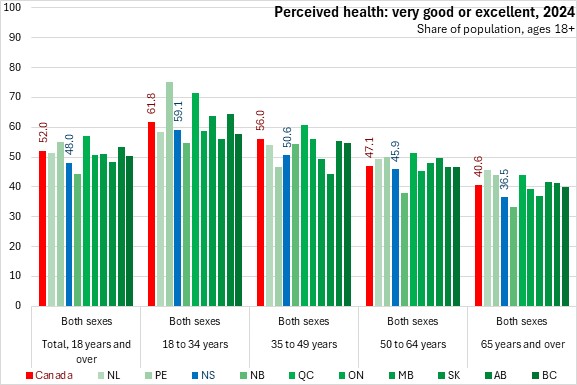
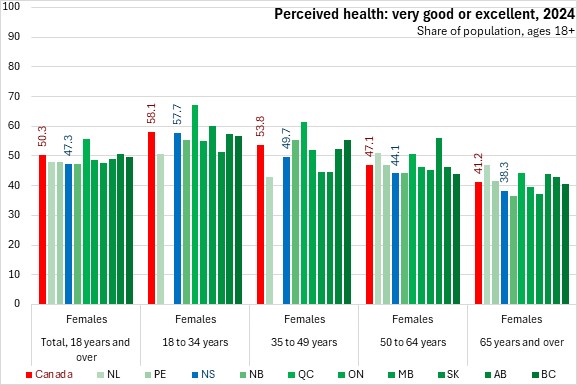
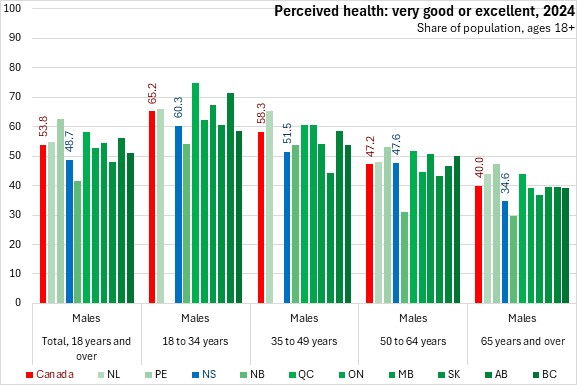
Perceptions of very good or excellent physical health rise with income and education levels and fall with age.
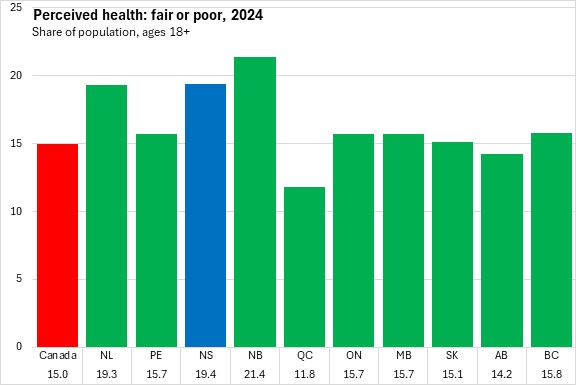
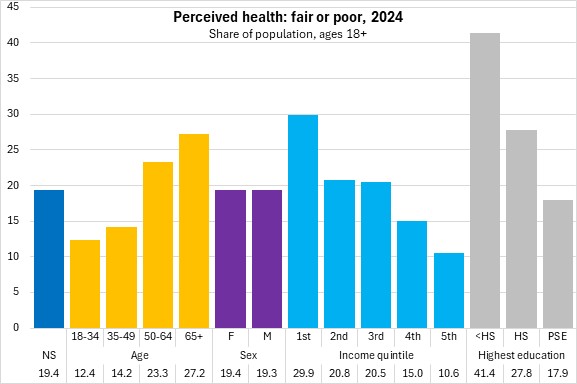
In Nova Scotia, 19.4% of the population aged 18+ perceived fair or poor health in 2024. This was above the national average (15.0%). Perceptions of fair/poor health were most prevalent in Newfoundland and Labrador, Nova Scotia and New Brunswick. Québec reported the lowest perceptions of fair/poor health.
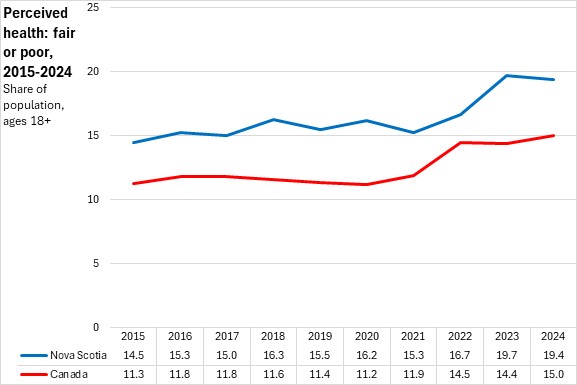
Perceptions of fair/poor health decreased in Nova Scotia in 2024 following a notable rise from 2021-2023.
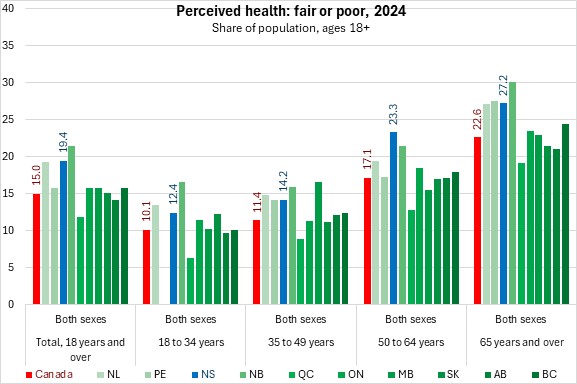
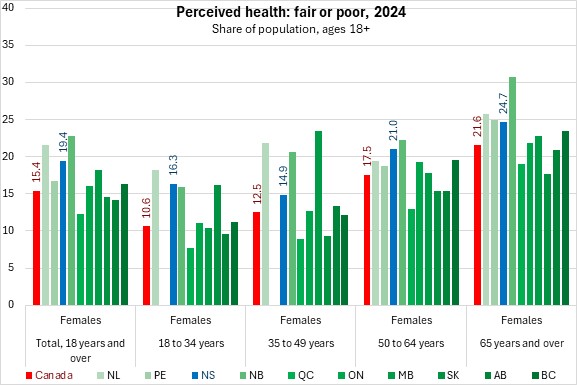
Perceptions of fair/poor health rise with age, particularly among males.
Perceptions of fair/poor health were more widespread among those in lower income quintiles as well as among those with lower levels of education.
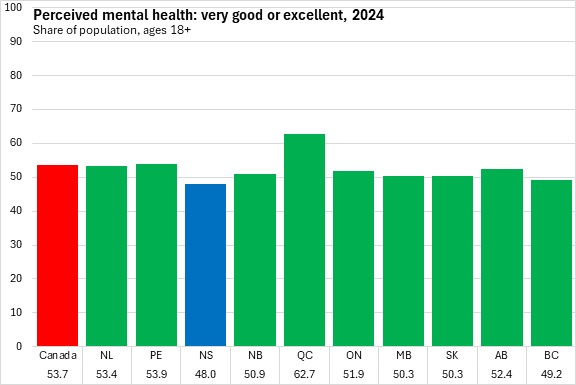
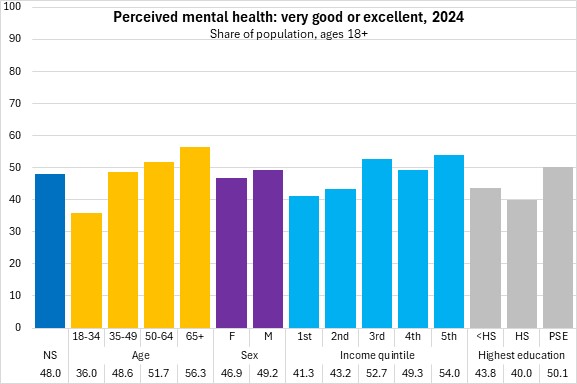
Nova Scotians reported the lowest perception (48.0%) of very good or excellent mental health. Nationally, 53.7% of the population reported very good or excellent mental health, with the highest share in Québec.
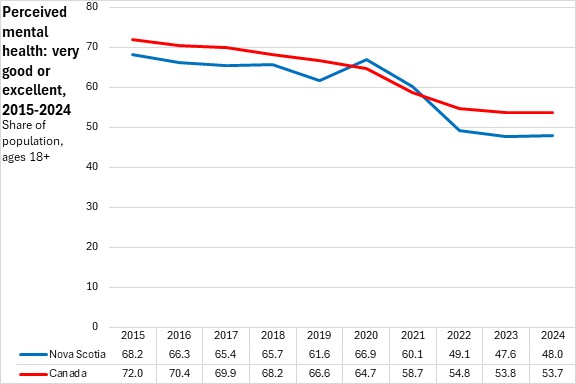
Perceptions of very good or excellent mental health have been trending down since 2015. Nova Scotia's perceptions of mental health reported some improvements (2018, 2020 and 2024), but have declined more sharply than national levels.
Perceptions of very good or excellent mental health were strongest among seniors. Those aged 18 to 34 and 35 to 49 reported the weakest perceptions of very good or excellent mental health (particularly among females aged 18-34).
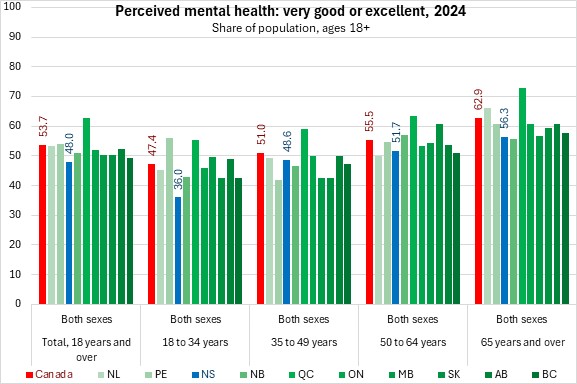
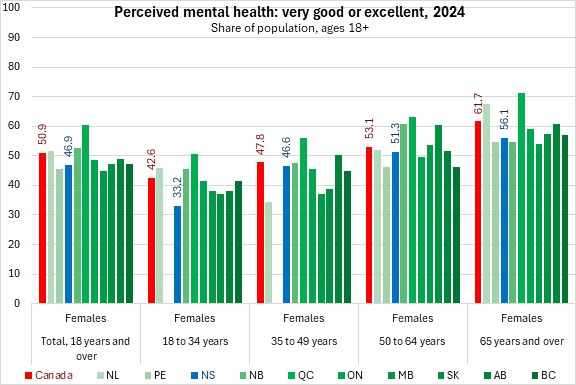
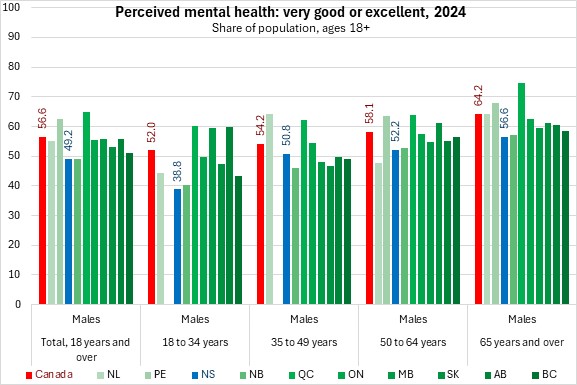
Perceptions of very good or mental health in Nova Scotia rise with age, income and education. Males reported stronger perceptions of mental health than females.
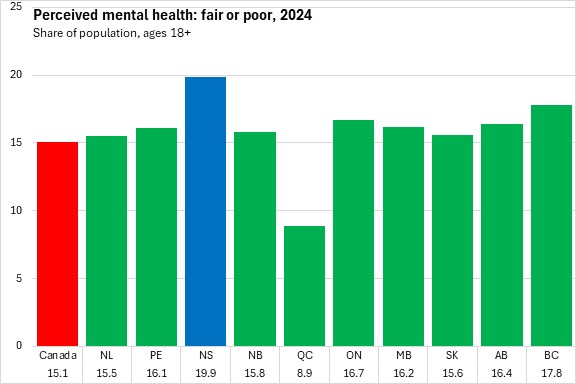
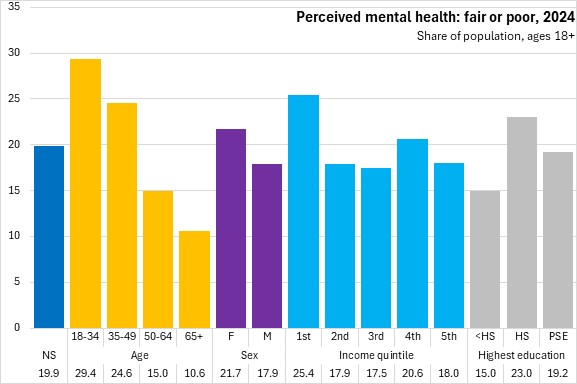
Nova Scotia's portion of the population that reported only fair or poor mental health was 19.9% - the highest among provinces and well above the national average (15.1%). Québec had the smallest portion of the population that reported fair or poor mental health.
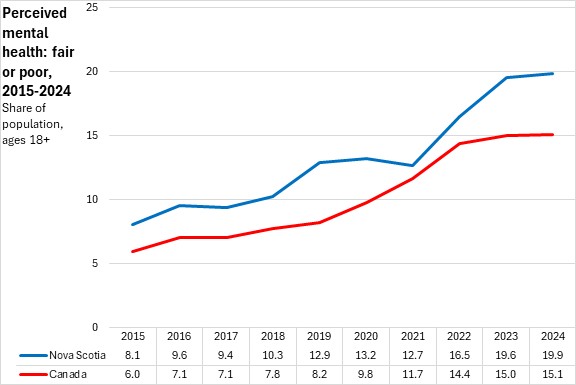
Perceptions of fair or poor mental health have been rising since 2015, though this growth slowed in 2024.
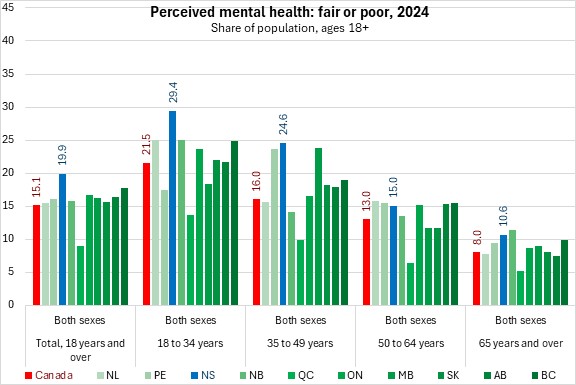
Perceived fair or poor mental health was most prevalent among Nova Scotians aged 18 to 34 (especially among females) as well as those aged 35 to 49.
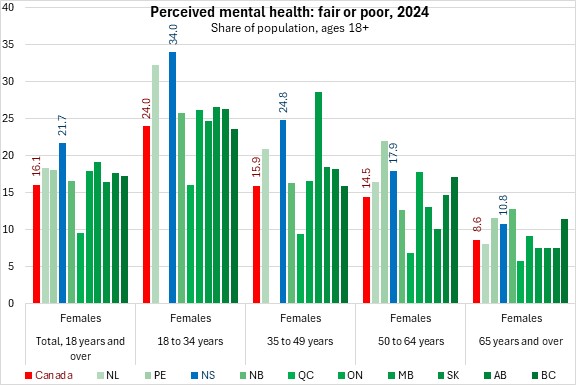
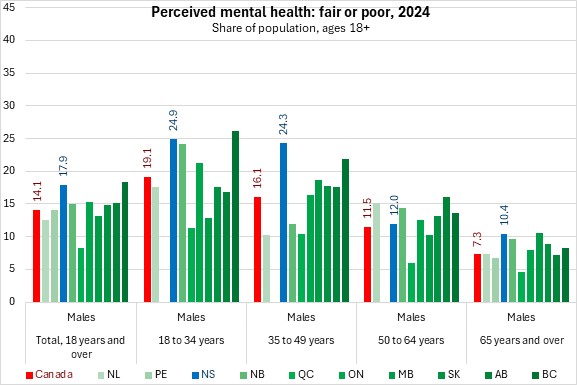
Perceptions of fair or poor mental health were notably more prevalent among those in the lowest income quintile. Older populations, males and those with less than a high school education were less likely to report fair/poor mental health.
Health conditions
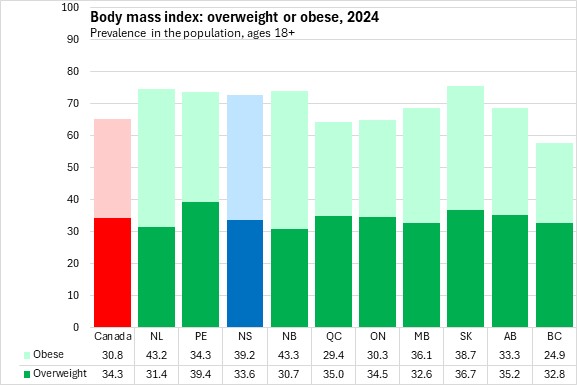
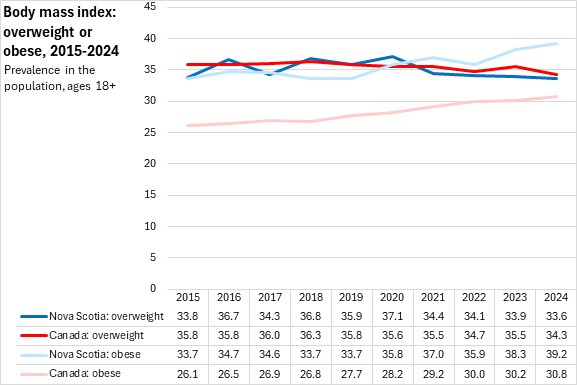
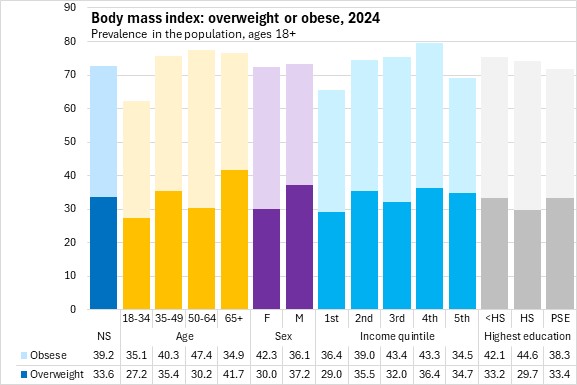
The portion of Nova Scotia's adult population that reports being overweight (33.6% using an adjusted self-assessment) was slightly lower than the national average in 2024 (34.3%). However, the portion of Nova Scotian adults who report obesity (39.2%) was considerably higher than the national average (30.8%). High body mass index was more prevalent among all Atlantic Provinces (as well as in Saskatchewan) and less prevalent in British Columbia.
Nova Scotia's reported levels of overweight populations have been fairly stable, as has the share of the Canadian population that report being overweight. The share of Canada's population that reported being obese is lower than the share in Nova Scotia. The portion of populations reporting obesity has risen both in Nova Scotia and across Canada.
Being overweight or obese is more common among those aged 35 and older. Obesity was most prevalent among those aged 50-64 as well as among females. The prevalence of obesity was higher for those in middle income quintiles than for those at the highest and lowest income levels. Persons with post secondary education reported the lowest obesity levels.
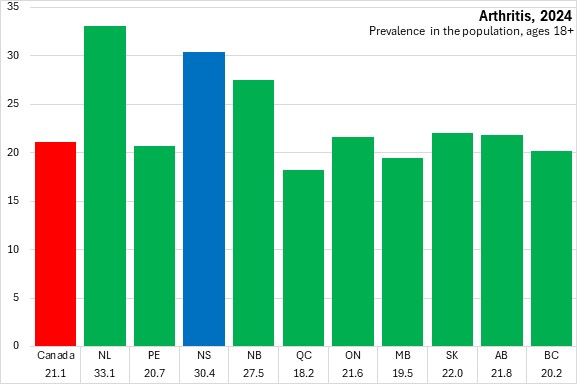
Among common chronic health conditions, Nova Scotia has the second highest prevalence of arthritis at 30.4% of the population aged 18 and older.
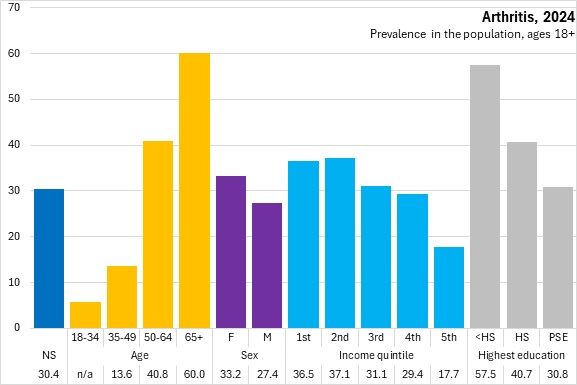
Arthritis was much more common among older age cohorts and also more common among females. The prevalence of arthritis declines with both income and education.
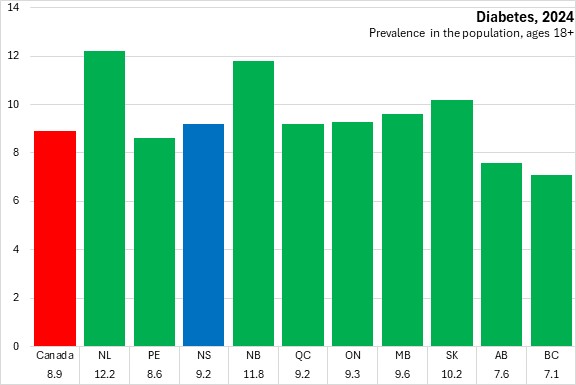
Nova Scotia's prevalence of diabetes (9.2%) of diabetes was higher than the national average (8.9%). British Columbia and Alberta reported notably lower prevalence of diabetes while Newfoundland and Labrador and New Brunswick reported notably higher prevalence.
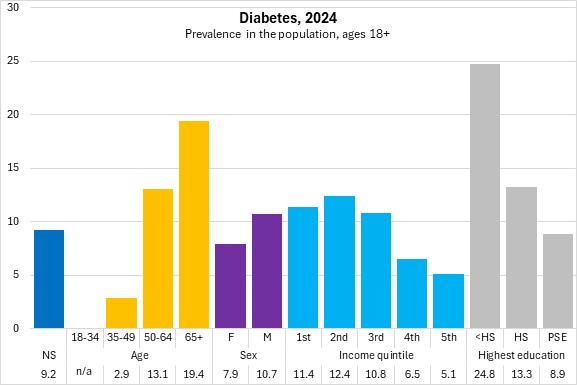
Diabetes was more common among older Nova Scotians and males as well as among those with less than a high school education. Diabetes was less common among the two highest income quintiles.
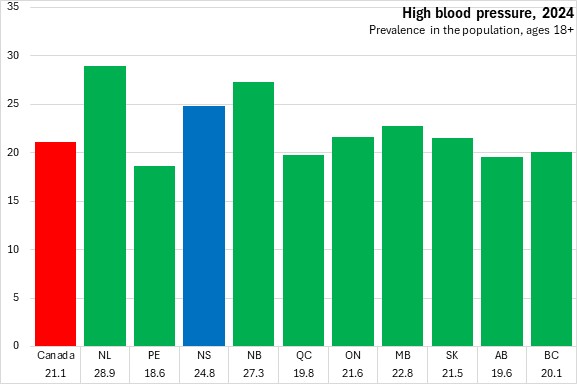
Nova Scotians reported the third highest prevalence of high blood pressure (24.8%), after Newfoundland and Labrador and New Brunswick. Nationally, high blood pressure was reported in 21.1% of the population in 2024, with the lowest share in Prince Edward Island.
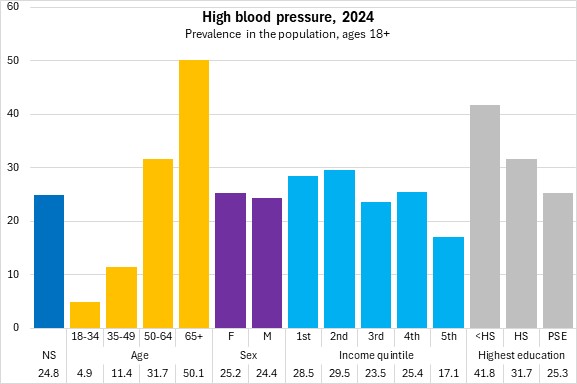
High blood pressure was more commonly reported among older age cohorts as well as among those in lower income and education groups.
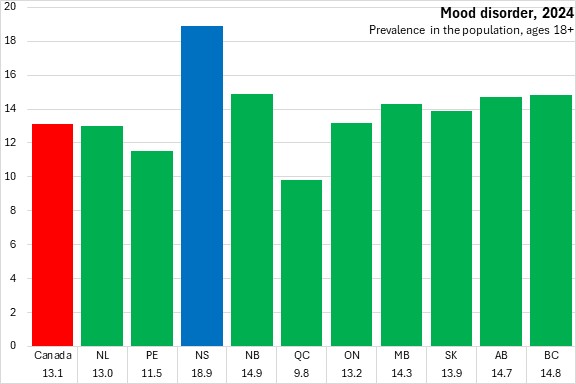
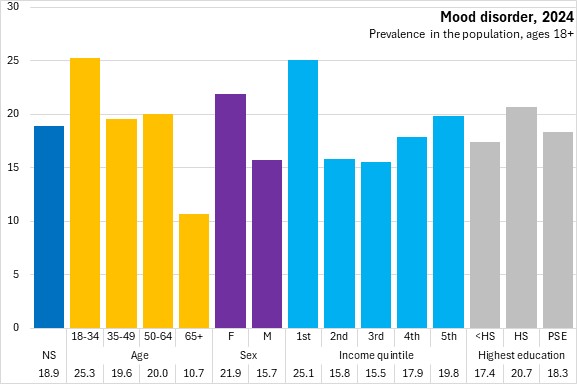
Nova Scotians reported the highest prevalence of mood disorders in 2024: 18.9% - four percentage points higher than the second highest prevalence. Nationally, 13.1% of the population reported a mood disorder with the lowest share in Québec.
Mood disorders were notably more prevalent among Nova Scotians aged 18-49 as well as among females and those in the lowest income quintile. Mood disorders were notably less prevalent among seniors as well as among males.
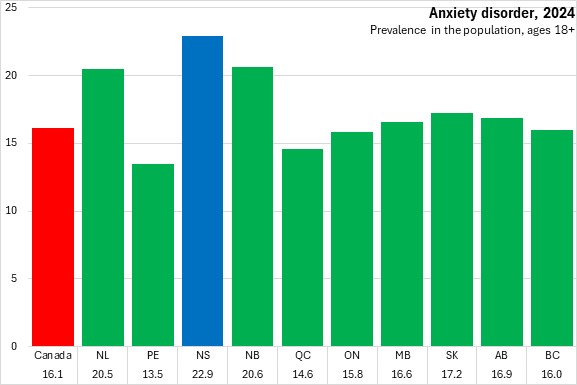
Nova Scotians reported the highest prevalence of anxiety disorders in 2024 at 22.9% of the population. Nationally, 16.1% of the population reported anxiety disorders. Nova Scotia, Newfoundland and Labrador and New Brunswick reported the highest prevalence of anxiety disorders while Prince Edward Island reported the lowest.
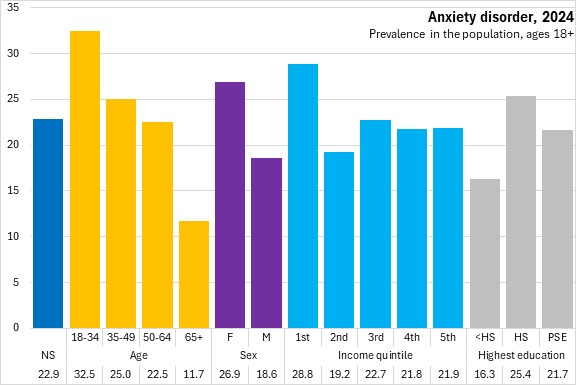
Anxiety disorders were notably more prevalent among females than among males. Anxiety disorders were more prevalent in younger age cohorts as well as among those with the lowest levels of income. Anxiety disorders were notably less common among those with less than a high school education.
Healthy behaviours
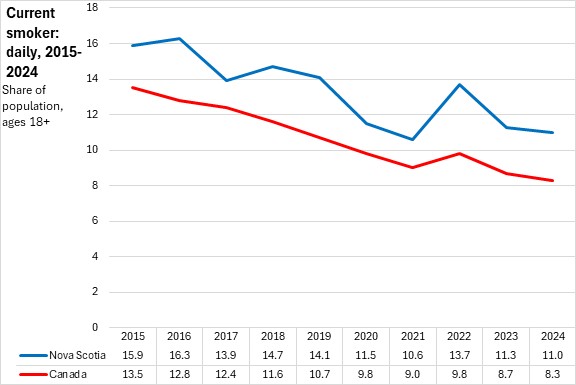
Nova Scotia reported the second highest portion of daily smokers among provinces (11.0%), after Newfoundland and Labrador. Nationally, 8.3% of the population were daily smokers with the lowest smoking rates in British Columbia.
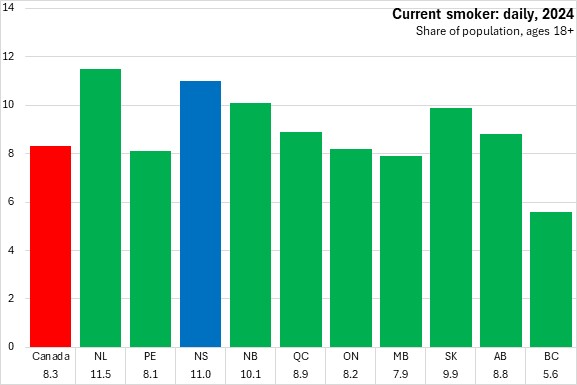
Nova Scotia's smoking rates have been trending down, but there are years (particularly 2022) when smoking rates have risen. Smoking rates declined both in Nova Scotia and nationally over each of the last two years.
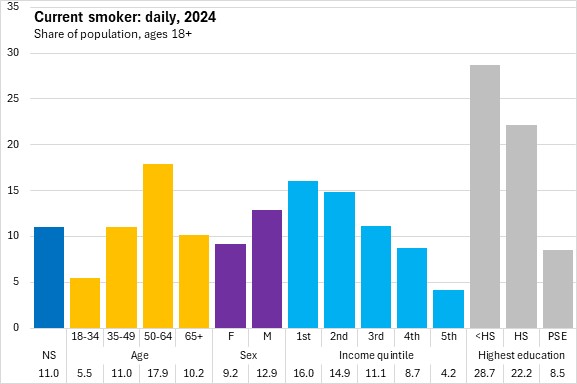
Smoking was more common among Nova Scotians aged 50-64 as well as among those in the lowest income quintile and those with high school or lower education levels. Smoking was more common among males than among females.
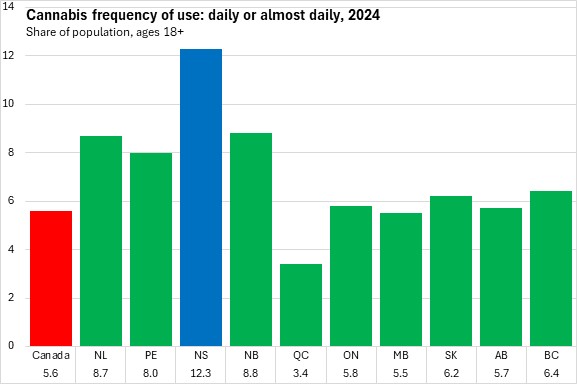
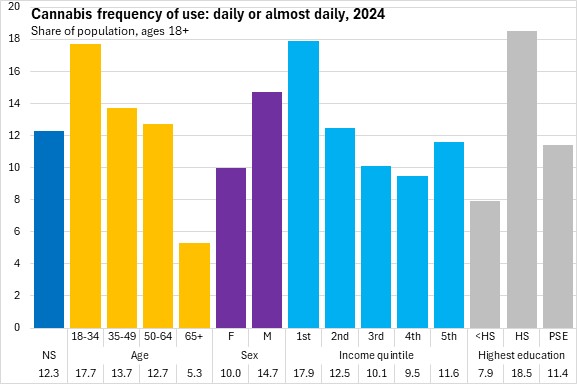
Nova Scotians report the highest prevalence of daily cannabis use: 12.3% - 3.5 percentage points higher than the second highest prevalence of daily cannabis use. Nationally, 5.6% of the population reported daily cannabis use, with the highest shares in Atlantic Canada and the lowest share in Québec.
Daily cannabis use increased for Nova Scotia in each year since 2021.
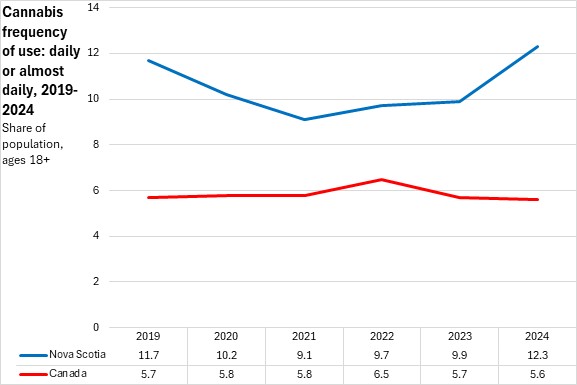
Daily cannabis use was more common among Nova Scotians aged 18-34 as well as among males. Cannabis use was less prevalent among seniors as well as among those in the higher income quintiles.
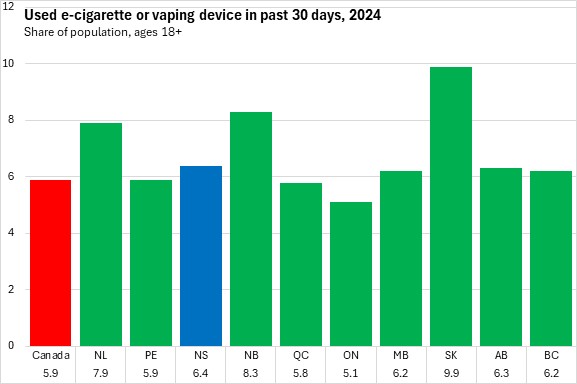
In Nova Scotia, 6.4% of the population reported using an e-cigarette or vaping device within the last 30 days. This was above the national average (5.9%). Vaping was most common in Saskatchewan and least common in Ontario.
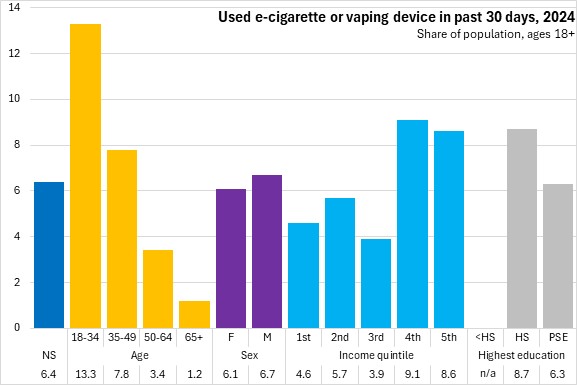
Use of e-cigarettes in Nova Scotia was substantially higher among those aged 18-34 as well as among males and those in the two highest income quintiles (which was a change from previous use patterns by income level).
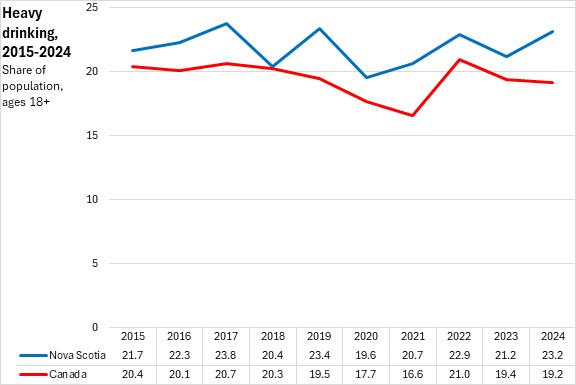
In Nova Scotia, 23.2% reported episodes of heavy drinking, which was above the national average of 19.2%. Newfoundland and Labrador and Prince Edward Island reported the highest frequency of heavy drinking (followed by Nova Scotia) while Ontario reported the lowest.
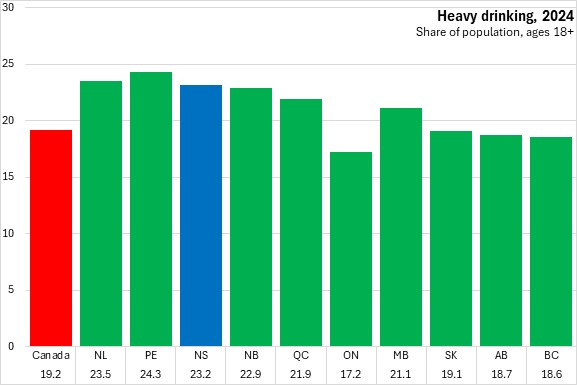
Heavy drinking was up in Nova Scotia and down in Canada last year.
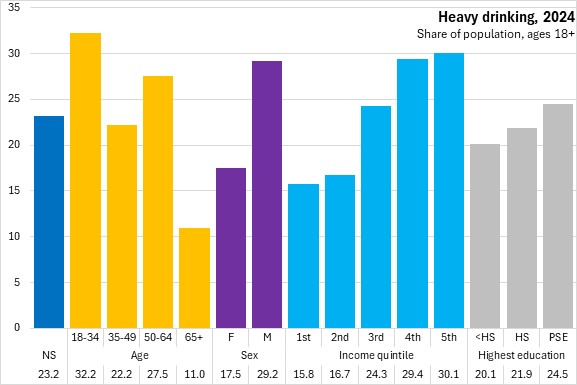
Heavy drinking declines among seniors in Nova Scotia. but rises with income and education. Males were more likely to be heavy drinkers than females. Nova Scotians in the age cohorts 18-34 and 50-64 reported highest incidence of heavy drinking.
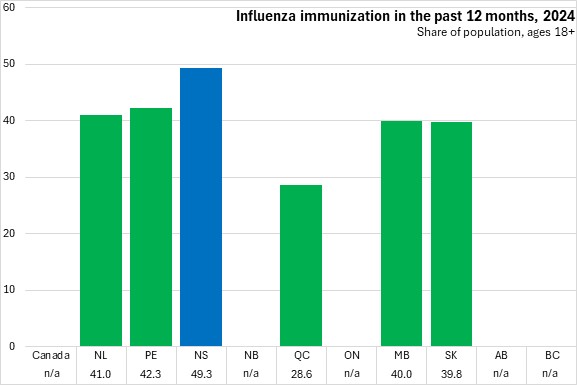
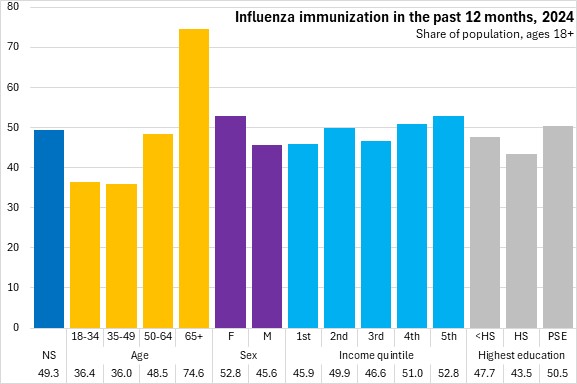
Nova Scotia consistently reports higher use of influenza vaccinations than in other reporting provinces. In 2024, 49.3% of Nova Scotians reported getting an influenza vaccine in the previous 12 months - the highest portion among reporting provinces. Among reporting provinces, the lowest share of influenza vaccination was in Québec. No data were reported for 2024 influenza immunizations in New Brunswick, Ontario, Alberta and British Columbia (and nationally).
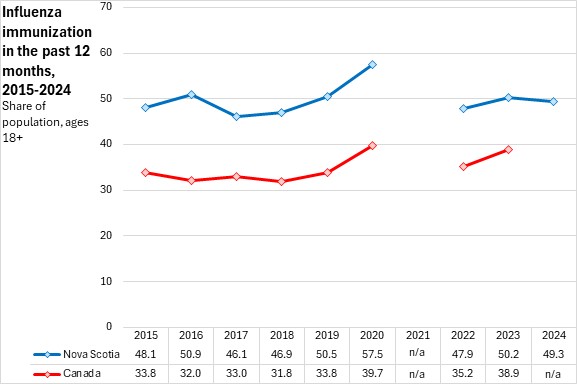
Use of influenza vaccines had been rising prior to the pandemic. In 2024, influenza vaccination remained similar to Nova Scotia's pre-pandemic levels.
Use of influenza vaccines in Nova Scotia rises with age. Females and those in higher income and education cohorts were more likely to get the flu vaccine in 2024.
Source: Statistics Canada. Table 13-10-0905-01 Health indicator statistics, annual estimates; Table 13-10-0906-01 Health indicator statistics, annual estimates, by household income quintile and highest level of education
<--- Return to Archive


