The Economics and Statistics Division maintains archives of previous publications for accountability purposes, but makes no updates to keep these documents current with the latest data revisions from Statistics Canada. As a result, information in older documents may not be accurate. Please exercise caution when referring to older documents. For the latest information and historical data, please contact the individual listed to the right.
<--- Return to Archive
For additional information relating to this article, please contact:
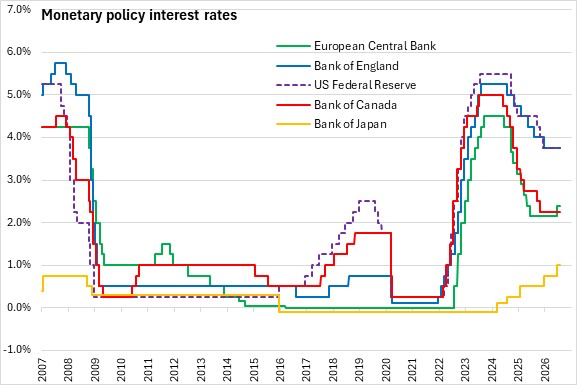
July 23, 2026EUROPEAN CENTRAL BANK MONETARY POLICY The European Central Bank (ECB) announced today that it would maintain the three key ECB interest rates. The interest rates on the deposit facility, main refinancing operations and the marginal lending facility will be kept at 2.25%, 2.40%, 2.65% respectively.
The European economy grew in Q2 of 2026, driven by contribution from AI-related activity. Manufacturing has held up so far supported by firms building up stocks to cope with supply chain pressures. This growth also reflects higher defence spending. Economic growth is expected to remain modest in the near future. Private consumption, investment in new digital technologies, government defence and infrastructure spending, and a partial recovery in exports are all expected to support overall growth momentum.
Unemployment was 6.2% in May, which remains close to historical lows. Job postings have continued to decline and firms and households expect a weaker labour market.
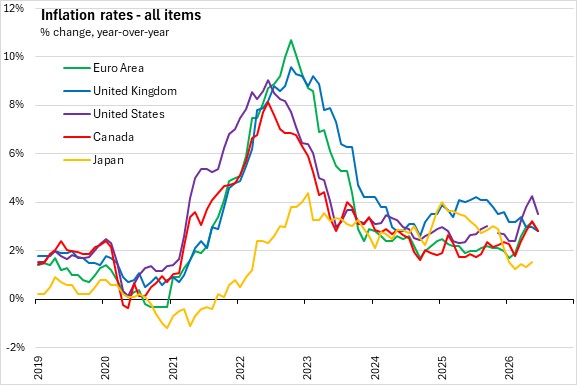
Inflation fell to 2.8% in June, from 3.2% in May. Energy prices were down to 8.5% from 10.8% in May. Food price inflation was down to 1.5% in June from 1.9% in May. Excluding food and energy, inflation eased to 2.4% in June, from 2.6% in May. Inflation is likely to remain above 2% target in the first half of 2027, then decline with the expected fall in energy prices and other prices are expected to rise more slowly.
The outlook remains uncertain, with upside risks for inflation and downside risks for economic growth. The war in the Middle East adds significant volatility to the global policy environment. Prolonged time could increase energy prices further and for longer. These factors would erode real incomes even more and make firms and households more reluctant to invest and spend. Additional frictions in international trade could also further disrupt supply chains, reduce exports and weaken consumption and investment. Extreme weather events and the unfolding climate and nature crises more broadly, could drive up food prices by more than expected.
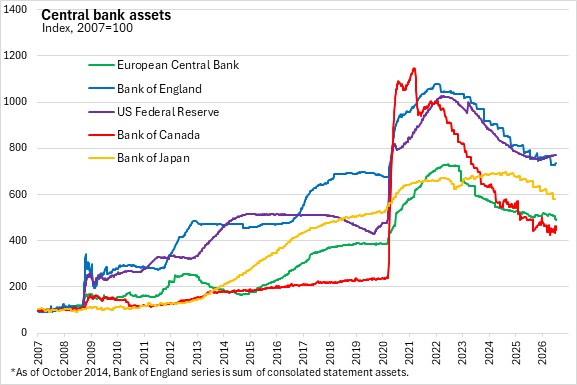
The asset purchase programme (APP) and Pandemic Emergency Purchase Programme (PEPP) portfolios are declining at a measured and predictable pace, as the Eurosystem no longer reinvests principal payments from maturing securities.
The Governing Council notes it is determined to see inflation stabilise at its 2.0% medium-term target. The Transmission Protection Instrument is also available to counter unwarranted, disorderly market dynamics that pose a serious threat to the transmission of monetary policy across all euro area.
Source: European Central Bank: Monetary policy decisions (Press Release); Monetary Policy Statement (Press Conference)
<--- Return to Archive


