For additional information relating to this article, please contact:
June 23, 2021STUDY: ECONOMIC IMPACTS OF COVID-19 IN THE PROVINCES AND TERRITORIES Today, Statistics Canada released two reports looking at the performance of provincial economies during the COVID-19 pandemic. The following is a summary of Economic impacts of COVID-19 in the provinces and territories and Differences in the economic impacts of COVID-19 across the provinces and territories.
Common across provinces during the pandemic was lower activity in certain sectors such as accommodation and food services, retail trade and transportation services. However, certain provincial-specific factors also influenced activity with construction activity playing a key role in relative output in several provinces. Employment levels generally moved with containment measure intensity in every province and high-contact service sectors were particularly impacted. Younger, women, and part-time workers had larger employment losses.
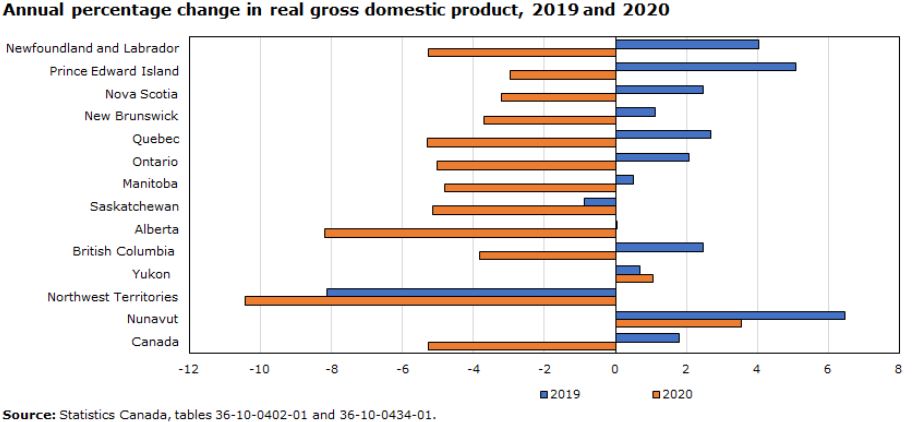
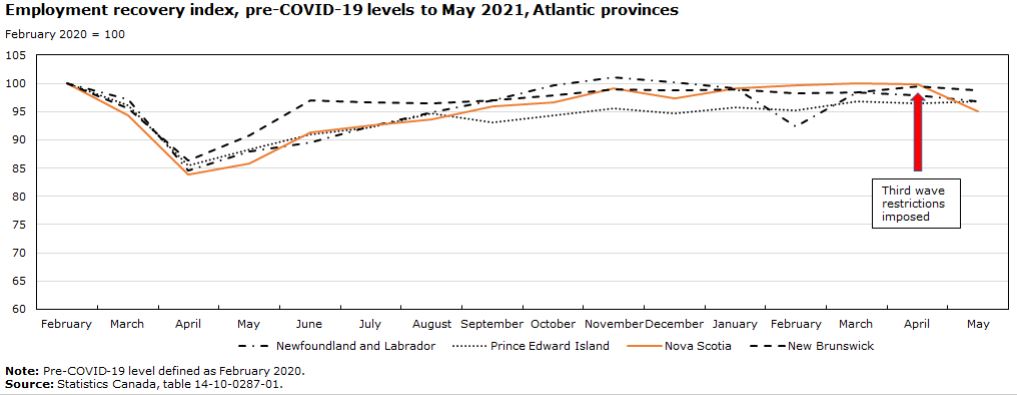
Atlantic Canada saw less intense second wave lockdowns that mitigated job losses among young workers during late 2020. Increased real estate and financial activity in the Maritime Provinces helped the economy and construction activity rose in Prince Edward Island and Nova Scotia. Tourism-related sectors had steep declines. New Brunswick manufacturing has risen on non-durable shipments that were relatively unaffected by pandemic measures. Newfoundland and Labrador output decline in engineering construction accounted for nearly half of the overall decline in 2020. Prince Edward Island real GDP decline was the smallest among provinces in 2020, but employment among young and related to tourism have been slower to recover.
Nova Scotia real GDP declined 3.2% in 2020. As of April 2021, Nova Scotia had the strongest employment recovery in country with rising levels in professional, scientific and technical service sand educational services. Circuit breaker restriction at the end of April 2021 resulted in 13% decline in youth employment in May, pausing the strong recovery. As of March 2021, Nova Scotia recoveries in manufacturing (supported by transportation manufacturing) and wholesale trade were the strongest in Canada.
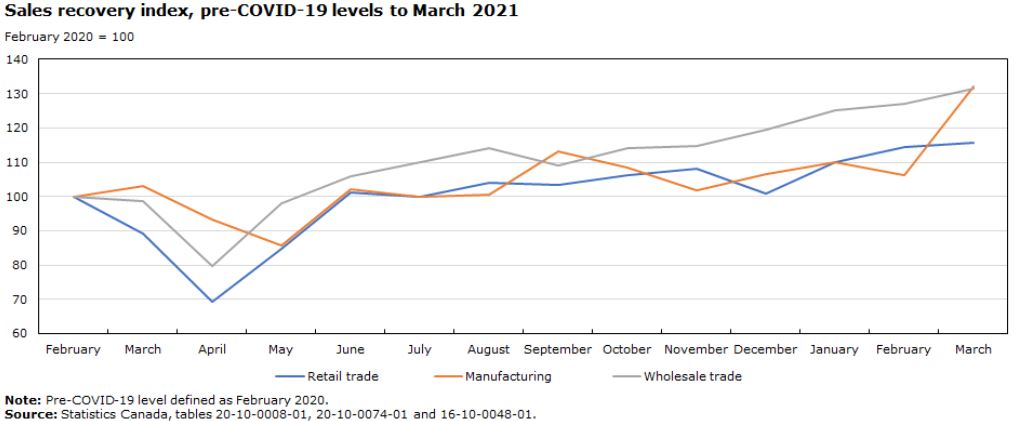
Ontario and Quebec manufacturing output decline accounted for almost one-fourth of the output lose in each province. Quebec had the largest decline initial retail sales decline with fall of 60% from pre-pandemic levels. Retail spending peaked in both Ontario and Quebec in November before second wave measures kept spending depressed until February 2021. Quebec and Ontario youth employment was particularly affected during initial shutdown and has not fully recovered. Youth employment in Quebec is 10% below and Ontario is 18% below pre-COVID levels. Employment in accommodation and food service remains more than 30% below pre-COVID levels in Quebec. Number of businesses remain below February 2020 levels in Ontario (-4.5%) and Quebec (-1.1%).
Reduction in engineering construction for resource projects drove lower activity in Alberta, Saskatchewan, and Manitoba. Furthermore, lower oil and gas extraction in Alberta and Saskatchewan led to significant decline. Saskatchewan agriculture supplies and machinery wholesale was by strong demand for agricultural products. In Western Canada, the employment recovery among youth and in accommodation and food services has been slowest in Alberta with third-wave restriction in April 2021. British Columbia benefited from engineering construction for major resource projects and higher housing market activity mitigating declines in tourism and high-contact sectors. New home prices have risen 12% from pre-pandemic levels increasingly issues of living costs and affordability in British Columbia.
Yukon (+0.7%) and Nunavut (+6.5%) real GDP rose in 2020 with rising mining activity while Northwest Territories economic real GDP was down 8.1% on lower mining and oil and gas extraction.