For additional information relating to this article, please contact:
December 05, 2025LABOUR FORCE SURVEY: VISIBLE MINORITIES, NOVEMBER 2025 The Labour Force Survey asks respondents about whether they identify with visible minority categories (as used in the Census): White, South Asian (e.g., East Indian, Pakistani, Sri Lankan), Chinese, Black, Filipino, Arab, Latin American, Southeast Asian (e.g., Vietnamese, Cambodian, Laotian, Thai), West Asian (e.g., Iranian, Afghan), Korean, Other.
November 2025 (3 month moving average, unadjusted)
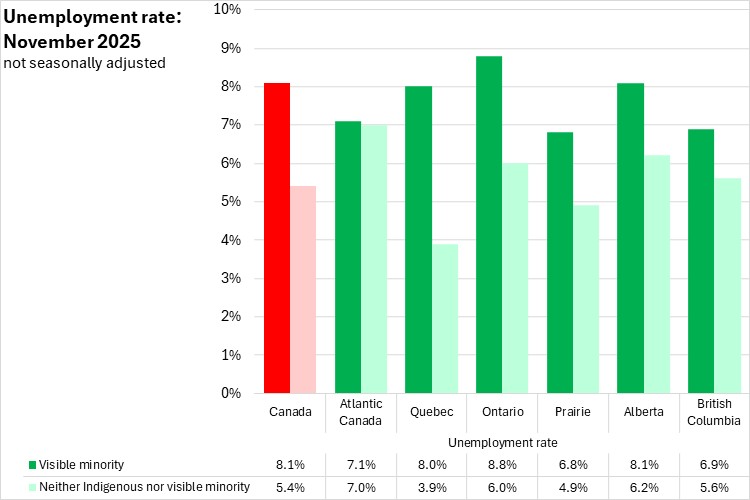
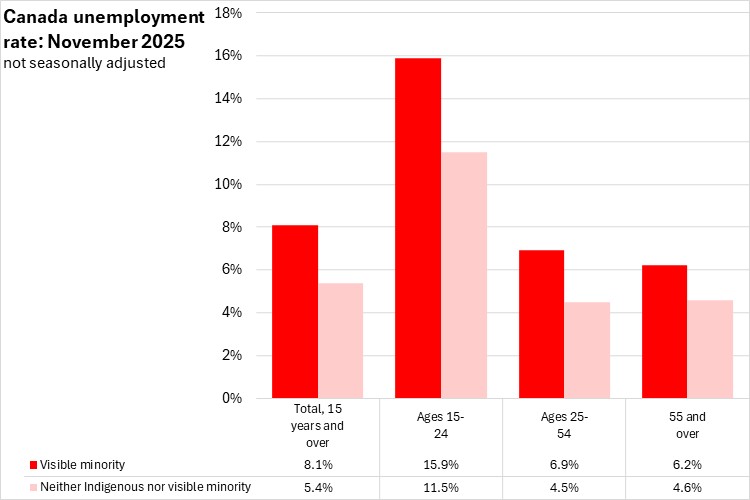
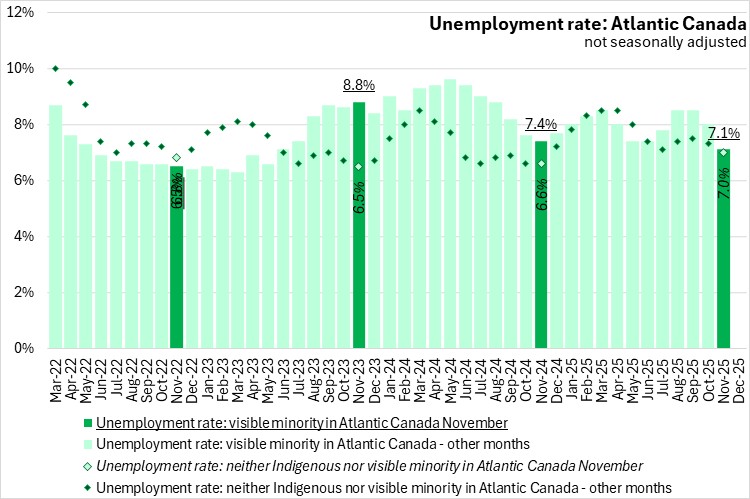
Nationally, the unemployment rate for those who identify as a visible minority population (8.1%) was higher than the unemployment rate for those that did not identify as Indigenous or in a visible minority population (5.4%). All regions had an unemployment rate higher for those who identify with a visible minority group than for those who did not identify as Indigenous or in a visible minority population. This gap was highest in Québec. In Atlantic Canada, the unemployment rate was 7.1% for those who identify with a visible minority group and 7.0% for those that did not identify as Indigenous or in a visible minority population.
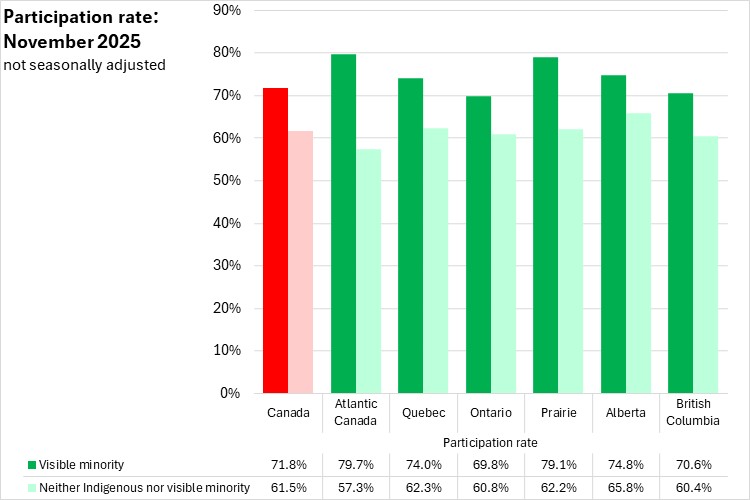
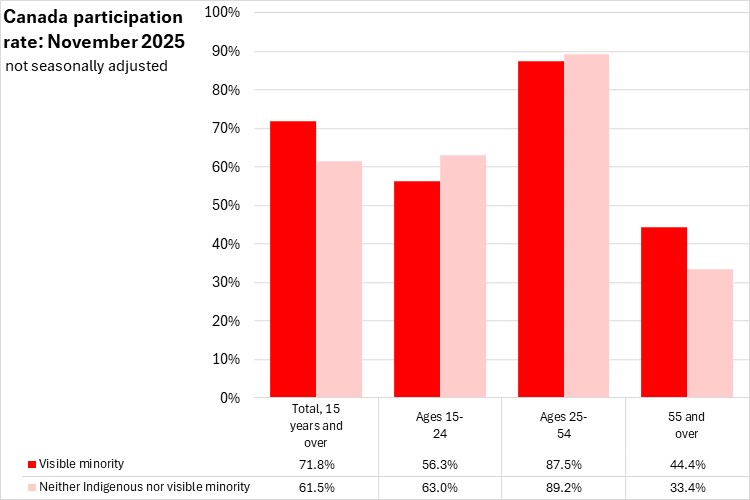
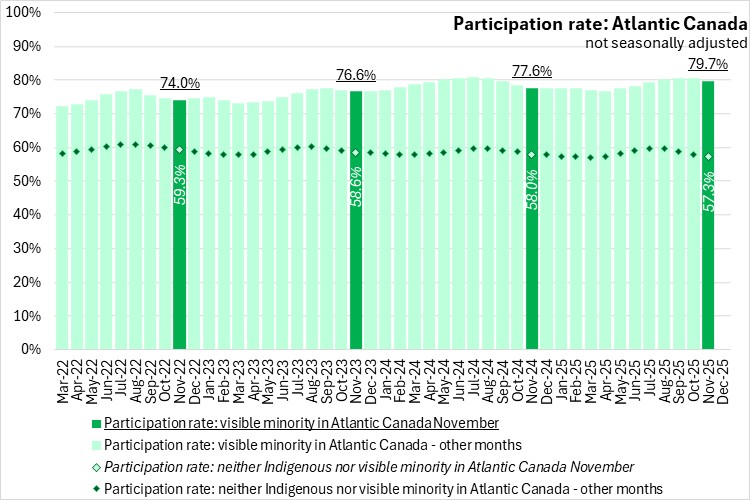
National participation rates were higher for those who identify with a visible minority population (71.8%) than for those that did not identify as Indigenous or in a visible minority population (61.5%). Participation rates of those who identify with a visible minority population were higher in all regions in November 2025. In Atlantic Canada, those who identify with a visible minority population reported a 79.7% participation rate, compared to a 57.3% participation rate for those that do not identify as Indigenous or in a visible minority population, the largest gap among regions.
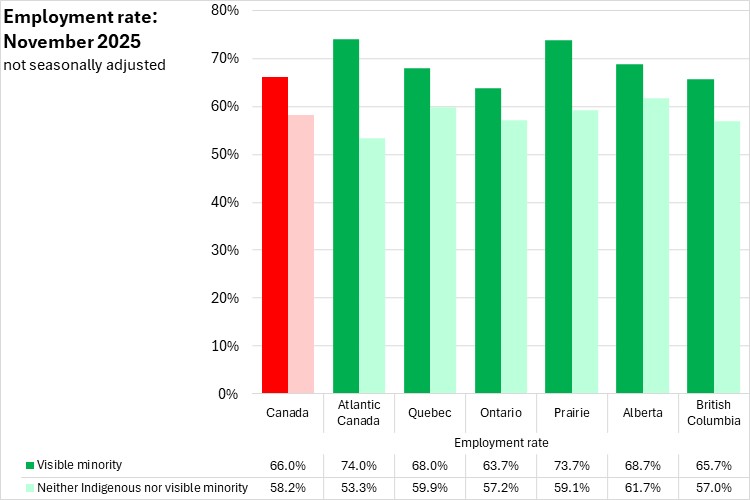
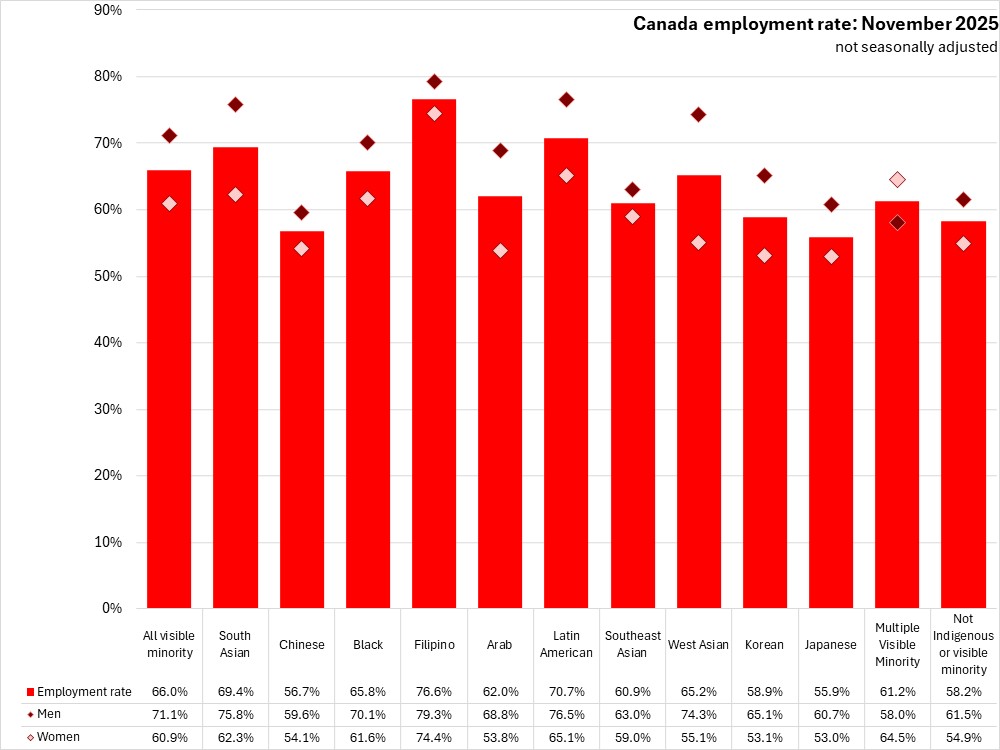
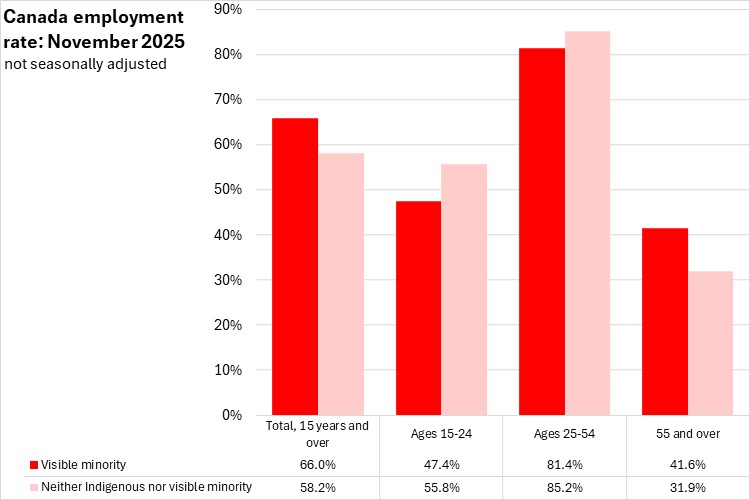
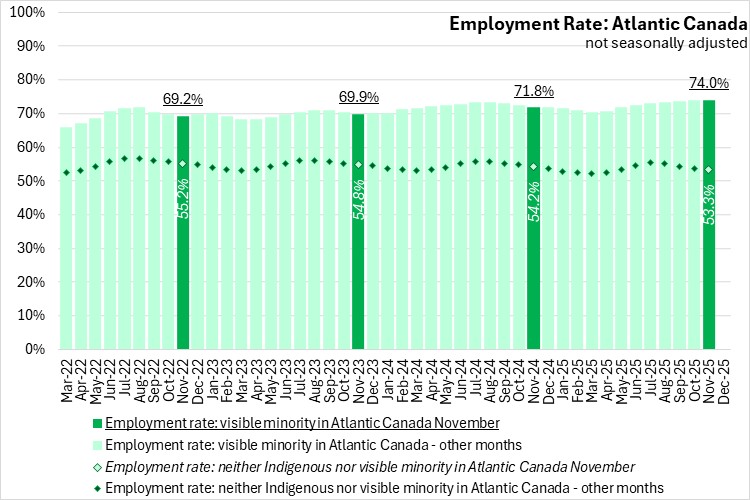
Nationally, employment rates were higher for those who identified with visible minority populations (66.0%) than for those who did not identify as Indigenous or in a visible minority population (58.2%). Employment rates were higher for those who identify with visible minority populations in every region when compared against those who do not identify as Indigenous or in a visible minority population in November 2025. The gap between the employment rates for those who identified with visible minority populations (74.0%) and those who did not (53.3%) was highest in Atlantic Canada.
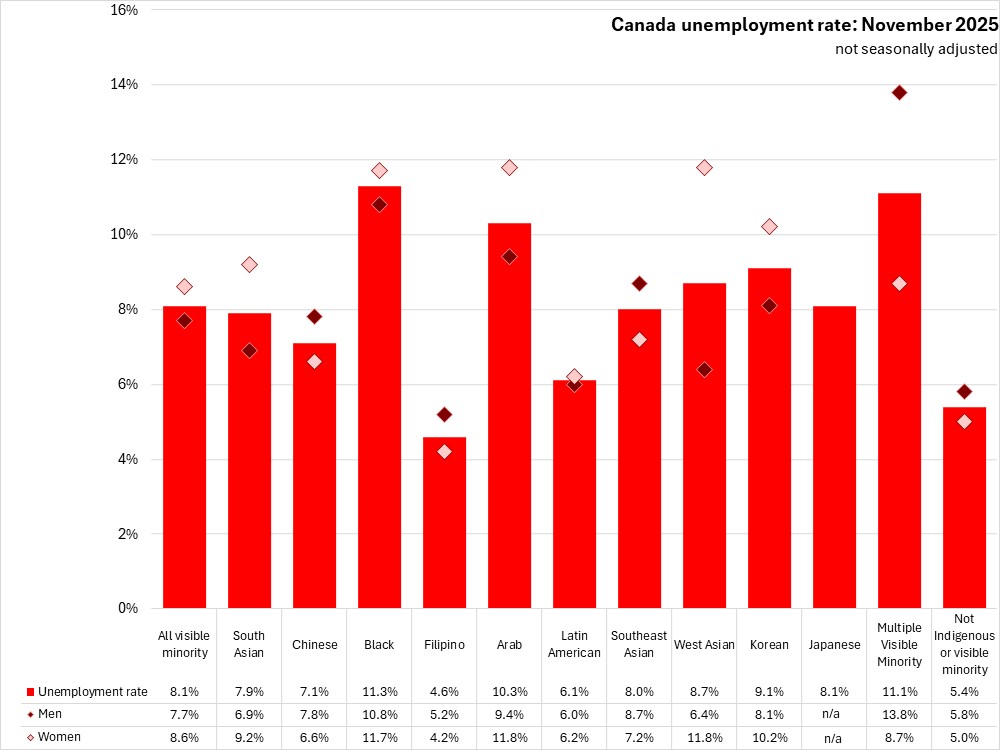
Canada's unemployment rates were generally higher across visible minority populations than for those who did not identify as Indigenous or in a visible minority population (Exception: Filipino).
In November 2025, the unemployment rates of males in all visible minority populations were lower (7.7%) than for females in visible minority populations (8.6%), which was not the case for populations that did not identify as Indigenous or visible minorities. Among specific populations, female unemployment rates were lower than for males among Chinese, Filipino and South East Asian, as well as for those that identified with multiple visible minority populations and those not indigenous or visible minority.
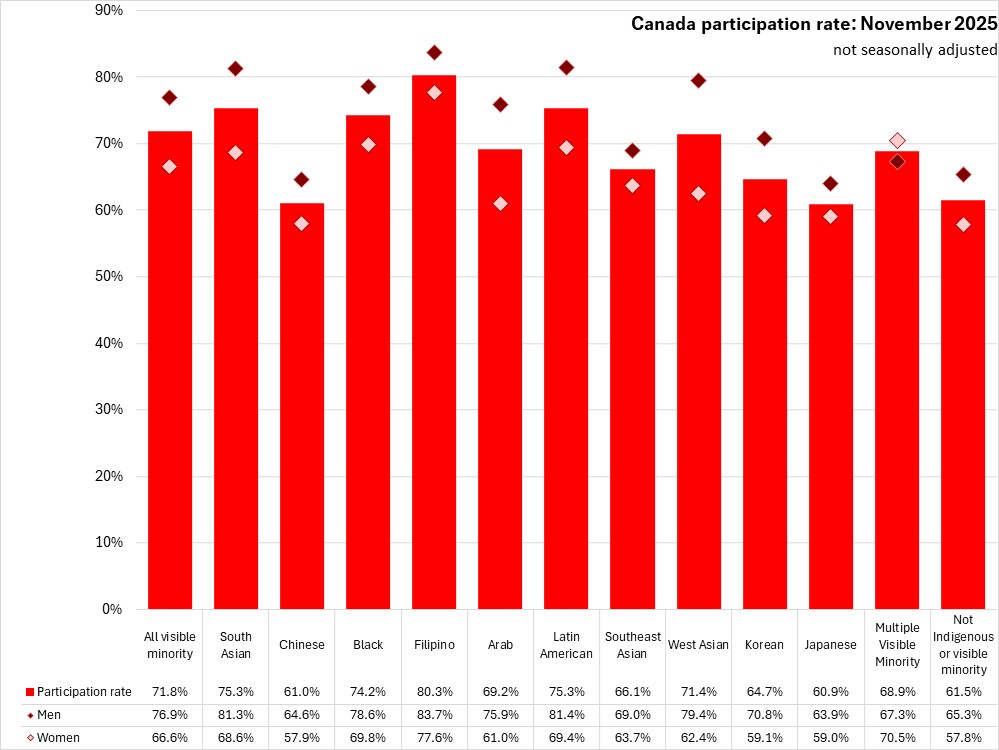
Labour force participation rates for those identifying with a visible minority were generally higher when compared those who do not identify as Indigenous or a visible minority (exception: Chinese and Japanese populations).
Participation rates were higher for men (76.9%) than for women (66.6%) among all visible minority populations. Male participations rates were also higher than for females for all specific visible minority population groups (exception: multiple visible minority) as well as for those who did not identify as indigenous or visible minority.
Employment rates were generally higher among visible minority populations than among those who identified neither as Indigenous nor as a visible minority (exception: Chinese and Japanese populations). Men reported higher employment rates than women in visible minority populations (exception: those that identify with multiple visible minorities), as was also the case among populations that did not identify as Indigenous or a visible minority.
Unemployment rates in Canada were higher for all age cohorts of visible minority populations, when compared with those that do not identify as Indigenous or in a visible minority population. The largest gap was for youth aged workers (aged 15-24).
Participation rates of visible minority populations were higher for older workers, compared to the same age cohort that does not identify as Indigenous or visible minority populations. Among youth and core aged workers, participation rates among visible minority populations were lower than among similarly aged populations that do not identify as Indigenous or in a visible minority population.
With lower participation and higher unemployment rates, employment rates were lower for visible minority youth and core aged populations than for those of similar age who do not identify as Indigenous or a visible minority population. With stronger participation rates (despite higher unemployment rates), the employment rate of older visible minority populations was higher than older Canadians who do not identify as Indigenous or in a visible minority population.
Trends
In November 2025, the unemployment rate for the visible minority population was higher compared to the population that was neither Indigenous nor in a visible minority population in Atlantic Canada for the fith consecutive month.
Participation and employment rates for visible minority populations in Atlantic Canada are consistently higher than those that identified neither as Indigenous nor in a visible minority population.
Source: Statistics Canada. Table 14-10-0373-01 Labour force characteristics by visible minority group, three-month moving averages, monthly, unadjusted for seasonality