For additional information relating to this article, please contact:
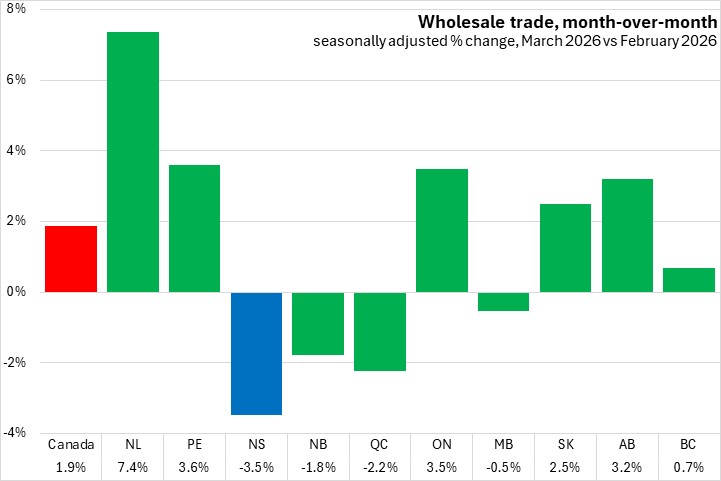
May 14, 2026WHOLESALE TRADE, MARCH 2026 Monthly (March 2026 vs February 2026, seasonally adjusted)
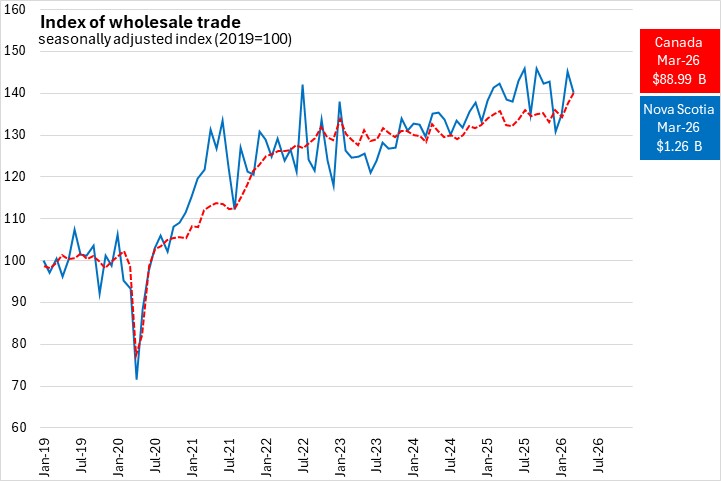
Nova Scotia wholesale trade decreased by 3.5% from February to March, falling to $1.26 billion. National wholesale trade rose 1.9% to $88.99 billion. Six provinces reported monthly growth in March led by Newfoundland and Labrador, while Nova Scotia reported the fastest decline.
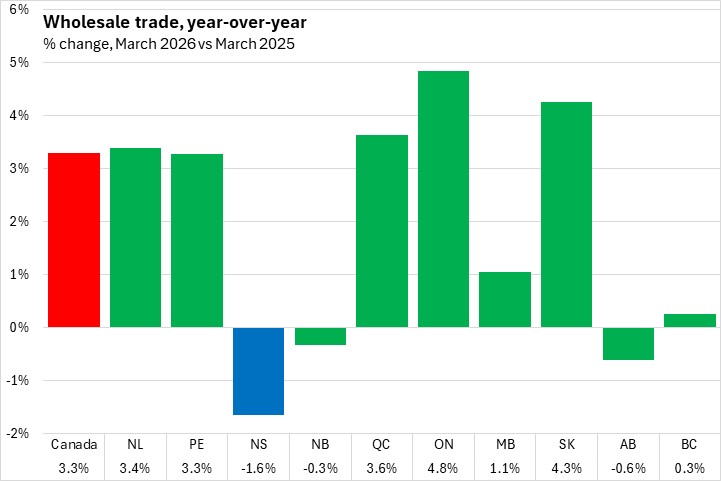
Year-over-year (March 2026 vs March 2025, seasonally adjusted)
Nova Scotia wholesale trade declined 1.6% in March when compared with the same month last year. Canada's wholesale trade grew 3.3% year-over-year. Seven provinces reported year-over-year increases in wholesale trade led by Ontario, while Nova Scotia reported the largest decline.
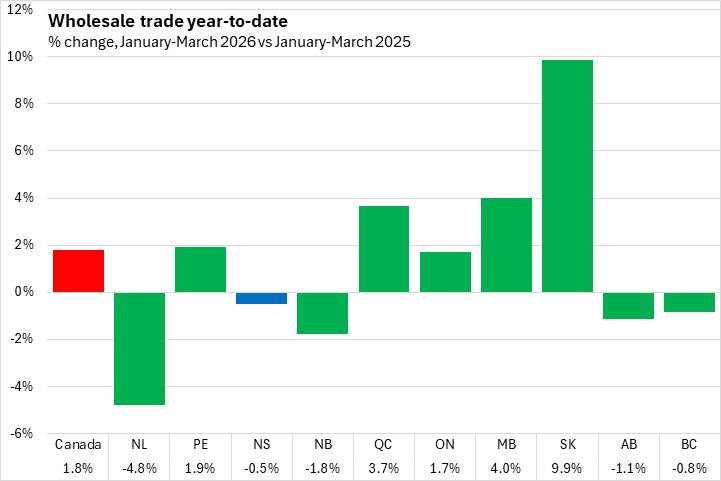
Year-to-date (January-March 2026 vs January-March 2025, seasonally adjusted)
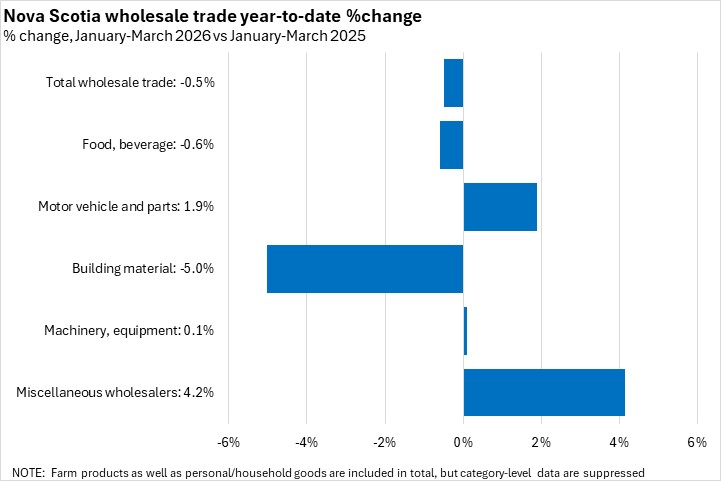
Nova Scotia's wholesale trade shrank 0.5% in the first three months of 2026. National wholesale trade was up 1.8% in January-March 2026, with growth in five provinces. Saskatchewan reported the strongest growth while Newfoundland and Labrador reported the steepest decline, year-to-date.
Food and beverage wholesale represents the largest share of Nova Scotia's reported wholesale trade categories, followed by building materials.
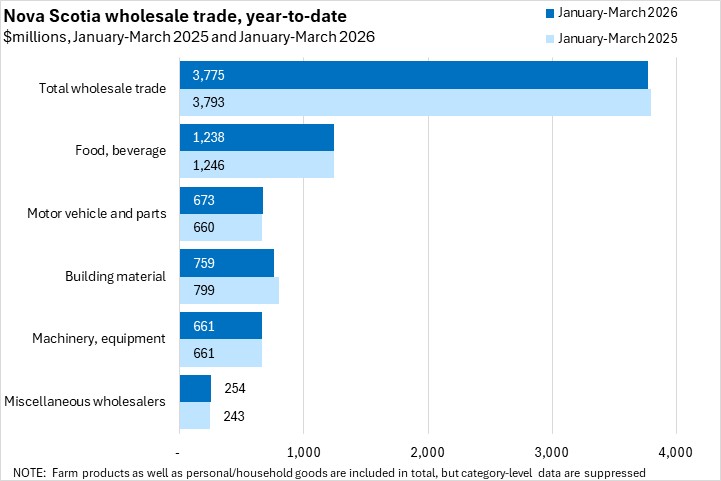
Miscellaneous wholesalers and motor vehicle and parts saw the largest year-to-date percentage increase in wholesale trade, while building materials and food/beverage wholesale merchant sales were down.
Trends
Through much of 2025 and into 2026, Nova Scotia's wholesale trade has outpaced the national average.
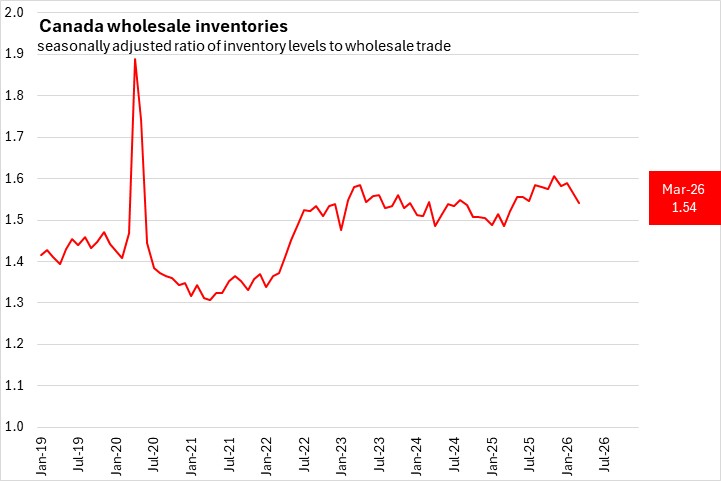
National wholesale inventories as a share of sales increased in 2025. In March 2026, the inventory-to-sales ratio declined to 1.54.
Note: wholesale trade data excludes petroleum, petroleum products, and other hydrocarbons as well as oilseed and grain.
Source: Statistics Canada. Table 20-10-0074-01 Wholesale trade, sales (x 1,000); Table 20-10-0076-01 Wholesale trade, inventories (x 1,000)