For additional information relating to this article, please contact:
May 29, 2026NON-RESIDENTIAL CAPITAL STOCK AND INVESTMENT, Q1 2026 Year-over-year (Q1 2026 vs Q1 2025)
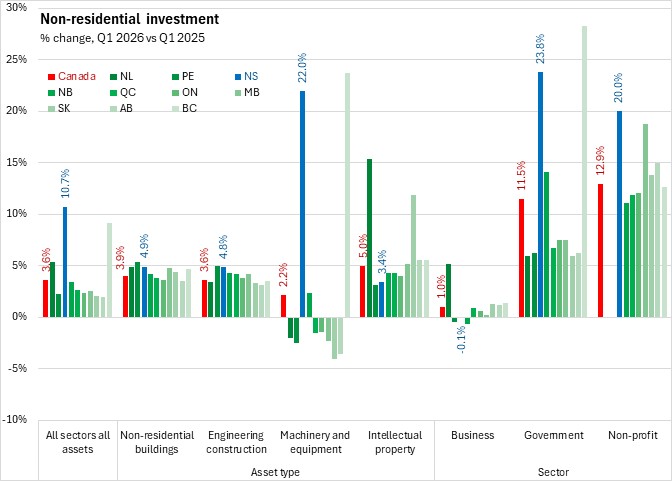
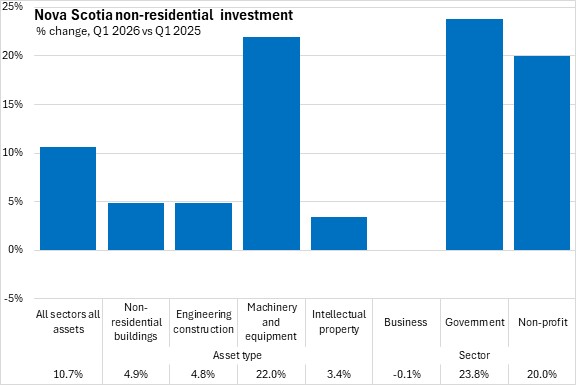
Nova Scotia non-residential investment (all sectors, all assets, current prices) rose by 10.7% from Q1 2025 to Q1 2026, leading all provinces in investment growth following growth of 12.4% in the previous quarter. Nationally non-residential investment was up 3.6% with gains in all provinces. The slowest growth in investment was reported in Alberta.
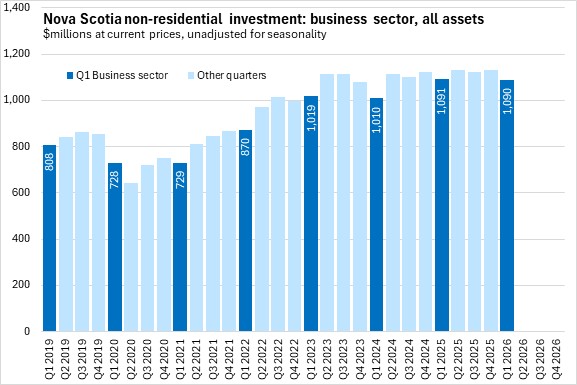
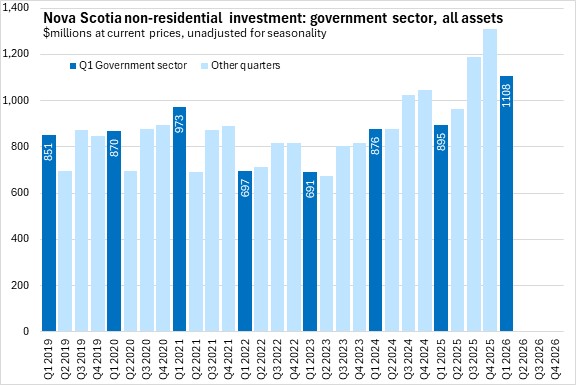
Nova Scotia's non-residential investment growth outperformed the national average for all asset types except intellectual property. Government sector capital investment in Nova Scotia was up 23.8% - the second fastest year-over-year growth among provinces. Nova Scotia's business sector investment edged down 0.1% while national business sector investment was up 1.0% year-over-year in Q1.
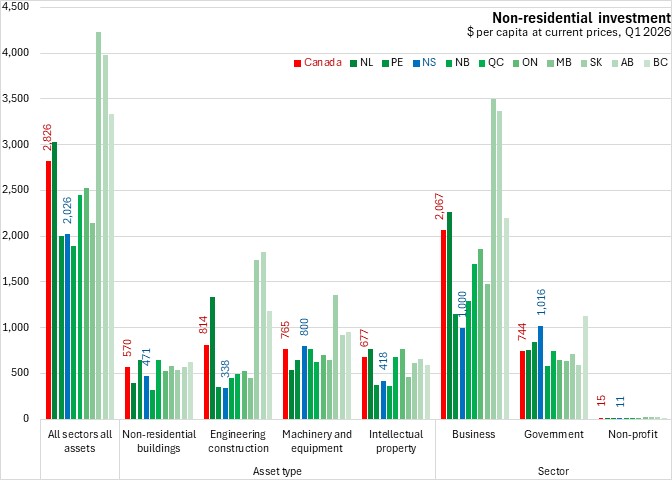
On a per capita basis, Nova Scotia's investment in non-residential assets amounted to $2,026 or 71.7% of the national per capita value. Nova Scotia's per capita investments were notably stronger than the national average for the government sector due to strength in government machinery and equipment. On average, investment per capita in all asset categories was lower than the national average.
Nova Scotia's per capita business investment was $1,000 per capita or 48.4% of the national per capita average. Business investment (notably for engineering construction) was substantially higher in Newfoundland and Labrador as well as in the three westernmost provinces.
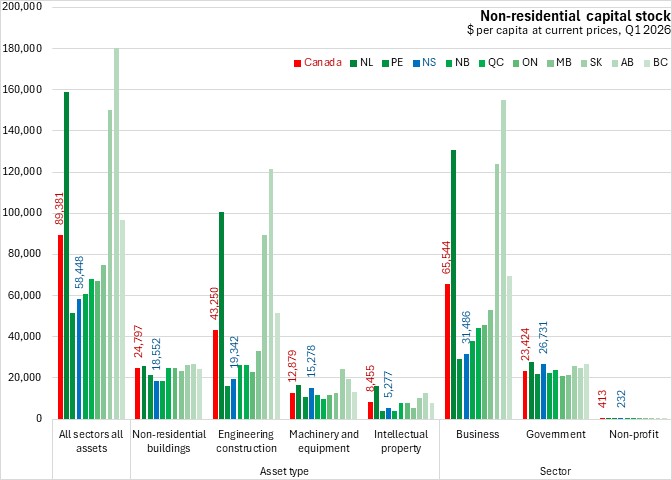
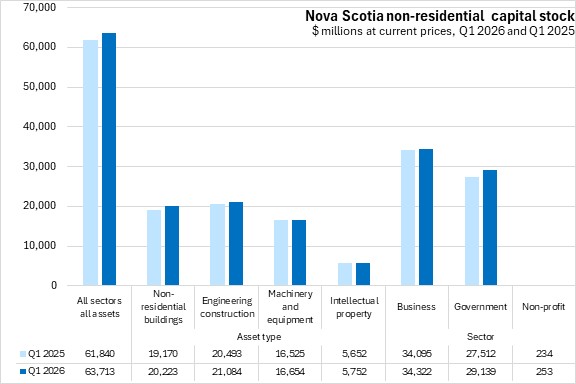
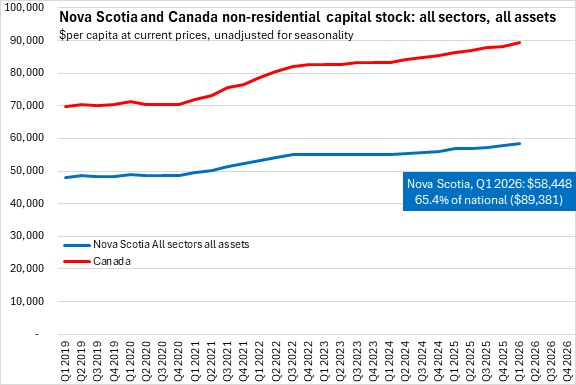
Nova Scotia's net capital stock (based on geometric depreciation) was $58,448 per capita as of Q1 2026. This was 65.4% of the national per capita capital stock. Capital stock per capita was notably higher for Canada's major natural resource regions: Newfoundland and Labrador, Saskatchewan and Alberta.
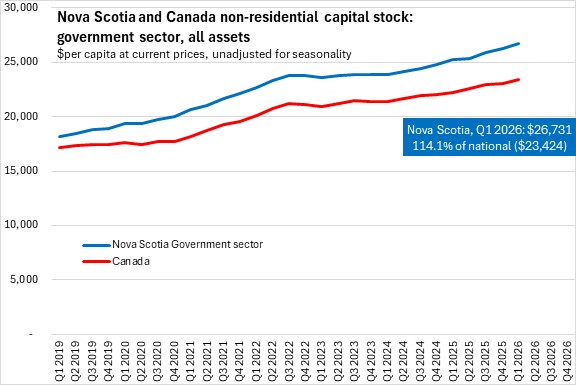
Nova Scotia's $26,731 capital stock per capita in the government sector (including military hardware) was substantially higher than the national average of $23,424 per capita.
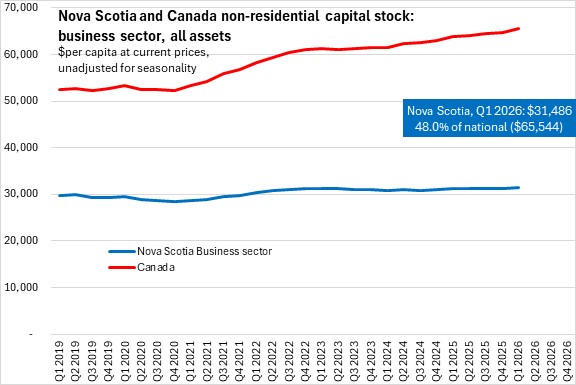
Nova Scotia's business sector capital stock was $31,486 per capita - second lowest among provinces and 48.0% of the national average of $65,544 per capita.
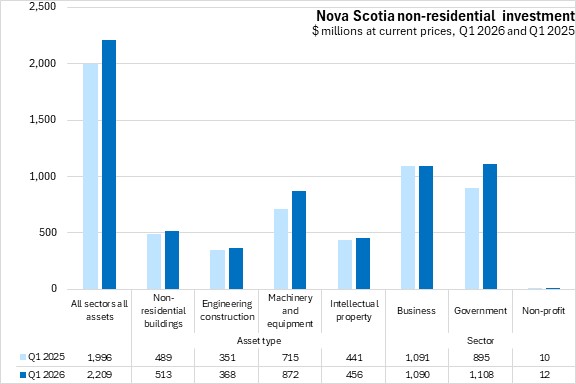
Compared to Q1 2025, Nova Scotia's investment levels increased for all major asset categories. Investment levels for government and non-profit were up, while business sector investment was down slightly.
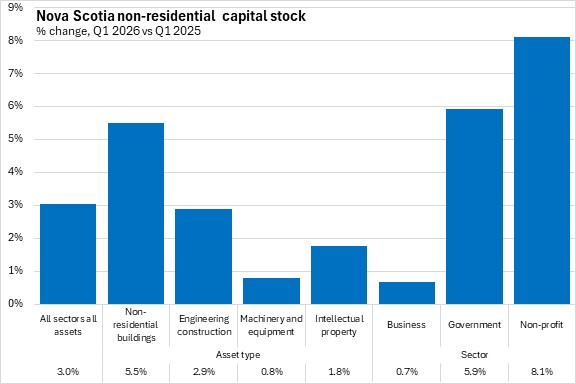
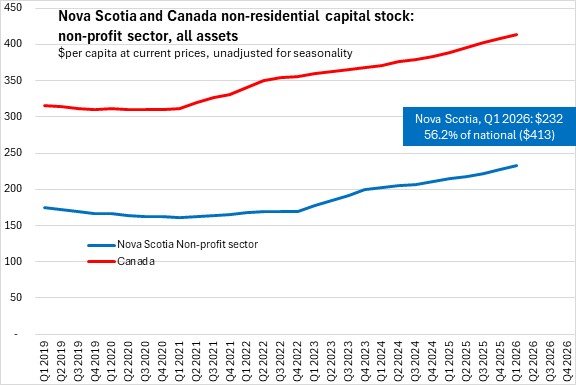
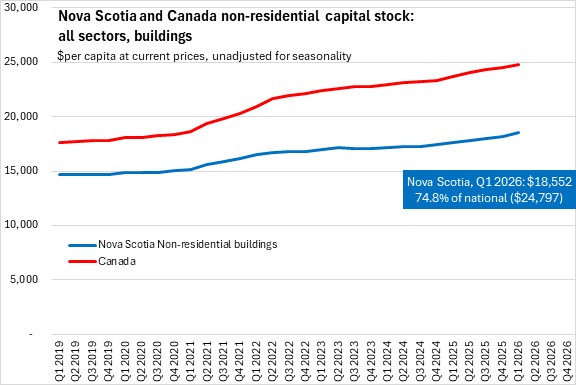
Net capital stock in Nova Scotia increased for all major asset types and for all three sectors. Government capital stock, and non-residential buildings stock reported the fastest increases. The non-profit sector also reported a notable increase, but this is a very small share of Nova Scotia's capital stock.
Trends
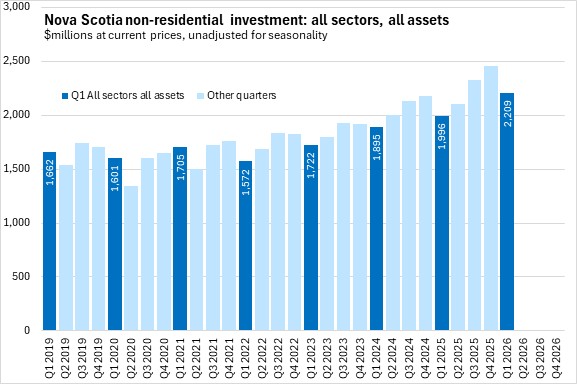
Nova Scotia's non-residential investment has generally trended up on a year-over-year basis since 2022.
Business sector non-residential investment trended downward to 2021, before trending upwards over 2021-2023. However, business sector investment has exhibited slower growth in 2024 and 2025.
Government sector investment trended upwards from 2019 to 2021. Slowing investment in 2022 and 2023 was followed by a notable acceleration in the second half of 2024. Results for government investment in Q1 2026 put government investment at its highest level to date in any prior comparable period.
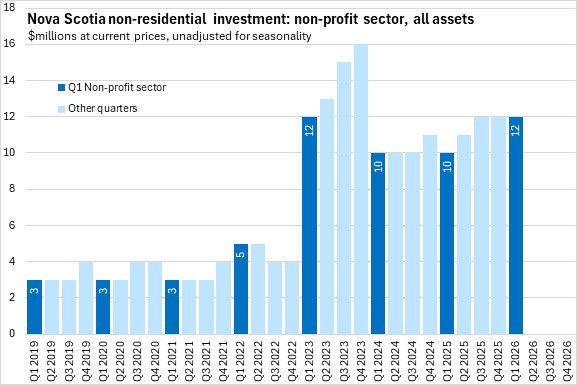
Non-profit institutions serving households have much lower investment levels than business or government sectors. Investment levels have been relatively stable since 2023 in the first quarter.
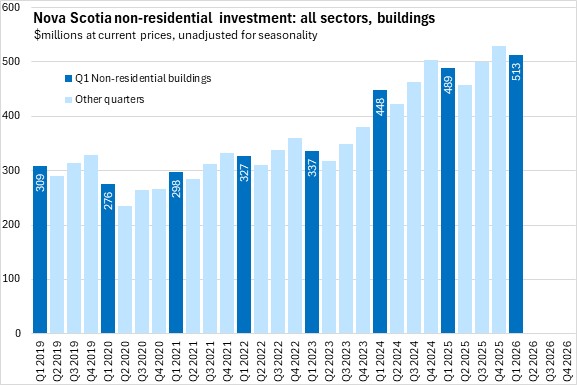
Nova Scotia's investment in non-residential buildings have grown steadily since 2020.
Nova Scotia's investment in engineering construction assets trended up prior to 2022, after which investment has grown at a slower pace.
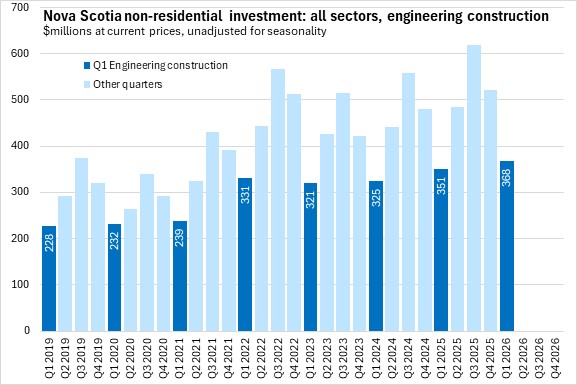
Nova Scotia's investments in machinery and equipment assets have been rising since 2022.
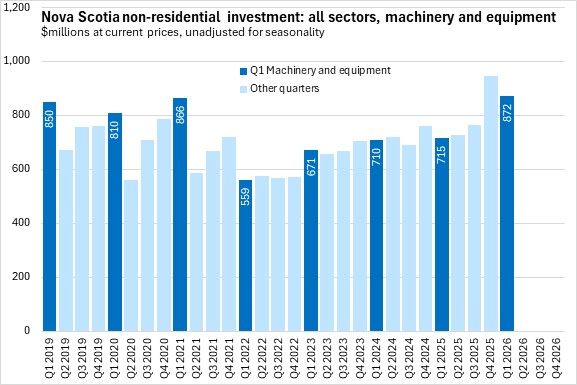
Nova Scotia's investments in intellectual property products have mostly trended up since 2019 with occasional spikes coinciding with specific offshore exploration projects (which are classified as intellectual property investments).
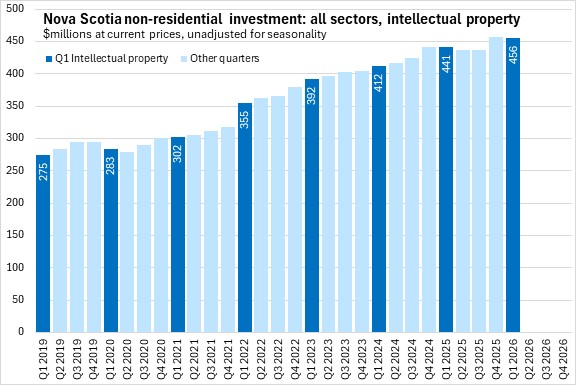
Nova Scotia's non-residential capital stock per capita has grown more quickly since 2020.
However, national non-residential capital stock per capita has grown faster than Nova Scotia's. This is particularly the case for business sector non-residential assets per capita as well as for buildings, engineering construction and intellectual property.
In contrast, Nova Scotia's per capita stocks of government sector assets as well as machinery/equipment assets have grown faster than the national pace and are now higher than national averages.
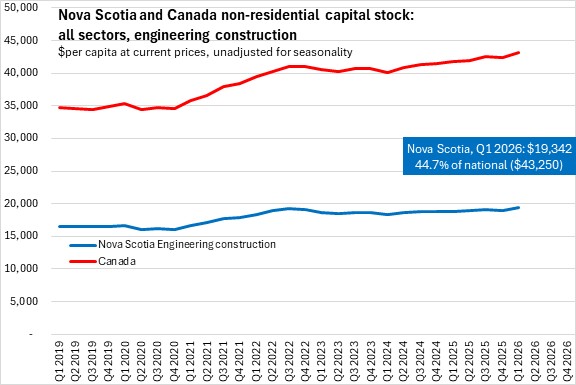
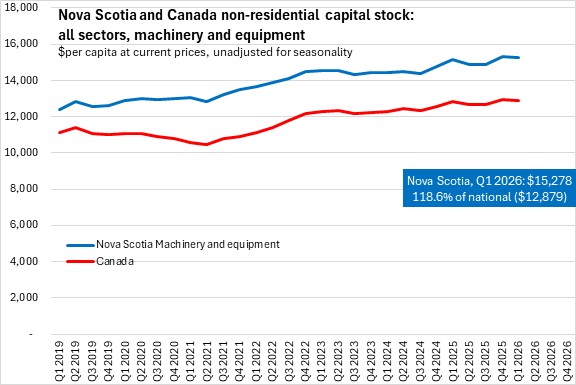
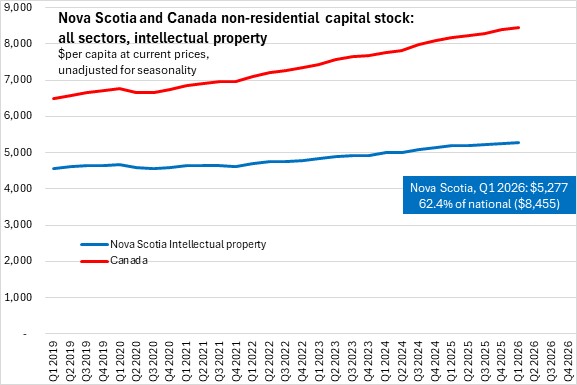
Notes: Non-residential fixed capital investment consists of expenditures made by business, governments and non-profit institutions serving households that add to the capital stock for production of goods and services in an economy. Investment that are included are buildings, engineering construction (i.e. bridge, mine structure), machinery and equipment, and intellectual property products (i.e. software, mineral exploration) but it doesn’t include non-reproducible assets (lands, mineral deposits, natural resources) or housing investment. The data are not seasonally adjusted and expressed in current prices.
Statistics Canada. Table 34-10-0163-01 Flows and stocks of fixed non-residential and residential capital, by sector and asset, provincial and territorial (x 1,000,000)