For additional information relating to this article, please contact:
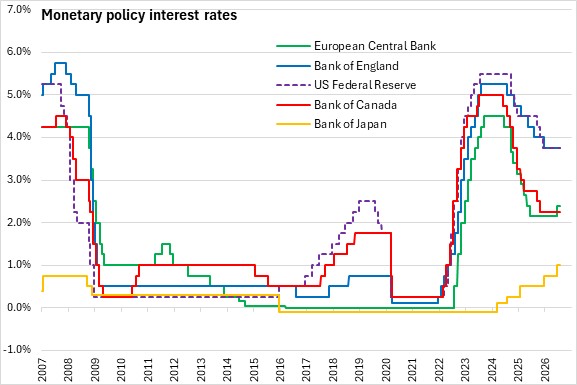
July 31, 2026BANK OF JAPAN MONETARY POLICY The Policy Board of the Bank of Japan kept its uncollateralized overnight call rate around 1.0%.
Japan’s economy saw moderate recovery despite the conflict in the Middle East. Higher crude oil prices have been slowing economic activity and are expected to reduce corporate profits and household’s real income through deterioration in terms of trade. However, government initiatives that aim to reduce household burden of higher energy prices continue to provide support. Private consumption has been strong supported by improvement in the employment and income situation. Japan was also able to secure alternative sources for raw materials that are highly dependent on the Middle East. Economy is expected to continue moderate growth, albeit at a slower rate. GDP is expected to grow between 0.6%-0.7% in 2026, 0.7%-0.8% in 2027 and 2028.
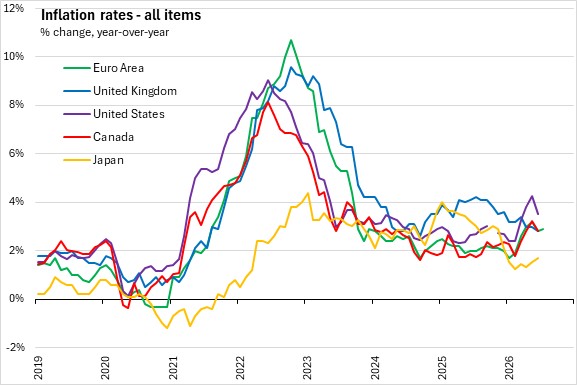
CPI inflation has been below 2% target rate due to government measures to reduce higher energy prices. The increase in wages has been passing through to prices contributed to CPI increase at around 1.5%. Medium- to long-term inflation expectations continue to rise above the 2% stability target. CPI is forecasted to rise 2.3%-2.7% in 2026, 2.2%-2.5% in 2027, and 2.0%-2.2% in 2028.
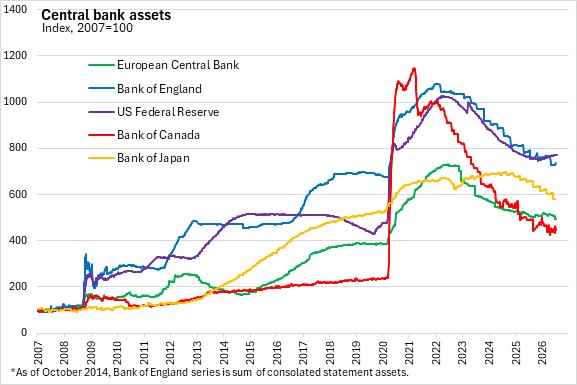
The Bank of Japan will continue to raise the policy interest rate and adjust the degree of monetary accommodation, given that inflation has been approaching 2%. The Bank will respond to developments in economic activity and prices, as well as financial conditions, to sustainably achieve the price stability (2%) target.
The Bank will release their next monetary policy statement on September 18, 2026.
Source: Bank of Japan, Statement on Monetary Policy; Economic Outlook, July