May 06, 2026AVERAGE RETAIL PRICES, MARCH 2026 Year-over-year (March 2026 vs March 2025)
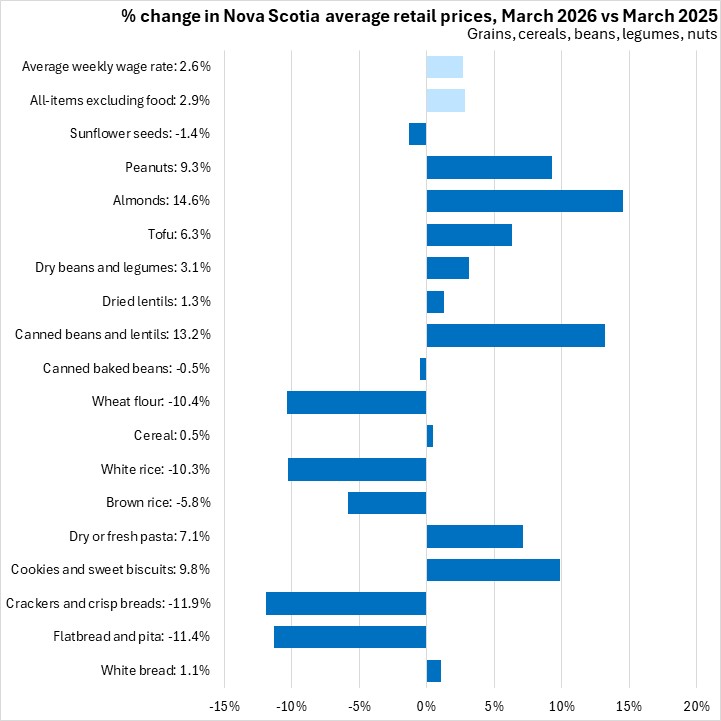
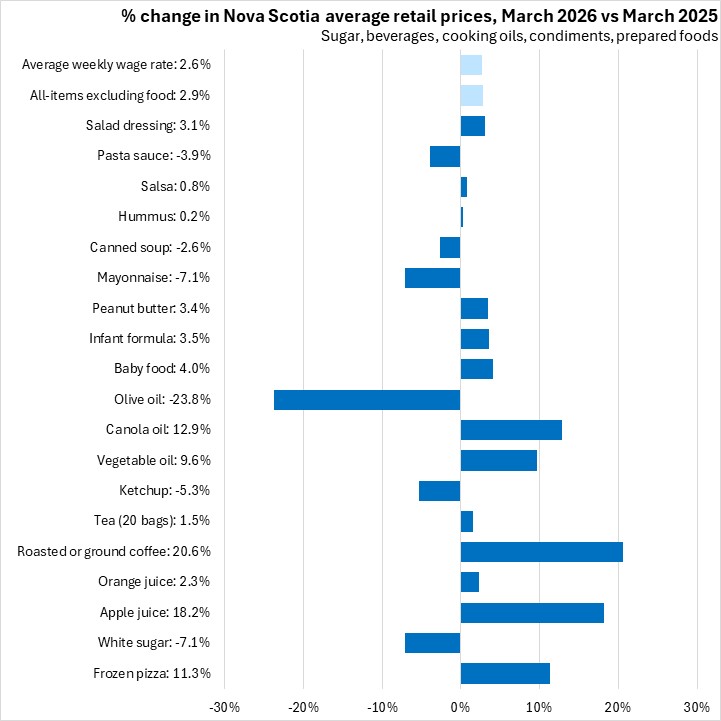
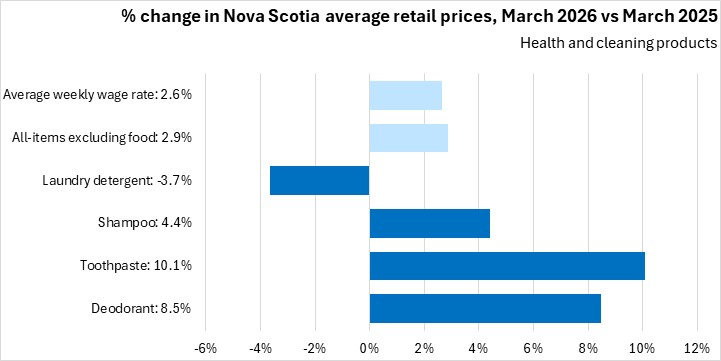
Over the last year (March 2026 vs March 2025), the consumer price index for all items in Nova Scotia excluding food increased by 2.9%. Food prices as a whole rose 3.4%. At the same time average weekly earnings across all Nova Scotia industries increased by 2.6%.
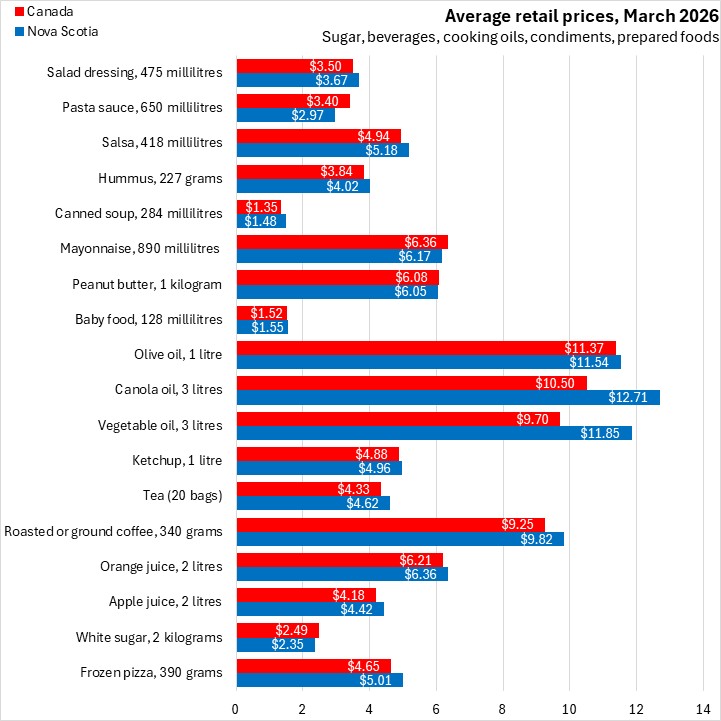
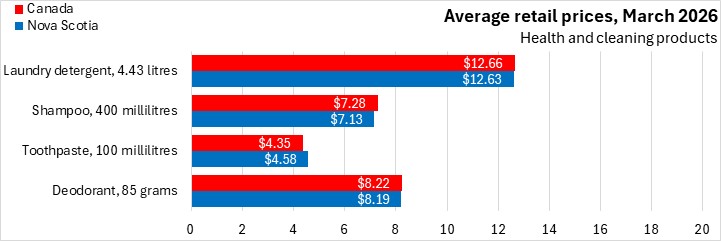
In the last year, the following products reported lower prices in Nova Scotia: beef top sirloin cuts, chicken thigh, canned tuna, butter, margarine, block cheese, eggs, pears, limes, avocado, potatoes (per kilogram), sweet potatoes, peppers, squash, frozen french fried potatoes, frozen green beans, frozen broccoli, frozen corn, frozen mixed vegetables, frozen peas, frozen spinach, flatbread and pita, crackers and crisp breads, brown rice, white rice, wheat flour, white sugar, ketchup, olive oil, mayonnaise, canned baked beans, canned soup, canned corn, pasta sauce, sunflower seeds, and laundry detergent.
The following products reported price growth that exceeded the gains in average weekly earnings: beef stewing cuts, beef striploin cuts, beef rib cuts, ground beef, pork (loin, rib, and shoulder cuts), whole chicken, chicken breasts, chicken drumsticks, bacon, wieners, shrimp, canned salmon, meatless burgers, milk (1 litre), soy milk, nut milk, cream, yogurt, apples, oranges, bananas, lemons, grapes, cantaloupe, strawberries, tomatoes, onions, per kilogram, celery, cucumber, iceberg lettuce, romaine lettuce, frozen pizza, frozen strawberries, cookies and sweet biscuits, dry or fresh pasta, apple juice, roasted or ground coffee, vegetable oil, canola oil, baby food, infant formula, peanut butter, canned tomatoes, canned beans and lentils, canned peach, canned pear, dry beans and legumes, tofu, salad dressing, almonds, peanuts, deodorant, toothpaste, and shampoo.
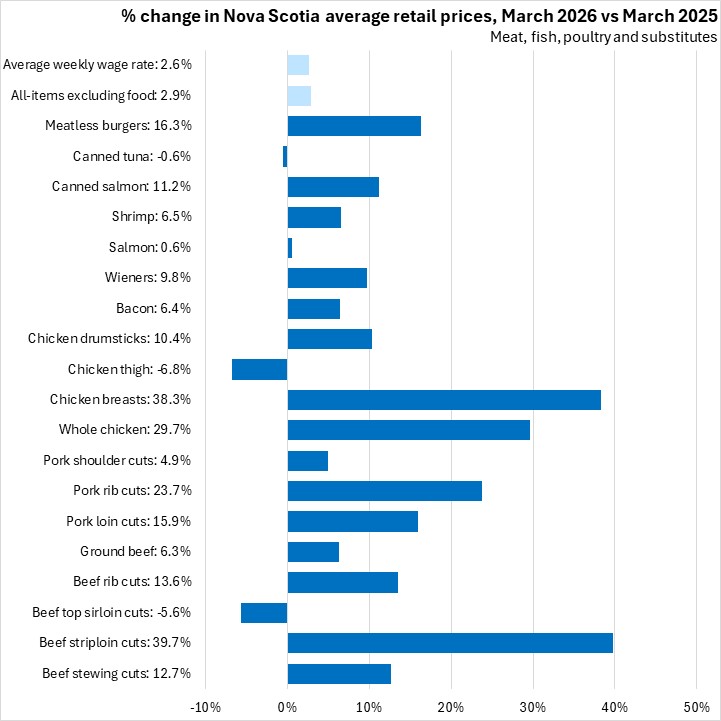
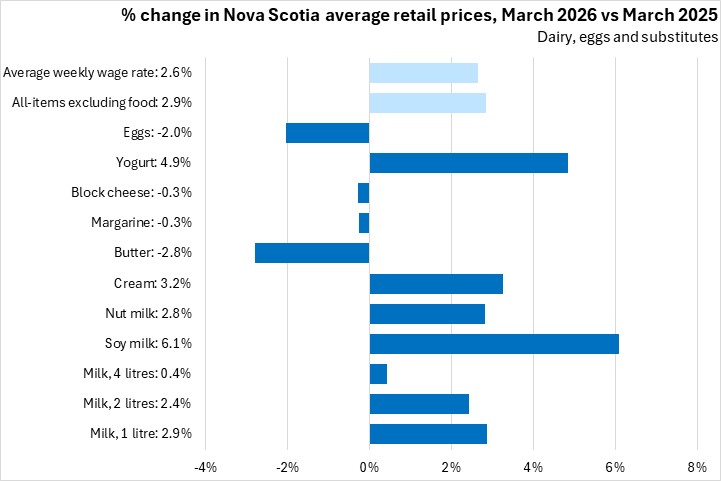
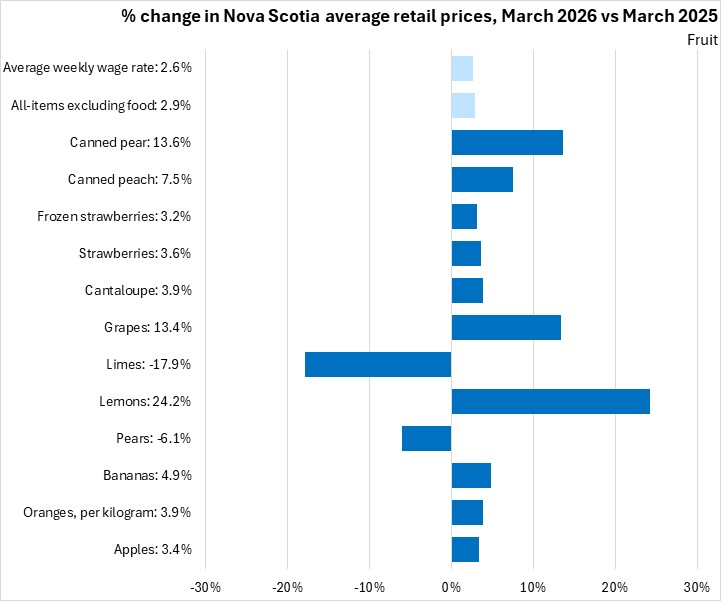
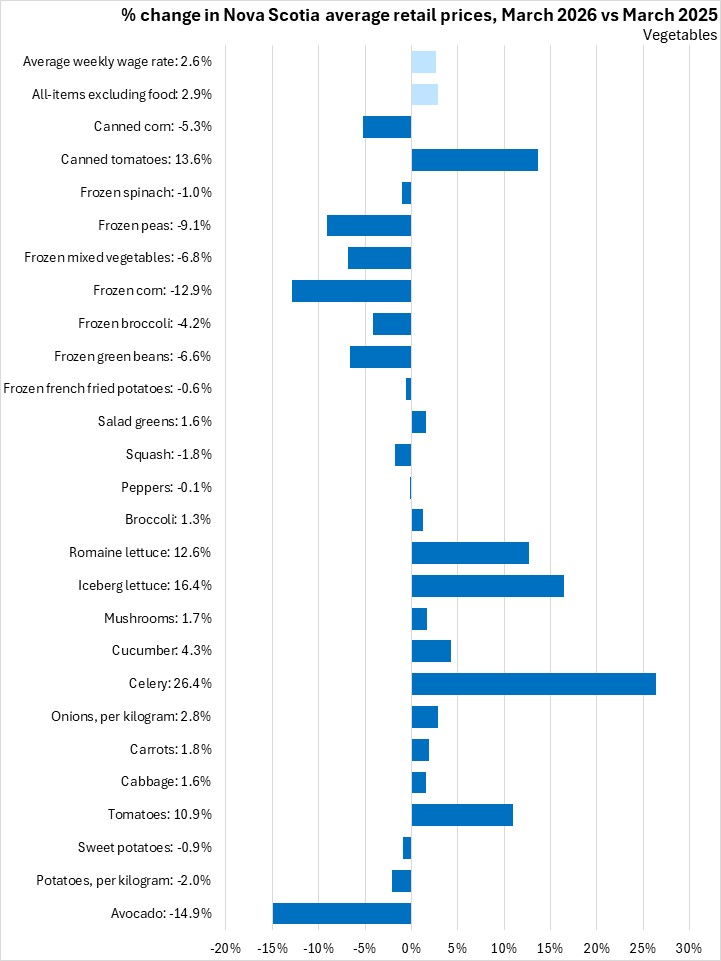
Nova Scotia prices relative to national average (March 2026)
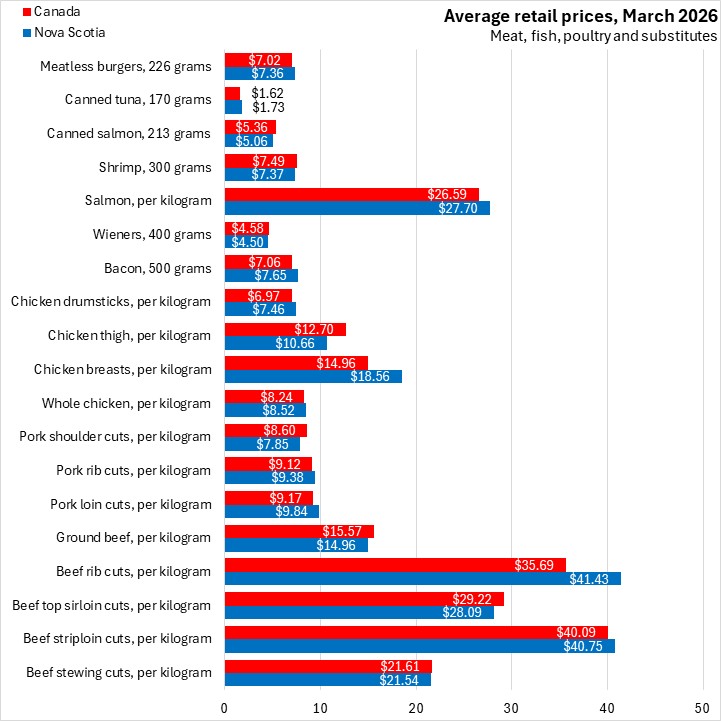
Nova Scotia food prices were below national averages for the following products: beef stewing cuts, beef top sirloin cuts, ground beef, pork shoulder cuts, chicken thigh, wieners, shrimp, canned salmon, milk (2 litres), cabbage, romaine lettuce, peppers, frozen green beans, frozen broccoli, frozen corn, frozen mixed vegetables, frozen peas, frozen spinach, white sugar, infant formula, peanut butter, mayonnaise, canned peach, pasta sauce, deodorant, shampoo, and laundry detergent.
Nova Scotia food prices were more than 10% higher than the national averages for the following products: beef rib cuts, chicken breasts, cream, eggs, oranges (per kilogram), bananas, pears, lemons, limes, grapes, cantaloupe, strawberries, onions, per kilogram, celery, cucumber, mushrooms, broccoli, squash, flatbread and pita, vegetable oil, canola oil, canned tomatoes, canned beans and lentils, dried lentils.
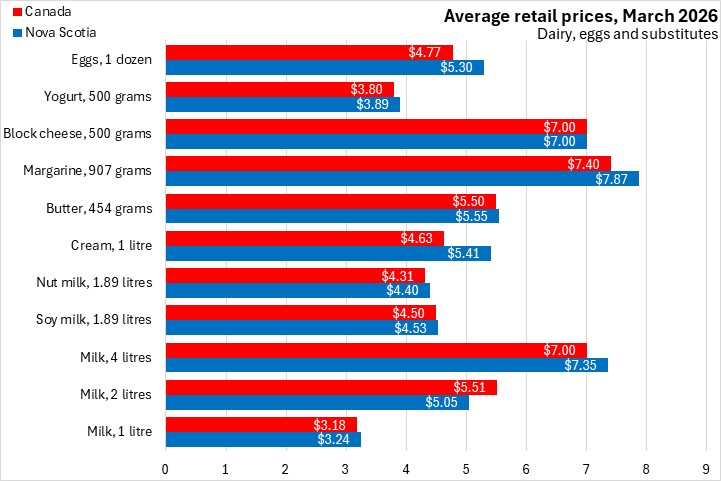
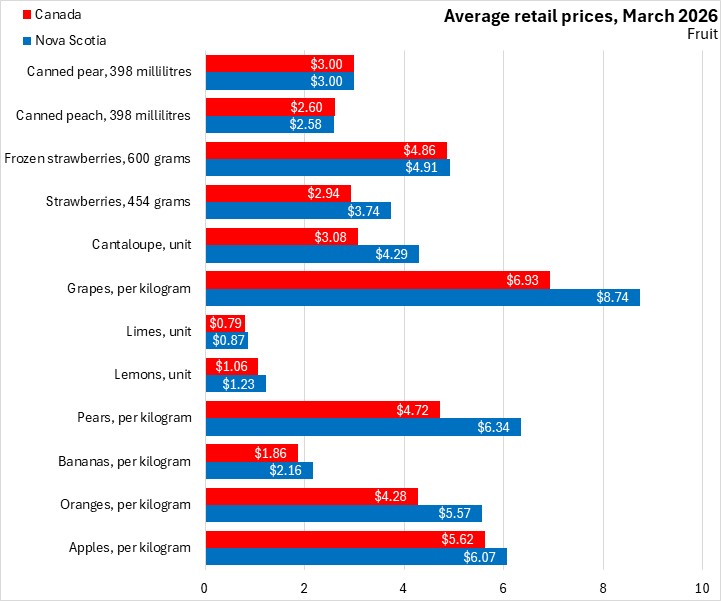
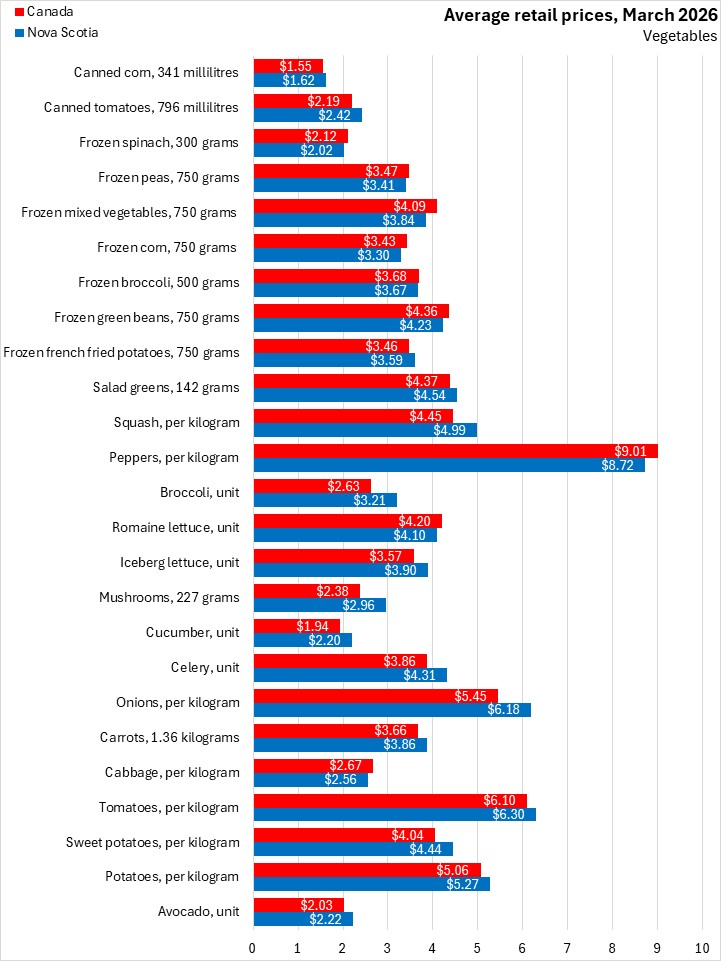
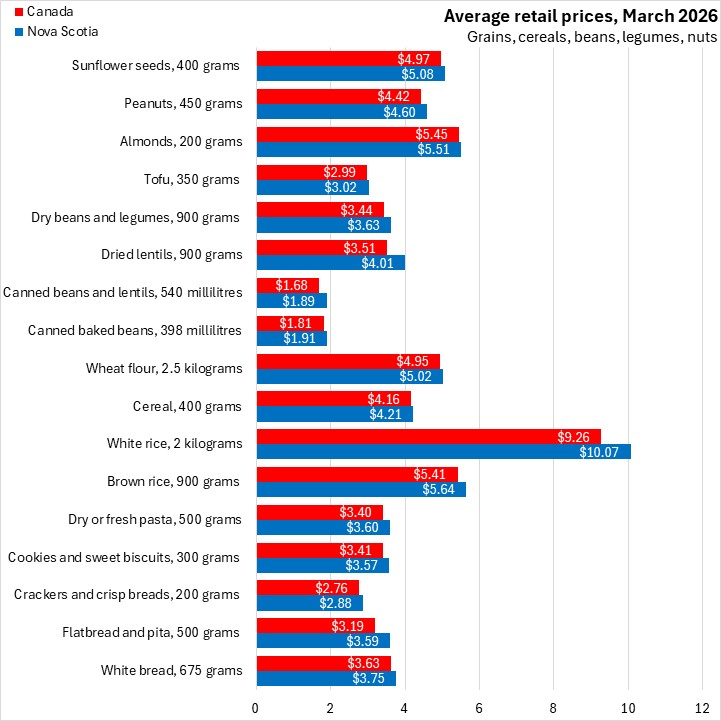

Notes: Statistics Canada makes available scanner data on prices collected for a range of food and personal care items. These prices are collected through point-of-sale (transaction) data obtained directly from Canadian retailers. The data represent commonly purchased items (which do change over time), but are not representative of the Consumer Price Index weights. Over time, products are rotated and quantity or quality may change. Comparisons of prices from one time period to another reflect quantity and quality changes as well as price changes.
For the purposes of this analysis, the 110 items reported by Statistics Canada will be grouped into:
- Meat, fish, poultry and meat substitutes
- Dairy, eggs and substitute products
- Fruit (including canned and frozen products)
- Vegetables (including canned and frozen products)
- Grains, cereals, beans, legumes and nuts
- Sugar, juices, cooking oils, condiments and prepared foods
- Health and cleaning products
Source: Statistics Canada. Table 18-10-0245-01 Monthly average retail prices for selected products; Table 18-10-0004-01 Consumer Price Index, monthly, not seasonally adjusted