October 19, 2026ANALYSIS OF CONSUMER PRICE INDEX FOR SEPTEMBER 2026 Note that energy prices continue to reflect the impact of the conflict in the Middle East.
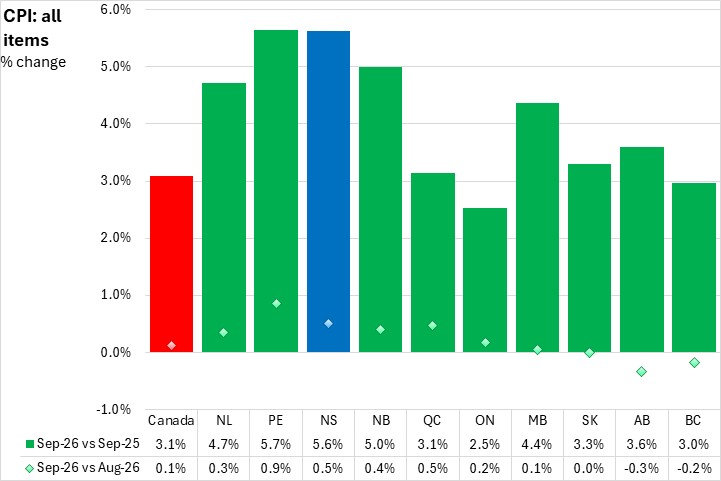
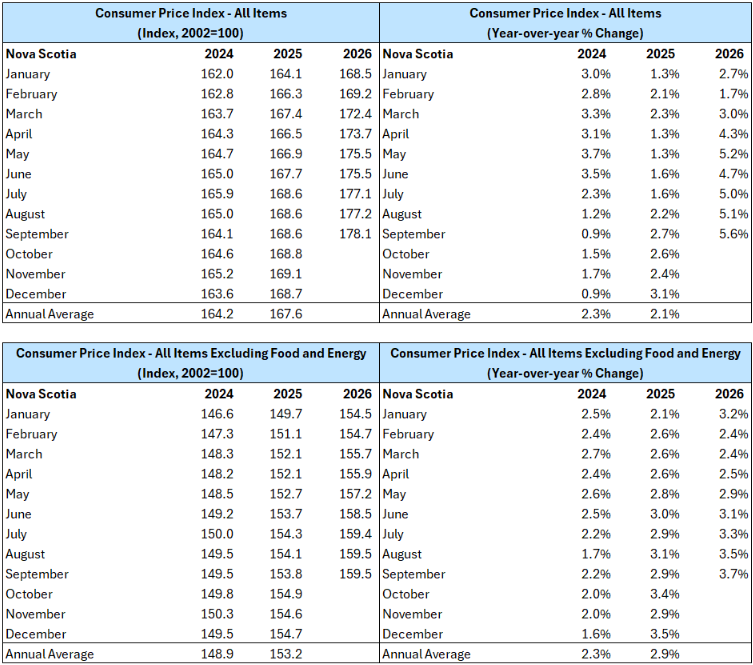
Nova Scotia’s all items Consumer Price Index (CPI) grew 5.6% year-over-year in September 2026, up 0.5 percentage points from the previous month.
Nationally, consumer prices grew 3.1% year-over-year in September 2026, up 0.1 percentage points from the previous month. Inflation was fastest in Prince Edward Island (followed closely by Nova Scotia) and slowest in Ontario.
The most significant upward contributors (combining price increase as well as share of the consumption basket) to Nova Scotia's 5.6% year-over-year inflation were: gasoline, fuel oil and other fuels, rent, food purchased from restaurants, and traveller accommodation.
The largest downward year-over-year contributions were from: financial services, fresh vegetables, processed meat, household appliances, and non-electric kitchen utensils, tableware and cookware.
On a monthly basis, Nova Scotia's all items CPI was up 0.5% from August 2026 to September 2026. National prices were up 0.1% on average, with monthly increases in seven provinces. The fastest rate of monthly increase was in Prince Edward Island, with the largest decline in Alberta.
Major upward contributors to Nova Scotia's monthly consumer prices were: gasoline, fuel oil and other fuels, recreational equipment and services (excluding recreational vehicles), purchase and operation of recreational vehicles, and passenger vehicle insurance premiums. Major downward contributors were: inter-city transportation, men's clothing, fresh vegetables, personal care supplies and equipment, and paper, plastic and aluminum foil supplies.
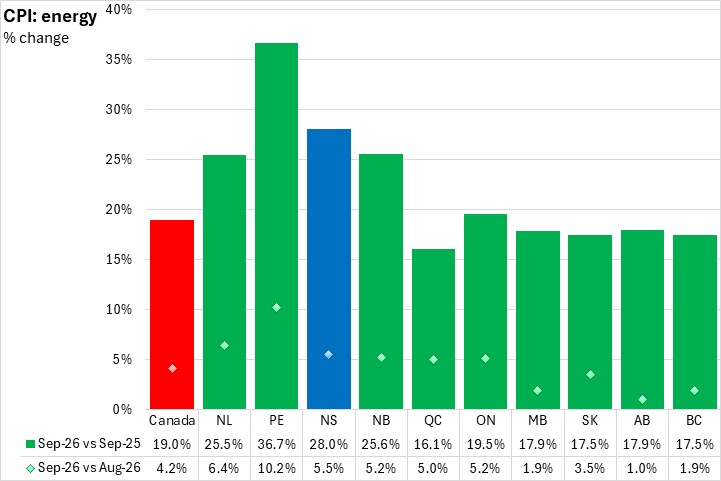
Energy prices play a significant role in inflation rates. Nova Scotia's energy prices (and overall inflation) are more sensitive to fluctuations in the global price of crude oil. Nova Scotia's energy prices were up 28.0% from September 2025 to September 2026. Year-over-year energy prices were up 19.0% nationally with all provinces reporting increasing energy prices (fastest: Prince Edward Island, slowest: Québec).
On a monthly basis, Nova Scotia's energy prices were up 5.5% from August 2026 to September 2026. National energy prices were up 4.2% with increases in every province, led by Prince Edward Island.
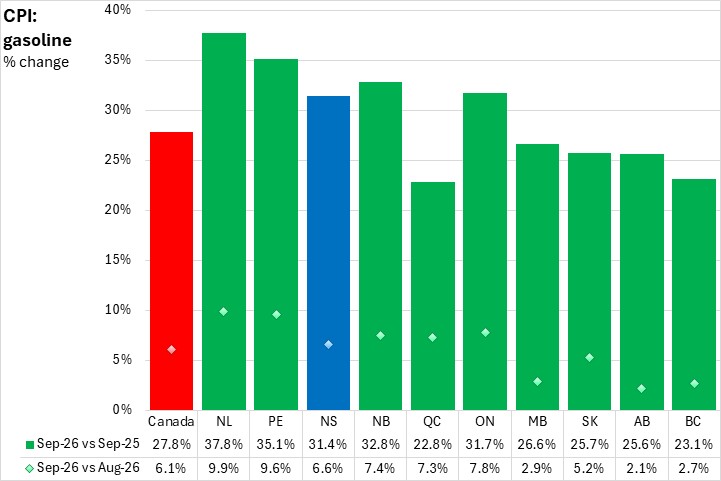
In September 2026, gasoline prices were up 31.4% compared to a year ago in Nova Scotia, more than the national average increase of 27.8%. All provinces reported increases, with Newfoundland and Labrador reporting fastest increase in gas prices year-over-year, while Québec reported the slowest increase.
Gasoline prices were up 6.6% from August to September in Nova Scotia. Nationally, gasoline prices were up 6.1% with all provinces reporting increases, led by Newfoundland and Labrador.
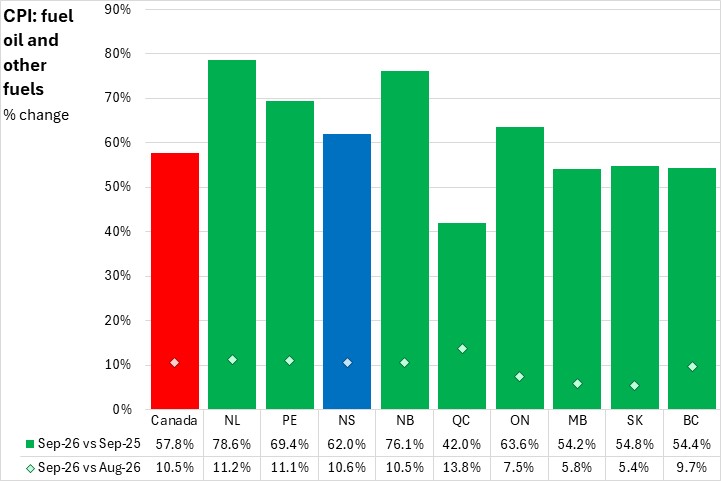
Nova Scotia's year-over-year fuel oil prices were up 62.0% in September 2026 compared with September 2025. Nationally, the fuel oil and other fuels price index increased 57.8% compared to September 2025 with all provinces, led by Newfoundland and Labrador, reporting increases.
On a monthly basis, Nova Scotia's fuel oil prices were up 10.6% compared to August 2026. National fuel oil prices were up 10.5% from August to September, with increases every province. Québec reported the fastest monthly increase among provinces.
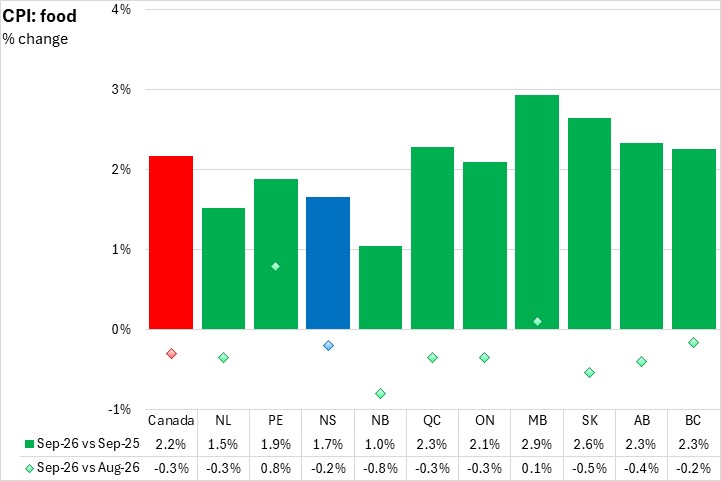
Food prices increased 1.7% in Nova Scotia year-over-year, below the national average food price inflation of 2.2% in September 2026. Food prices were up in every province, led by Manitoba.
On a monthly basis, Nova Scotia's food prices fell 0.2% from August to September. National food prices were down 0.3% with declines in every province except Prince Edward Island and Manitoba. The fastest decline was reported in New Brunswick.
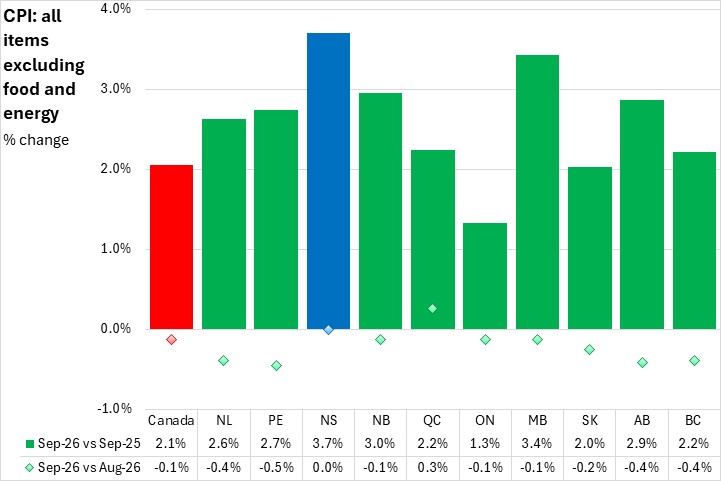
Food and energy prices are heavily influenced by volatile global commodity markets. Nova Scotia's underlying inflation rate excluding food and energy was up 3.7% from September 2025 to September 2026, the fastest among provinces. Nationally, inflation excluding food and energy was 2.1% with year-over-year increases in all provinces. Ontario reported the slowest increase in prices excluding food and energy.
On a monthly basis, Nova Scotia's prices for all items excluding food and energy were unchanged from August to September. Nationally, prices for all items excluding food and energy were down 0.1%. Québec reported the fastest monthly increase, whild the fastest decline was in Prince Edward Island.
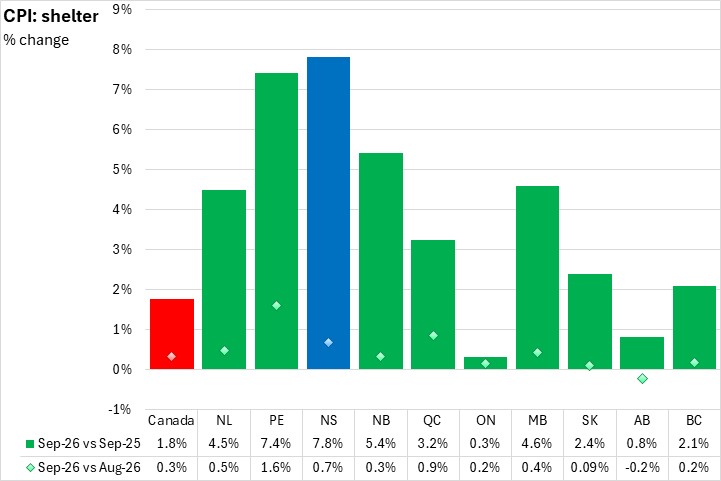
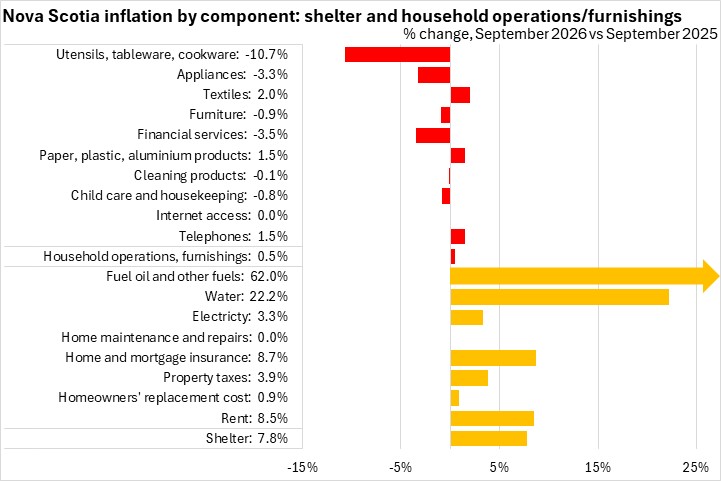
Year-over-year shelter cost inflation was 7.8% in Nova Scotia in September 2026, above the national average shelter price increase of 1.8% and the fastest among provinces.
Monthly shelter costs were up 0.7% in Nova Scotia from August to September 2026. Nationally, shelter costs were up 0.3% with increases every province except Alberta. The fastest monthly increase in shelter costs was in Prince Edward Island.
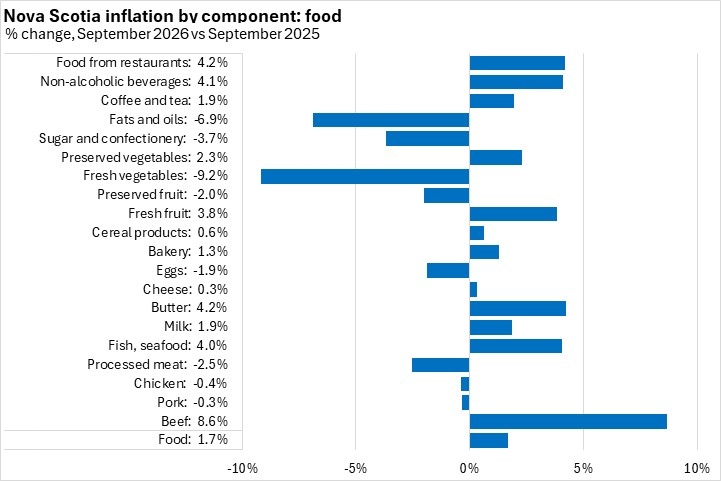
Among detailed food products with available data, Nova Scotia's year-over-year inflation was fastest for beef, butter, and food from restaurants. Year-over-year price declines were fastest in fresh vegetables and fat/oils.
In detailed shelter cost components, the fastest year-over-year growth was reported for fuel oil/other fuels and water.
Household operations/furnishings costs were up 0.5% overall. The fastest year-over-year price increase was for textiles, while prices fell the fastest for utensils/tableware/cookware.
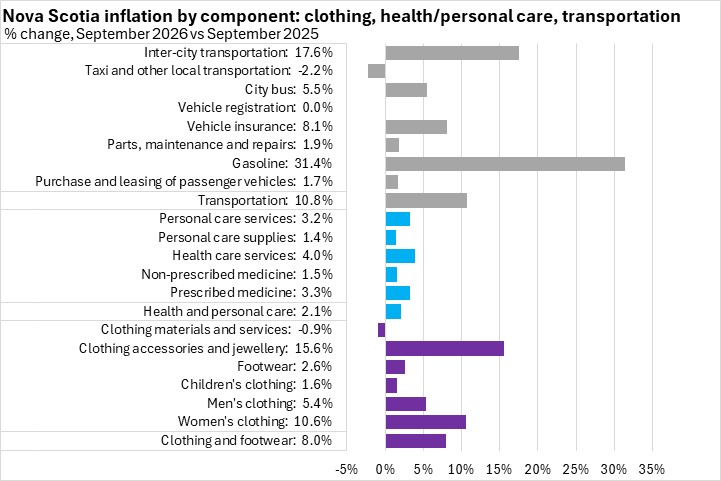
Clothing and footwear prices were up 8.0% year-over-year in September as all sub-components grew except for clothing materials/services, with the fastest price growth in clothing accessories/jewellery.
Health and personal care costs were up 2.1% year-over-year on gains in all sub-components. Health care services reported the fastest increases.
Overall transportation costs were up 10.8% year-over-year in September due in large part to an increase in gasoline prices. The only decrease was in taxis/other local transportation, while vehicle registration prices were unchanged.
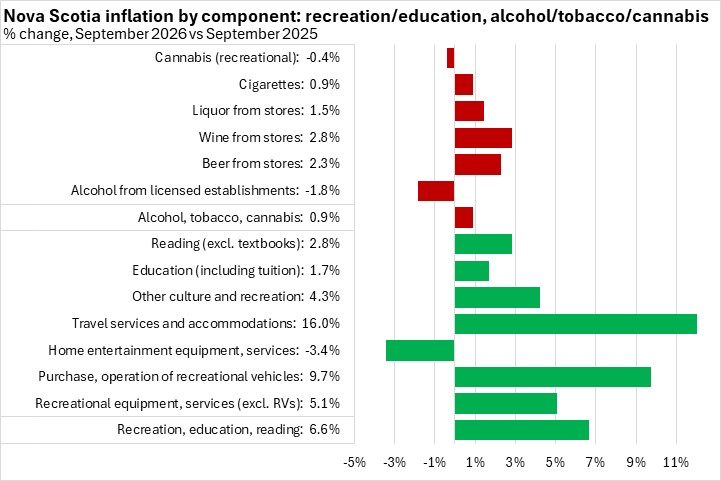
Nova Scotia's overall prices for recreation, education and reading were up 6.6% from September 2025 to September 2026 with the fastest increase for travel services/accommodations. The only declines were in home entertainment equipment/services.
Nova Scotia's prices for alcohol, tobacco and recreational cannabis were up 0.9% year-over-year. The fastest increase was in wine from stores, while the largest decrease was in alcohol from licensed establishments.
Trends
Since the start of the Bank of Canada's inflation-targeting monetary policy regime, inflation for all items has generally been in the 0-4% range. Periods of above target inflation are typically followed by periods of slow price growth or declines. The acceleration in inflation from 2021 to 2024 was the strongest since the inflation-targeting era began, though this receded with tighter monetary policy and lower commodity prices. Nova Scotia's September 2026 all-items inflation rate of 5.6% was the fastest pace of year-over-year inflation since February 2023.
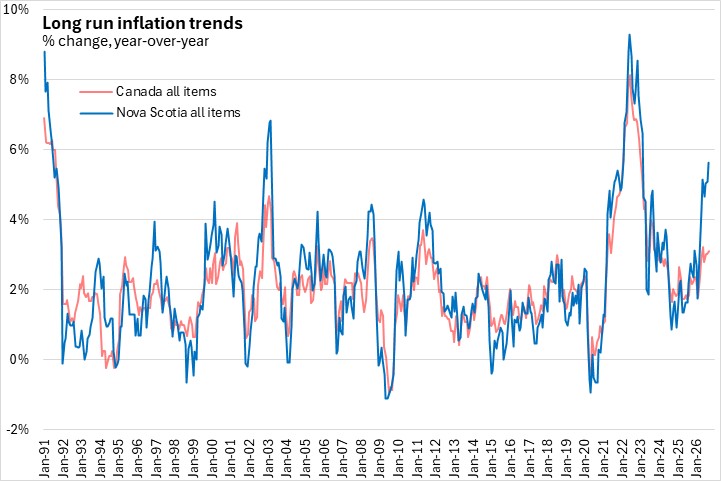
Many of these periods of accelerated and slowed inflation are attributable to volatile commodity prices, especially energy prices. Once the more volatile commodity prices are excluded, inflation in Nova Scotia has largely been below 2% for much of the last 20 years. However, the rise in inflation through 2021-2024 spread beyond commodity prices, resulting in the longest period under the Bank of Canada's inflation-targeting regime with Nova Scotia's CPI excluding food and energy above 3%. After decelerating in 2024, Nova Scotia's CPI excluding food and energy rose in 2025 and has remained above 2%. In September 2026, it reached 3.7%, the highest value since November 2023.
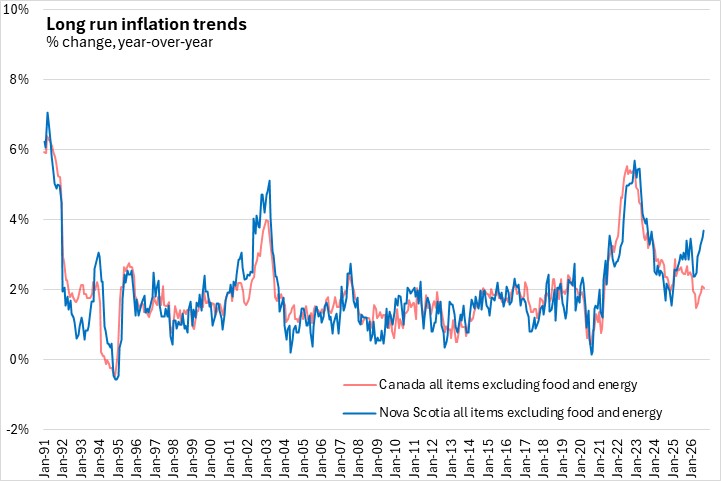
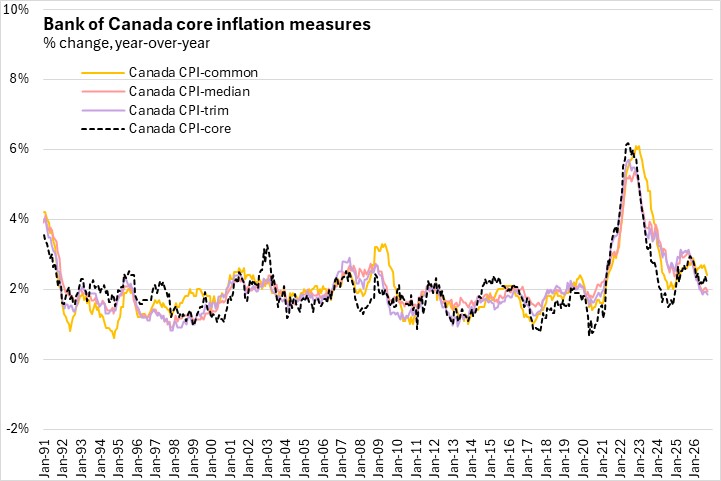
The Bank of Canada examines 'core' measures of inflation that are intended to remove the effects of volatile components and capture underlying inflation trends that are more connected to capacity in the Canadian economy. Core measures of inflation September also indicate where all items inflation is headed.
Canada's core measures of inflation remained mostly at or below the Bank's target of 2% for over a decade prior to 2021. However, core inflation measures rose in 2022, peaking at over 6% for the CPI-common measure before declining around the beginning of 2023. Core measures of inflation began to rise toward the end of 2024.
The Bank of Canada's year-over-year core inflation measures in September 2026 were:
- CPI-common: 2.4% (down from 2.6% the previous month)
- CPI-median: 1.9% (down from 2.0% from the previous month)
- CPI-trim: 1.8% (down from 1.9% the previous month)
The core CPI excluding volatile products and the effects of indirect taxes was 2.2% (down from 2.4% the previous month).
Source: Statistics Canada. Table 18-10-0004-01 Consumer Price Index, monthly, not seasonally adjusted; Table 18-10-0256-01 Consumer Price Index (CPI) statistics, measures of core inflation and other related statistics - Bank of Canada definitions