May 01, 2025CANADIAN INCOME SURVEY: POVERTY, 2023 Statistics Canada has released results from the Canadian Income Survey, reporting on incomes for 2023. This includes food security, median incomes as well as Canada's official poverty rate, as assessed against the Market Basket Measure threshold.
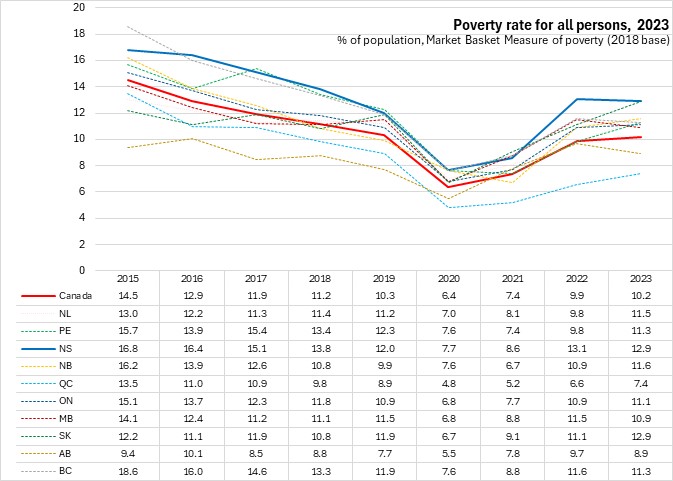
Note that there were significant government income supports during the COVID-19 pandemic which drove a large decline in the poverty rates for 2020 and 2021. These supports were largely withdrawn by 2022 while there was a significant acceleration in inflation.
Poverty Rates
The Market Basket Measure (MBM) estimates the share of the population that do not have sufficient income for a reference family to afford the cost of a basket of essential goods and services. The MBM threshold is estimated for specific communities. In Nova Scotia, there are separate thresholds for MBM in Halifax, Cape Breton, communities with populations between 30,000 and 100,000, communities with populations under 30,000 and rural areas. The Market Basket has recently been updated to 2018, with historical estimates provided back to 2015. These data are collected through the Canadian Income Survey. Indicators of poverty and income for smaller sub-components of the population may be of limited data quality.
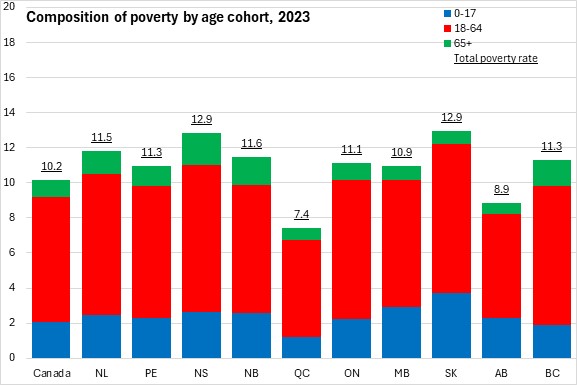
The poverty rate was 12.9% in Nova Scotia in 2023, down from 13.1% in 2022. This was tied for the highest poverty rate among provinces (with Saskatchewan). Nationally, 10.2% of the population were below the MBM poverty threshold. The lowest poverty rate was in Québec.
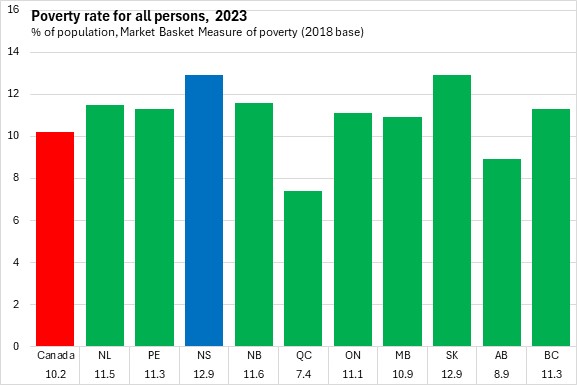
Poverty rates increased in six provinces from 2022 to 2023. Saskatchewan and Newfoundland and Labrador reported the sharpest increases in poverty rates while Alberta reported the largest decline in poverty rate.
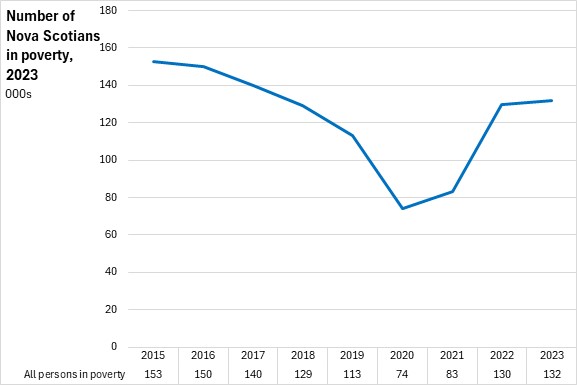
The number of Nova Scotians in poverty rose to 132,000 in 2023 - up 2,000 from the previous year. Faster growth in the population resulted in a declining poverty rate.
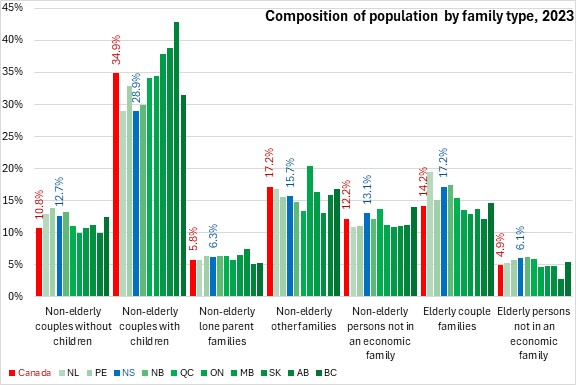
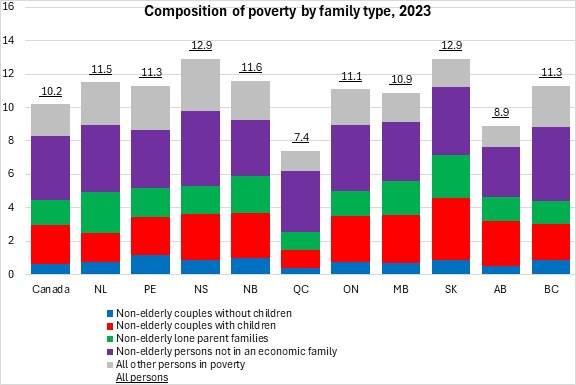
Family structure is a significant correlate for poverty rates. The largest number of families are non-elderly couples with children, followed by elderly couple families, non-elderly persons not in an economic family and other non-elderly families.
Non-elderly persons are the largest single cohort among those living in poverty in every province.
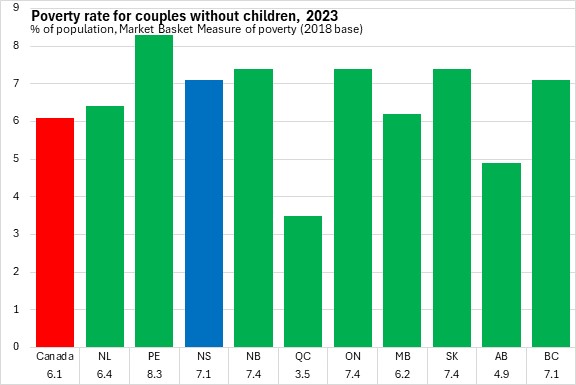
The poverty rate for couple economic families without children was 7.1% in Nova Scotia in 2023. This was above the national average of 6.1% (highest: Prince Edward Island, lowest: Québec).
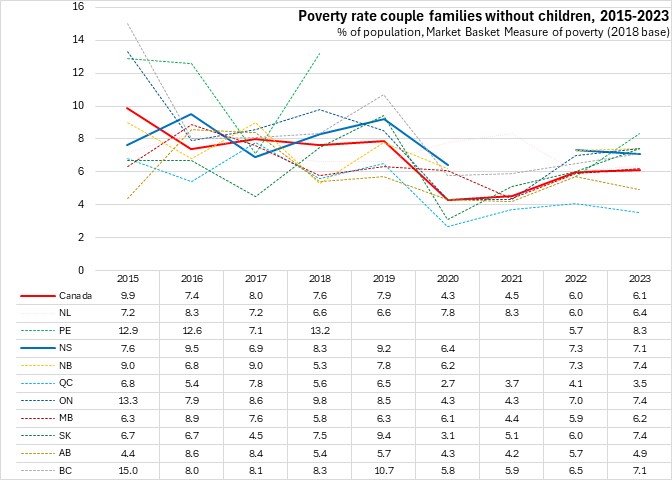
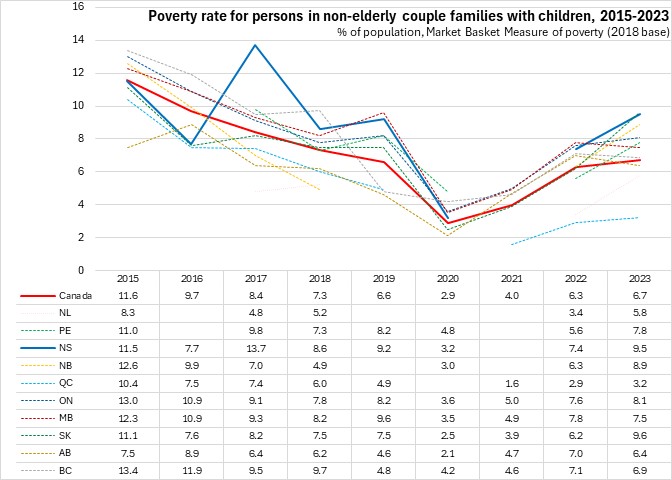
Nova Scotia's poverty rate for couple families with children was down slightly from 2022-2023. Seven provinces reported rising poverty rates for couple families with children.
In Nova Scotia, 9.5% of couple families with children were below the MBM poverty line in 2023 - this was just behind Saskatchewan for the highest poverty rate among couple families with children. The national poverty rate for couple families with children was 6.7% (lowest: Québec).
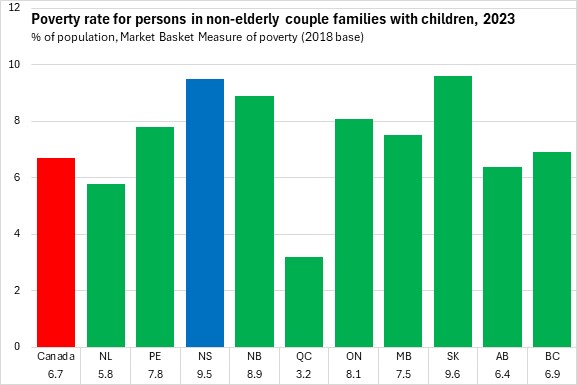
Poverty rates among couple families with children rose in all provinces except Manitoba, Alberta and British Columbia.
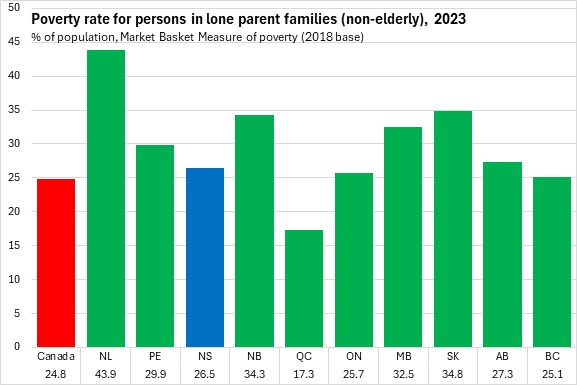
Lone parent families have historically had higher poverty rates than for couple economic families. In Nova Scotia, 26.5% of those in lone parent families lived in poverty, above the national average of 24.8% for these families. Lone parent poverty was highest in Newfoundland and Labrador and lowest in Québec.
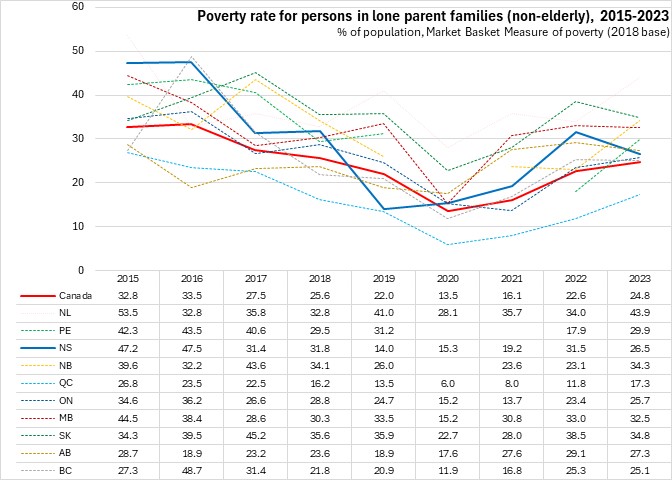
Nova Scotia's poverty rate among lone parent families declined by 5 percentage points from 2022 to 2023, the steepest decline among provinces. Lone parent poverty rates were up for 5 provinces.
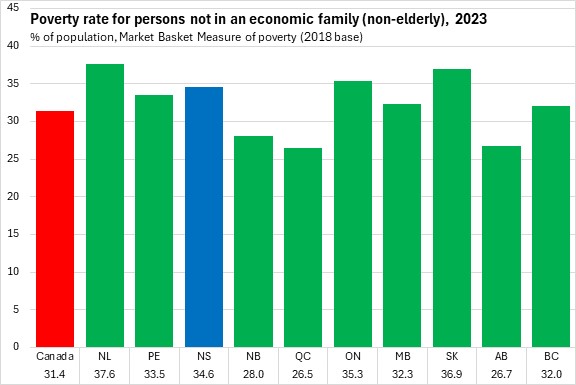
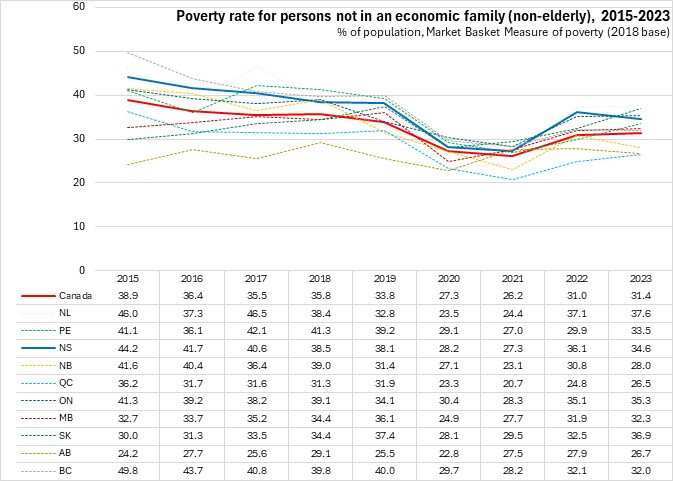
Persons not in economic families report the highest poverty rates. In 2023, 34.6% of Nova Scotians who were not in an economic family lived in poverty. This is above the national average. Persons not in economic families reported the highest poverty rates in Newfoundland and Labrador and the lowest poverty rates in Québec (though this was still 26.5%).
Nova Scotia's poverty rates for persons not in economic families decreased in 2023. Six provinces reported increases in poverty rates for persons not in an economic family from 2022 to 2023.
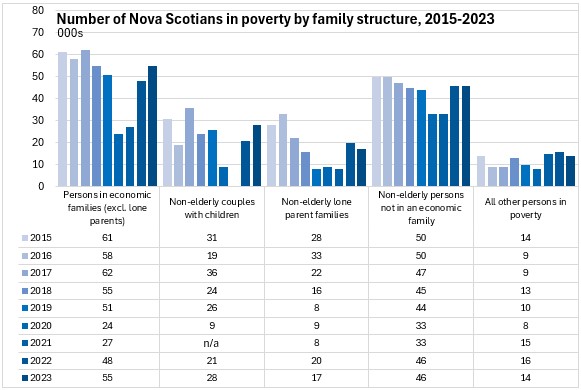
Persons in economic families (excl. lone parents) made up the largest number of persons in poverty in Nova Scotia, followed by non-elderly persons not in an economic family.
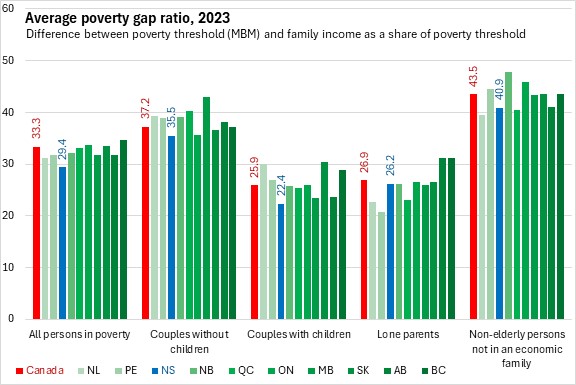
The average poverty gap reports the difference between the MBM threshold and family income, stated as a percentage of the threshold. For all Nova Scotians living in poverty in 2023, the gap was 29.4% of the MBM threshold, which was the smallest gap among provinces. For each major family structure, Nova Scotia's poverty gap was smaller than the national average. Nova Scotia's poverty gap ratio was smallest for lone parent families (26.2%) as well as for couples with children (22.4%). Non-elderly persons not in an economic family had both the highest poverty rates and poverty gap ratios.
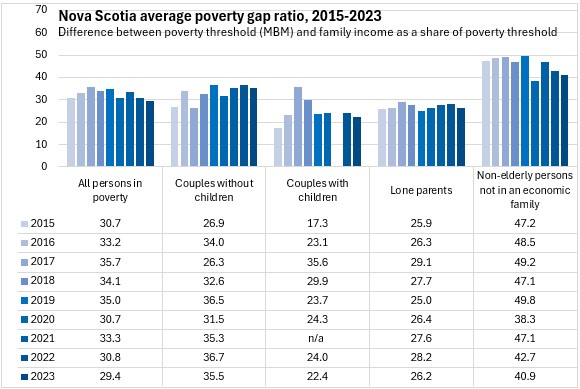
Nova Scotia's average poverty gap ratios improved in 2023, reflecting gains for all family structures.
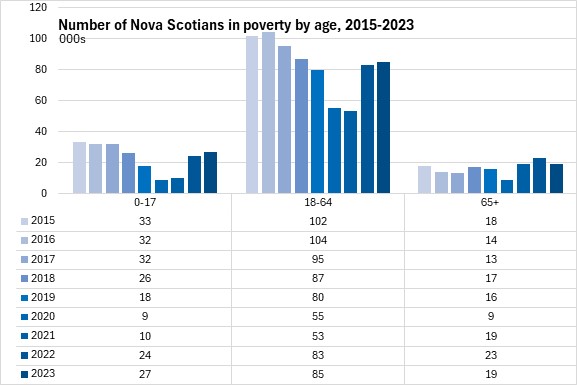
The majority of those living in poverty in Nova Scotia are between the ages of 18 and 64 years old. This is the case across the country, where this age cohort is clearly the largest part of the population.
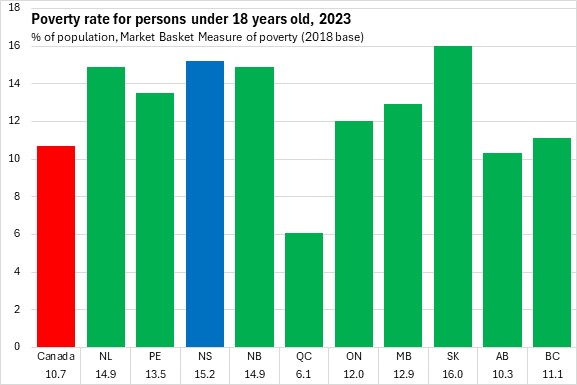
The child poverty rate in Nova Scotia was 15.2% in 2023 - the second highest poverty rate for this age cohort after Saskatchewan. The national child poverty rate was 10.7% with the lowest poverty in Québec.
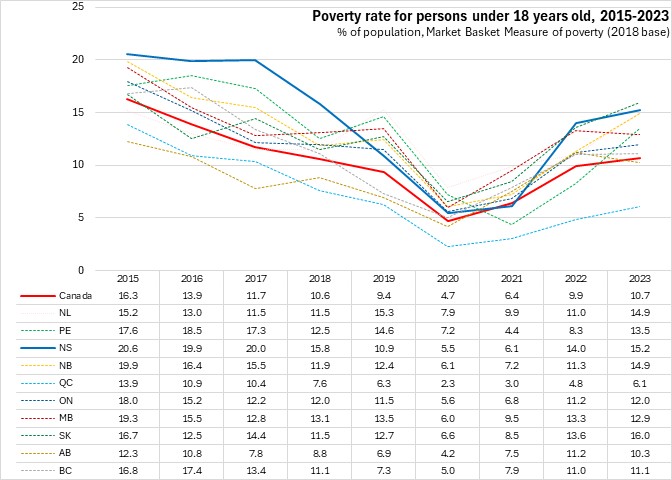
Every province except Manitoba and Alberta reported an increase in child poverty rates in 2023. Prince Edward Island reported the largest rise in the child poverty rate.
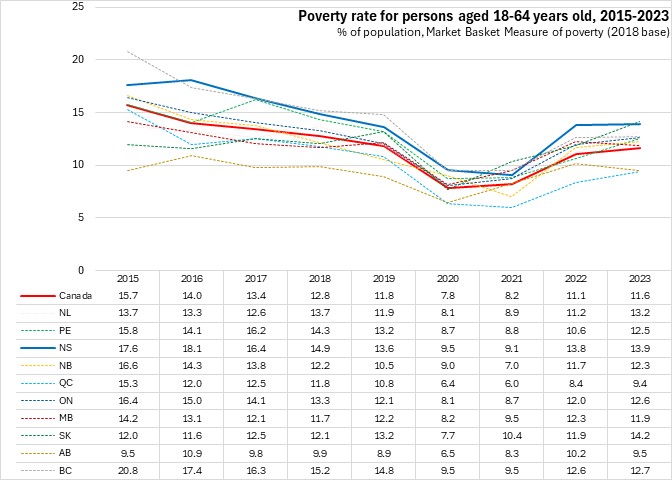
The poverty rate for those aged 18-64 was 13.9% in Nova Scotia, which was also the second highest among provinces (after Saskatchewan). The poverty rates for those aged 18-64 was 11.6% nationally with the lowest rates in Alberta and Québec.
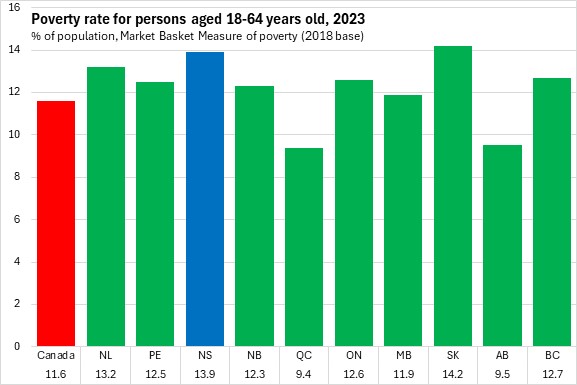
Poverty rates for those aged 18-64 increased in all provinces except Manitoba and Alberta in 2023.
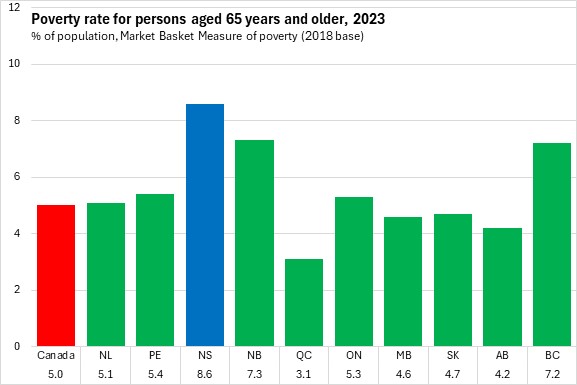
Nova Scotia's poverty rate among seniors was 8.6% - the highest rate among the provinces for this cohort. The national seniors poverty rate was 5.0% with the lowest value in Québec.
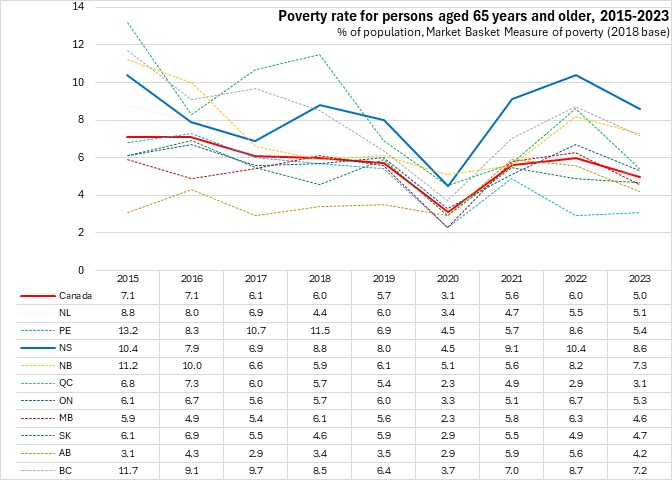
Seniors' poverty declined in all provinces except Québec in 2023.
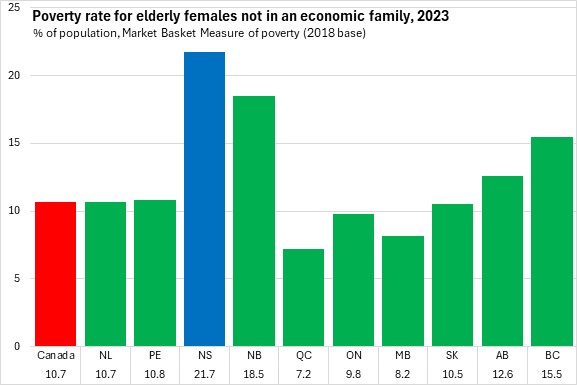
Among the population aged 65 and older, the number of Nova Scotians who live in poverty is highly concentrated among elderly persons not in an economic family. Of the 19,000 seniors in poverty in Nova Scotia, 14,000 of them were not in economic families, and of these a disproportionate number were women (9,000).
Poverty rates among elderly Nova Scotians not in an economic family were notably higher than for similar cohorts in other provinces, a phenomenon that emerged particularly in 2022 and continued in 2023.
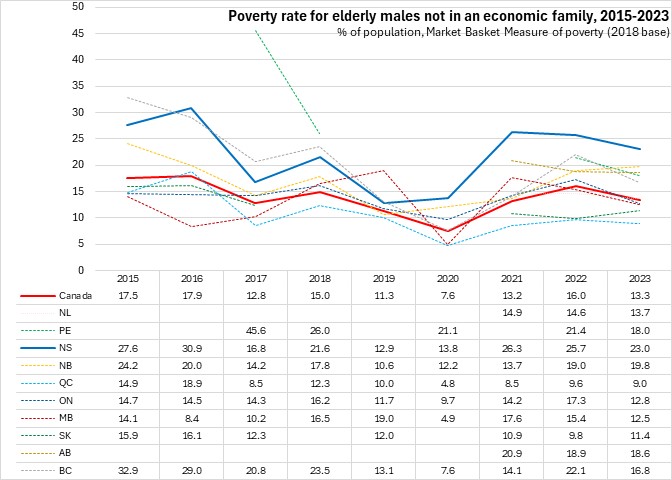
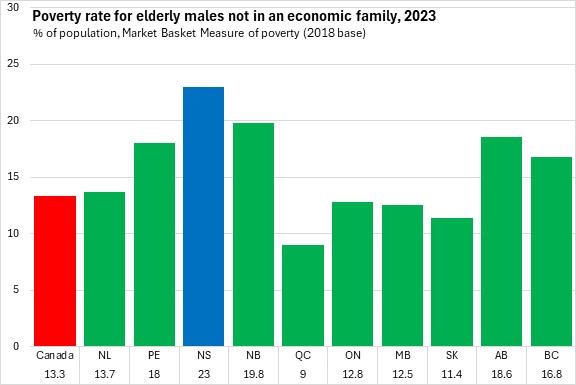
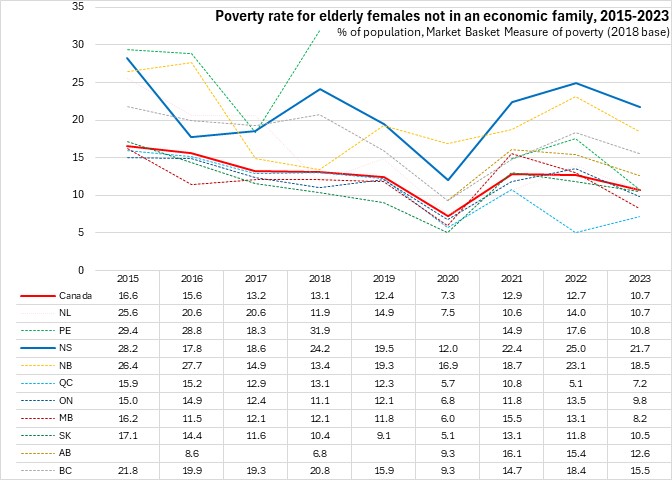
The largest number of Nova Scotians living in poverty in 2023 were between the ages of 18 and 64: 85,000. There were more children (27,000) than seniors (19,000) living in poverty in Nova Scotia in 2023.
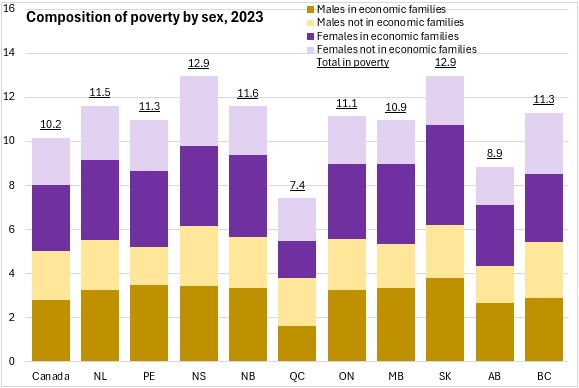
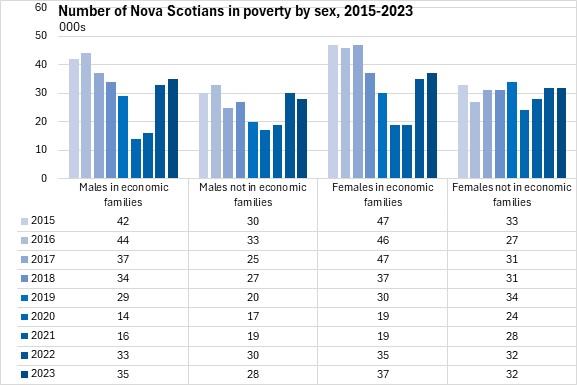
There were more females (69,000) than males (63,000) in poverty in Nova Scotia in 2023. In most provinces (Québec and Saskatchewan excepted), females make up a larger portion of those living in poverty.
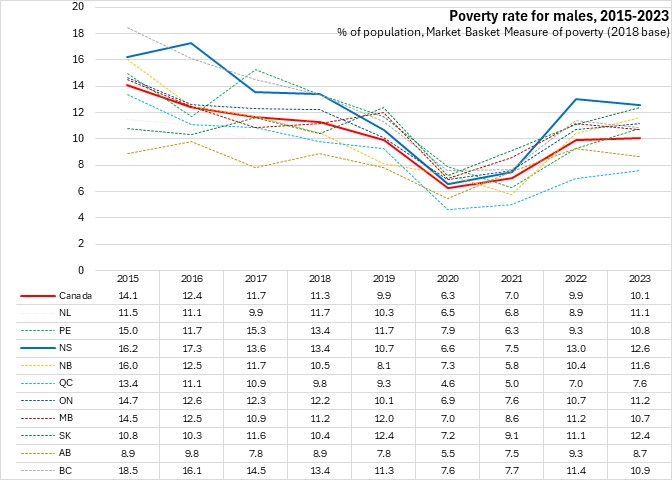
The male poverty rate was 12.6% in Nova Scotia in 2023 - highest among provinces. The male poverty rate was 10.1% nationally with the lowest poverty rate in Québec.
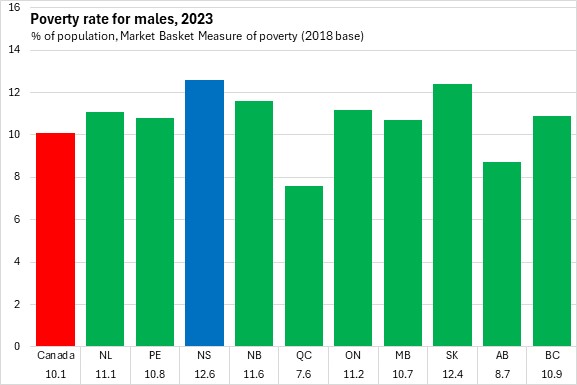
Male poverty rates increased for six provinces in 2023. Nova Scotia's male poverty rate declined in 2023.
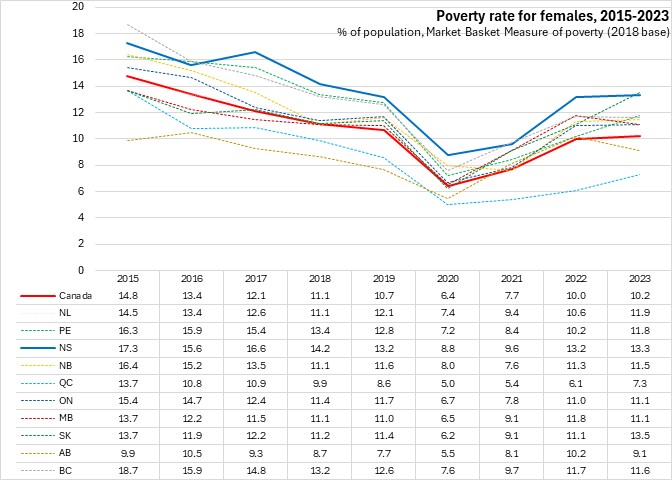
The female poverty rate was 13.3% in Nova Scotia in 2023, the second highest female poverty rate after Saskatchewan. The national female poverty rate was 10.2% in 2023, with the the lowest female poverty rate in Québec.
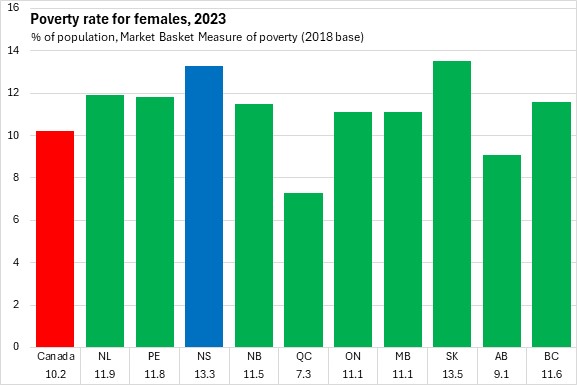
Female poverty rates rose in seven provinces in 2023, including Nova Scotia.
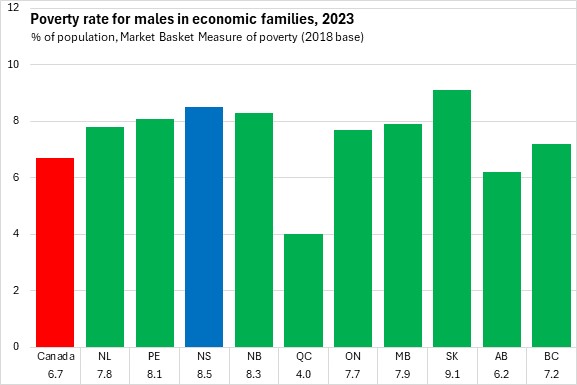
The poverty rate among Nova Scotia males in economic families was 8.5% in 2023 - the second highest rate for this cohort after Saskatchewan. Nationally, males in economic families had a poverty rate of 6.7% with the lowest prevalence in Québec.
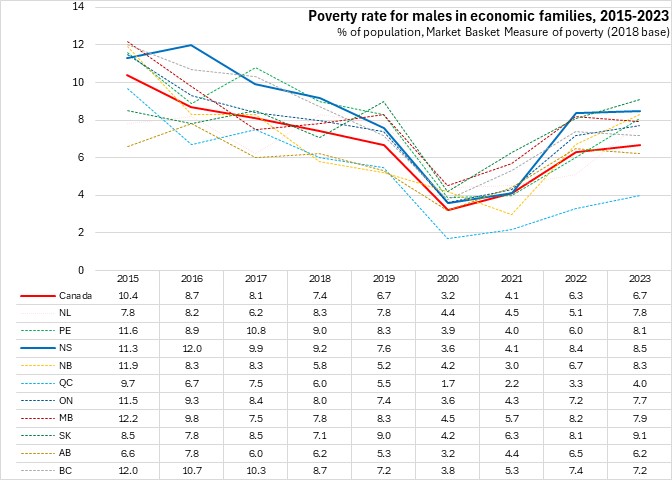
Poverty rates for males in economic families were up in seven provinces (including Nova Scotia) in 2023.
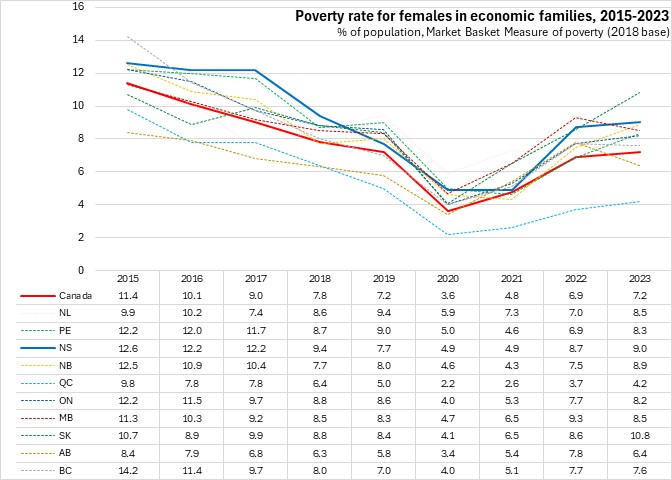
The poverty rate for females in an economic family in Nova Scotia was 9.0% in 2023 - second highest among provinces after Saskatchewan. Nationally, the poverty rate for females in an economic family was 7.2% with the lowest value in Québec.
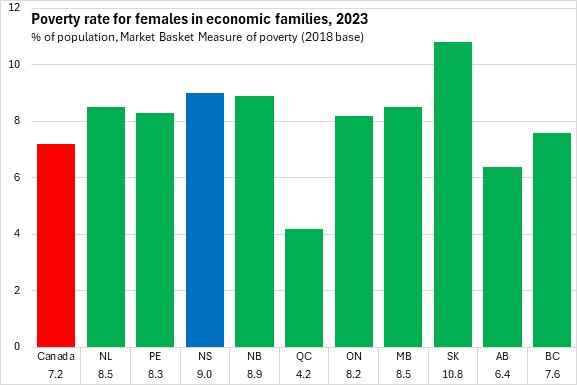
Poverty rates for females in economic families increased in seven provinces (including Nova Scotia) in 2023.
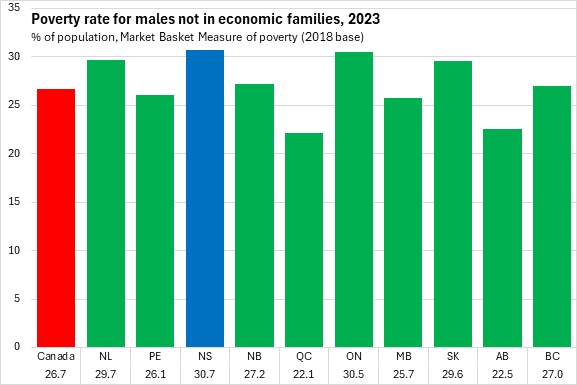
Nova Scotia's poverty rate for males not in an economic family was substantially higher (than for males in an economic family) at 30.7% in 2023. Nova Scotia reported the highest poverty rate for this cohort, just ahead of Ontario. Nationally, the poverty rate among males not in an economic family was 26.7% with the lowest poverty rates in Alberta and Québec.
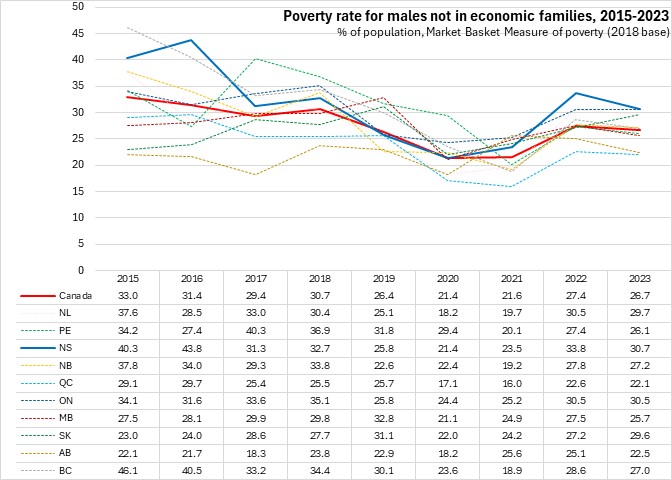
Poverty rates for males not in an economic family decreased in every province except Saskatchewan, Ontario (unchanged).
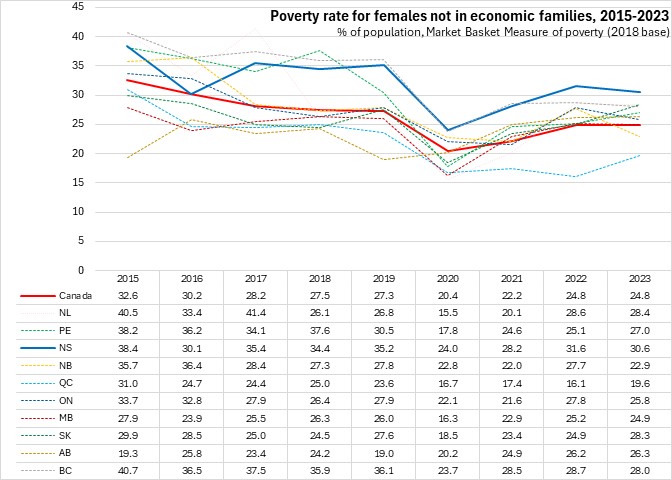
Nova Scotia's poverty rate for females not in an economic family was 30.6% in 2023 - the highest among provinces and substantially higher than for females in an economic family. Nationally, females not in an economic family had a poverty rate of 24.8% with the lowest value in Québec.
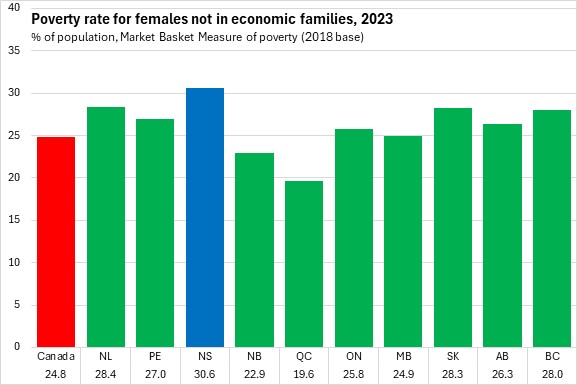
Poverty rates for females not in an economic family decreased in six provinces (including Nova Scotia) in 2023.
The number of females in poverty outnumbered males in poverty by 6,000.
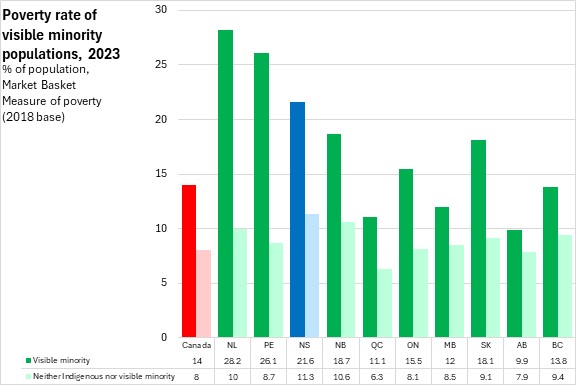
Statistics Canada's reported poverty rates now include categories for racialized persons (defined as identifying with 'visible minority' populations).
Poverty rates among those who identify with a visible minority category were substantially higher in Nova Scotia (21.6%) than for those who identified neither as Indigenous nor as a visible minority (11.3%). Visible minority populations reported higher poverty rates in all provinces. The largest gaps between the poverty rates for visible minority populations and those who identified neither as Indigenous nor as a visible minority were reported in Atlantic Canada (particularly in Newfoundland and Labrador and Prince Edward Island).
Threshold
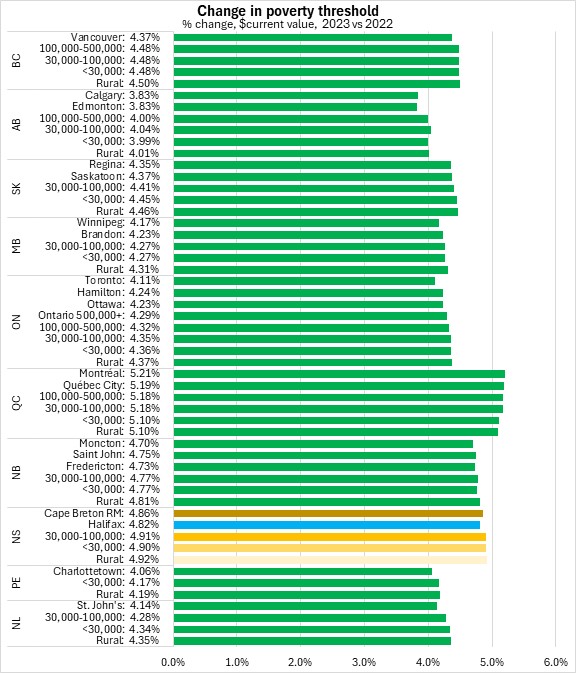
The threshold for the poverty rate varies by province and community size. In Nova Scotia, the income required for a reference family (2 adults, 2 children) to afford a basic standard of living ranged from $50,634 in Cape Breton RM to $54,966 in Halifax. The highest thresholds were reported in larger cities: Vancouver, Calgary, Edmonton, Toronto and Ottawa. The lowest thresholds were in smaller communities of Québec.
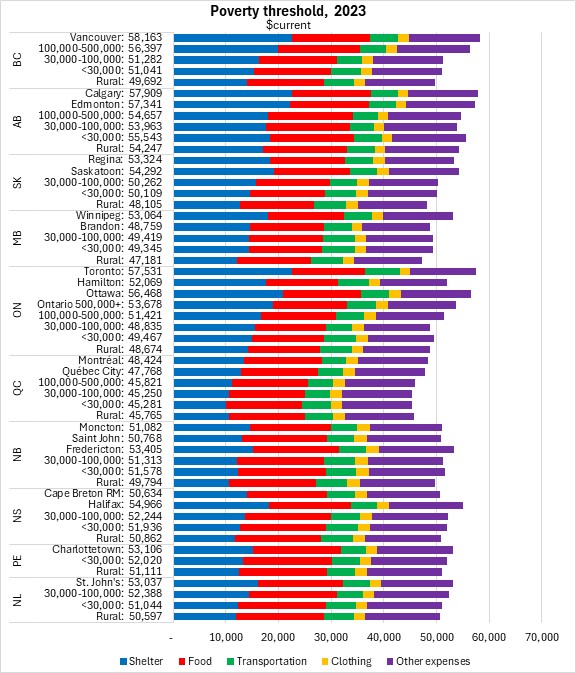
Compared with the thresholds from 2022, Nova Scotia's Market Basket Measure threholds increased by between 4.86% and 4.92%. MBM threshold levels grew faster in the Québec, New Brunswick and Nova Scotia.
Notes and definitions
The Canadian Income Survey estimates are based on probability samples and are therefore subject to sampling variability. As a result, estimates will show more variability than trends observed over longer time periods.
The market basket measure (MBM) of poverty is based on the cost of a specific basket of goods and services representing a modest, basic standard of living. It includes the costs of food, clothing, footwear, transportation, shelter and other expenses for a reference family. These costs are compared with the disposable income of families to determine whether or not they fall below the poverty line.
An economic family refers to a group of two or more persons who live in the same dwelling and are related to each other by blood, marriage, common-law union, adoption or a foster relationship. This concept differs from the census family concept used for subprovincial data in the Annual Income Estimates for Census Families and Individuals.
Sources: Statistics Canada, Canadian Income Survey. Table 11-10-0135-01 Low income statistics by age, sex and economic family type; Table 11-10-0136-01 Low income statistics by economic family type; Table 11-10-0093-01 Poverty and low-income statistics by selected demographic characteristics